Dragonfly Pond World
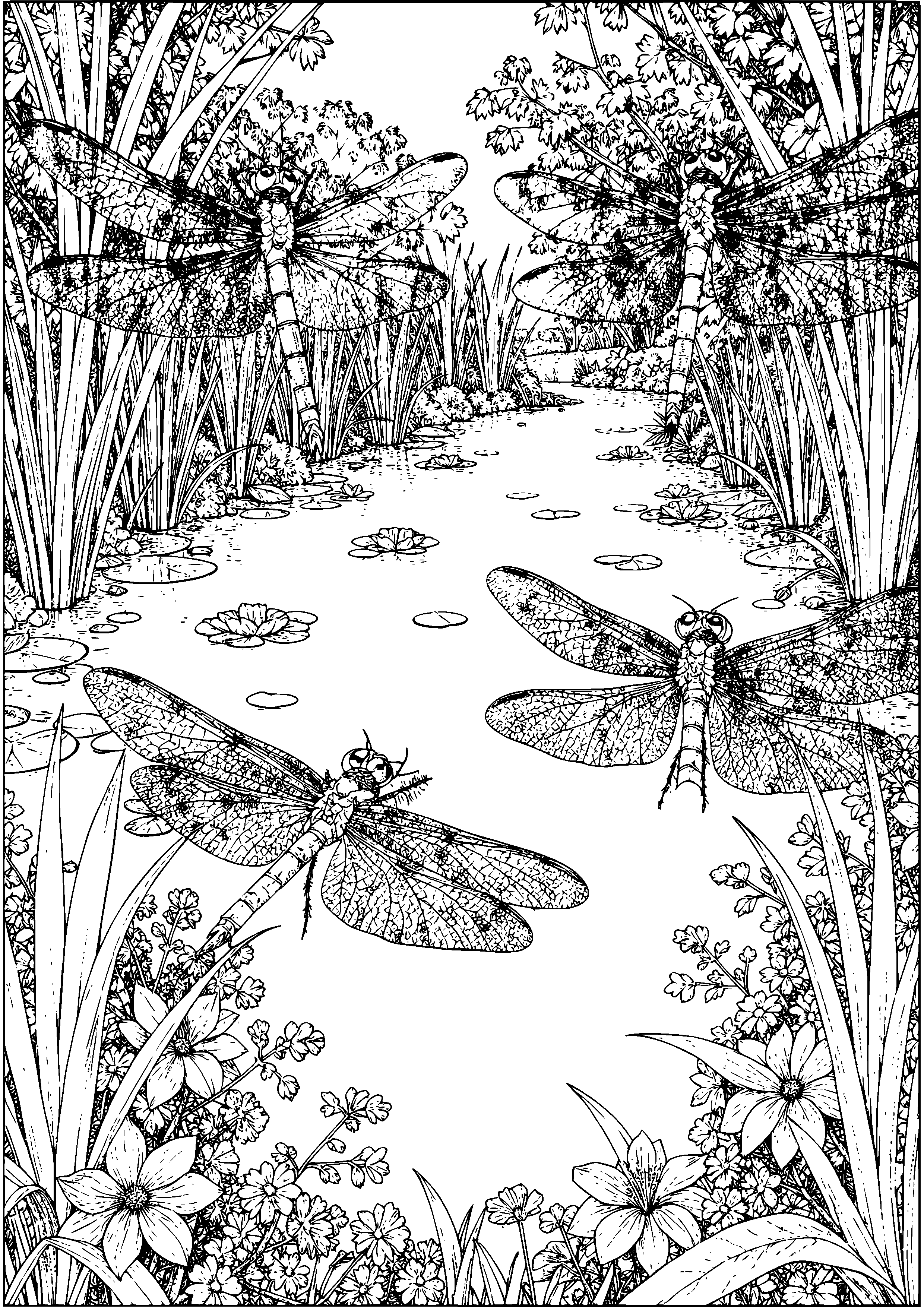
Dragonflies patrol the busy pond.
★★★★★
Free printable · PNG 2480×3508 px (A4, 300 DPI) · PDF in A4 & US Letter · No sign-up
Best for Adults
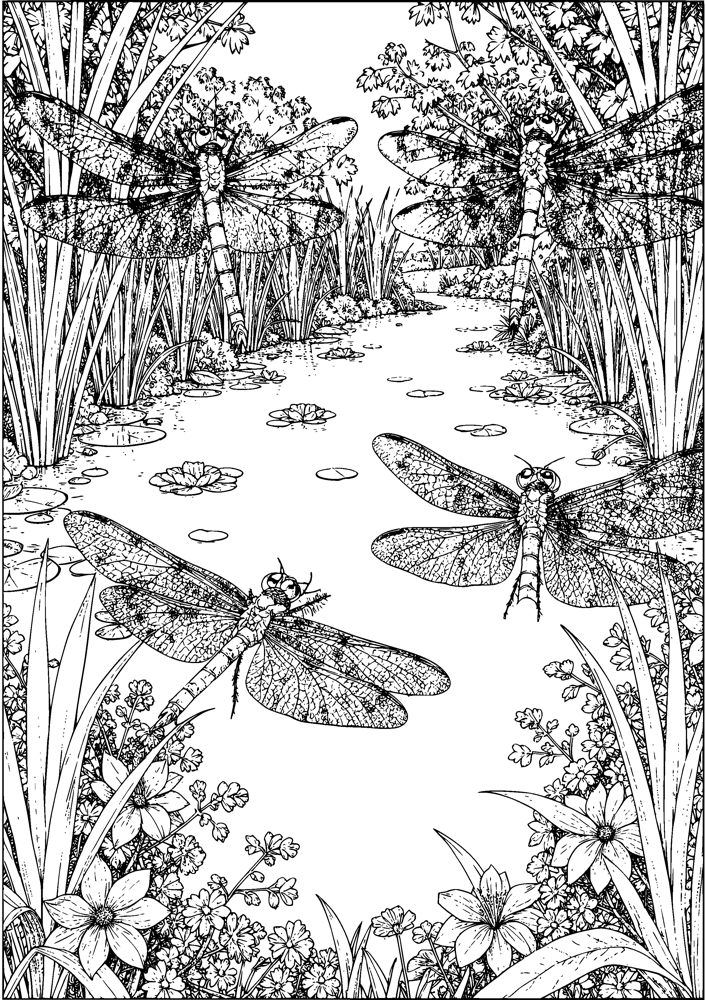
This intricate coloring page features four detailed dragonflies hovering above a serene pond surrounded by tall reeds, water lilies, and delicate flowering plants. The composition uses a strong frame of foliage in the foreground and sides, leading the eye toward the distant water and trees.
The line work is dense with heavy textures on the dragonfly wings and bodies, while the open water areas and white sky spaces provide contrast. The outlines are crisp and varied in weight, offering dozens of distinct sections for careful shading and blending.
Dragonflies are exceptional aerial hunters that spend most of their lives near fresh water like ponds, lakes, and marshes. Their massive compound eyes contain nearly thirty thousand lenses each, giving them an almost complete three-hundred-and-sixty-degree field of vision.
When flying, dragonflies can beat their four wings independently and even fly backwards or hover in place like a helicopter. They capture smaller flying insects mid-air using their spiky legs to form a basket-like trap.
Adult colorers using sharp-pointed colored pencils or fine-tip fineliners will find plenty of detail in the wing venation and foliage. Start by coloring the dragonflies in iridescent blues, greens, or coppery bronze tones, then move to the reeds and flowers.
For a creative approach, try coloring the pond water in unexpected twilight purples or deep indigos instead of standard blue. Leaving some of the wing cells uncolored can also create a nice translucent glass effect.
Because this page contains heavy hatching and intricate line work in the wings and flowers, a heavier cardstock paper around eighty pounds works best if you plan to use fineliners or light watercolor washes. Standard copy paper is fine for colored pencils, but heavier paper prevents buckling and allows for deeper color layering.