Mother Hen and Chick
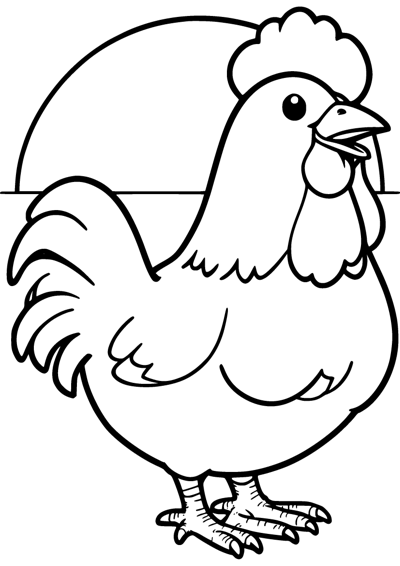
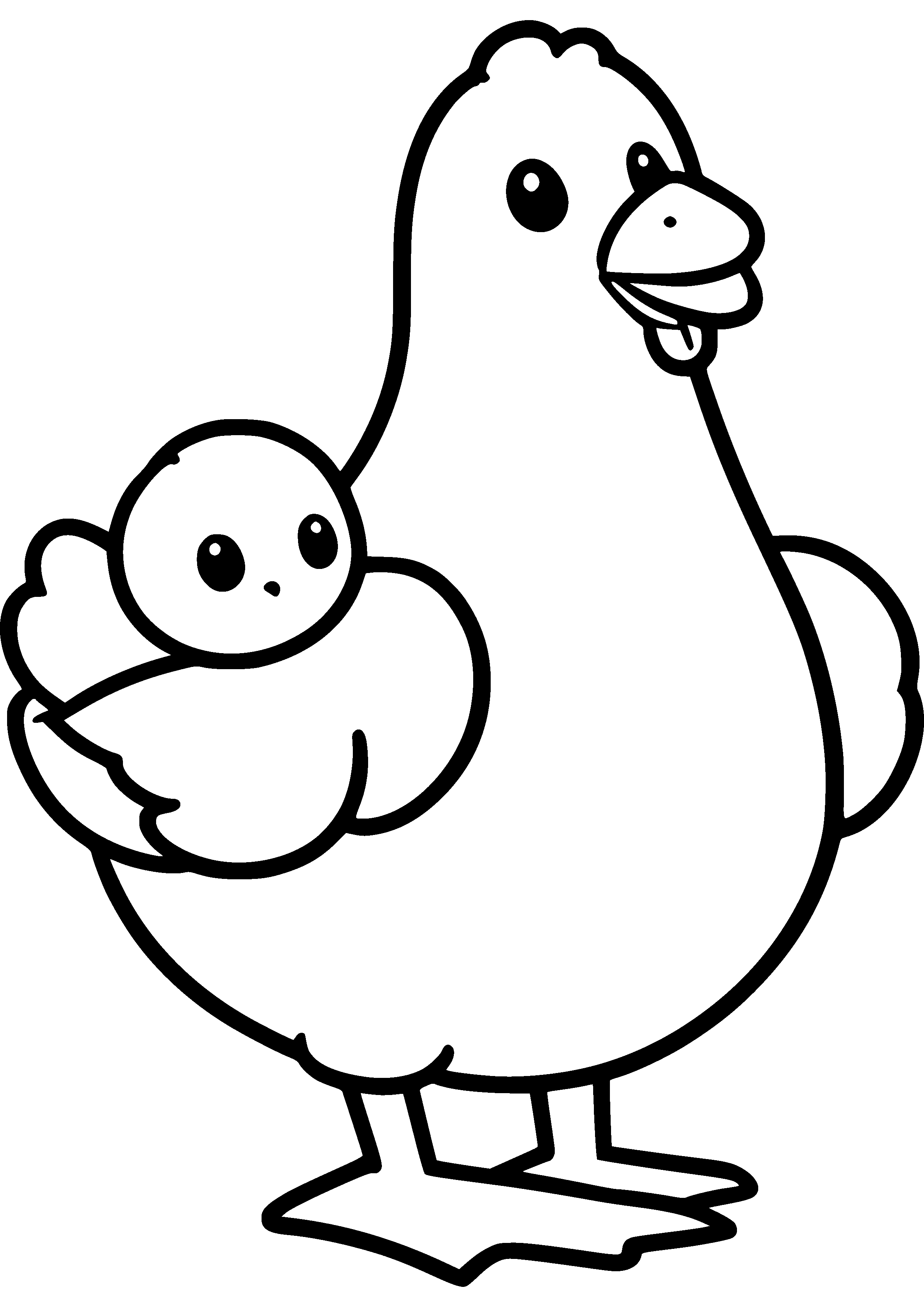
A mother hen watches her little chick.
★
Free printable · PNG 2480×3508 px (A4, 300 DPI) · PDF in A4 & US Letter · No sign-up
Best for Toddlers
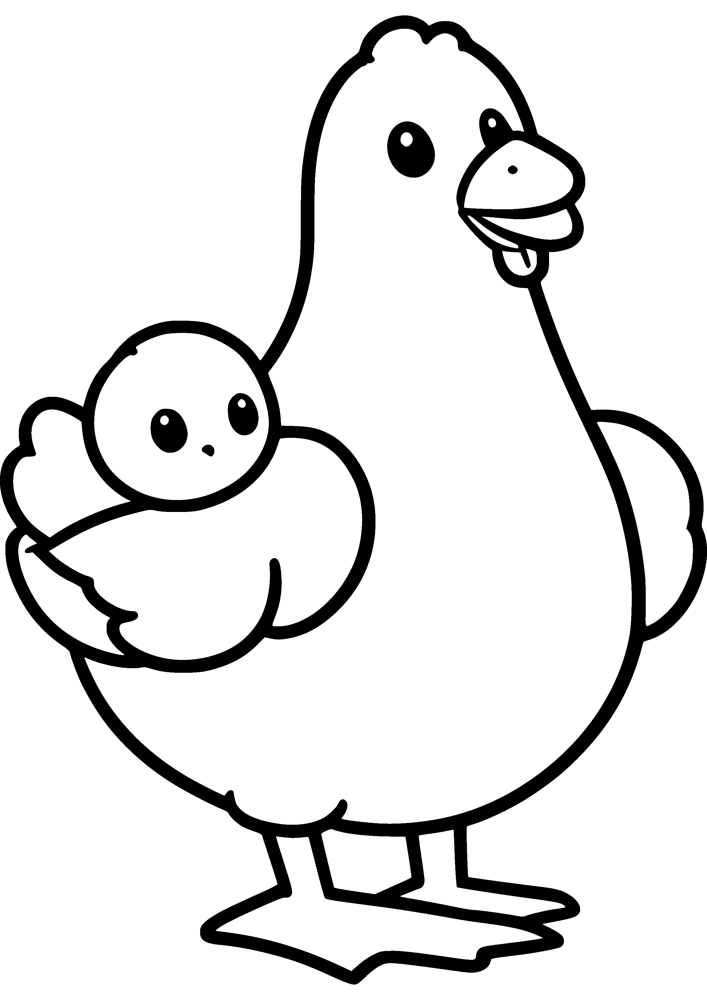
This coloring page features a mother hen standing upright with her chick resting against her left side. The drawing has thick, bold outlines that make it easy for small hands to see where the shapes begin and end. There is plenty of open white space surrounding the two birds, with no background details to distract from the main subjects.
The page contains large, simple enclosed areas that are well suited for younger children who are still learning to control their hand movements. The mother hen has a simple body shape, a prominent beak, and one large eye, while the smaller chick tucks in closely with its own distinct head and wing shapes. At the bottom, two flat feet anchor both birds to the page.
Mother hens are known for protecting their young from danger and keeping them warm under their feathers. When baby chicks hatch, they are covered in soft down feathers rather than the hard adult feathers seen on older birds. Right after hatching, chicks can already walk and follow their mother around the farmyard.
Chicks make soft peeping sounds to talk to their mother, and the mother hen makes specific clucking noises to call her chicks back to her. Even before they hatch, chicks can communicate with the hen and with each other through their shells. Hens are very attentive mothers and will gather their brood under their wings whenever they feel threatened.
Younger children can use bright yellow or golden brown crayons to fill in the large bodies of both the mother hen and the chick. The beaks and feet can be colored with a contrasting orange or yellow shade. For a fun twist, a child might want to color the mother hen with pink or purple spots instead of natural farm colors.
It is usually easiest to start coloring the smaller chick first before moving on to the larger body of the mother hen. Since the shapes are big and simple, large wax crayons work very well for filling in the broad spaces without frustration. Encouraging the child to color outside the printed lines is completely normal and expected at this early age.
Standard printer paper works fine for this drawing, but a slightly heavier cardstock will hold up better if your child tends to press down hard with crayons. Thick outlines mean you do not have to worry about tiny details bleeding together if you use markers, though crayons are still the most comfortable tool for toddlers.