Thistle and Bee
Bees work the thistle meadow.
★★★★★
Free printable · PNG 2480×3508 px (A4, 300 DPI) · PDF in A4 & US Letter · No sign-up
Best for Adults
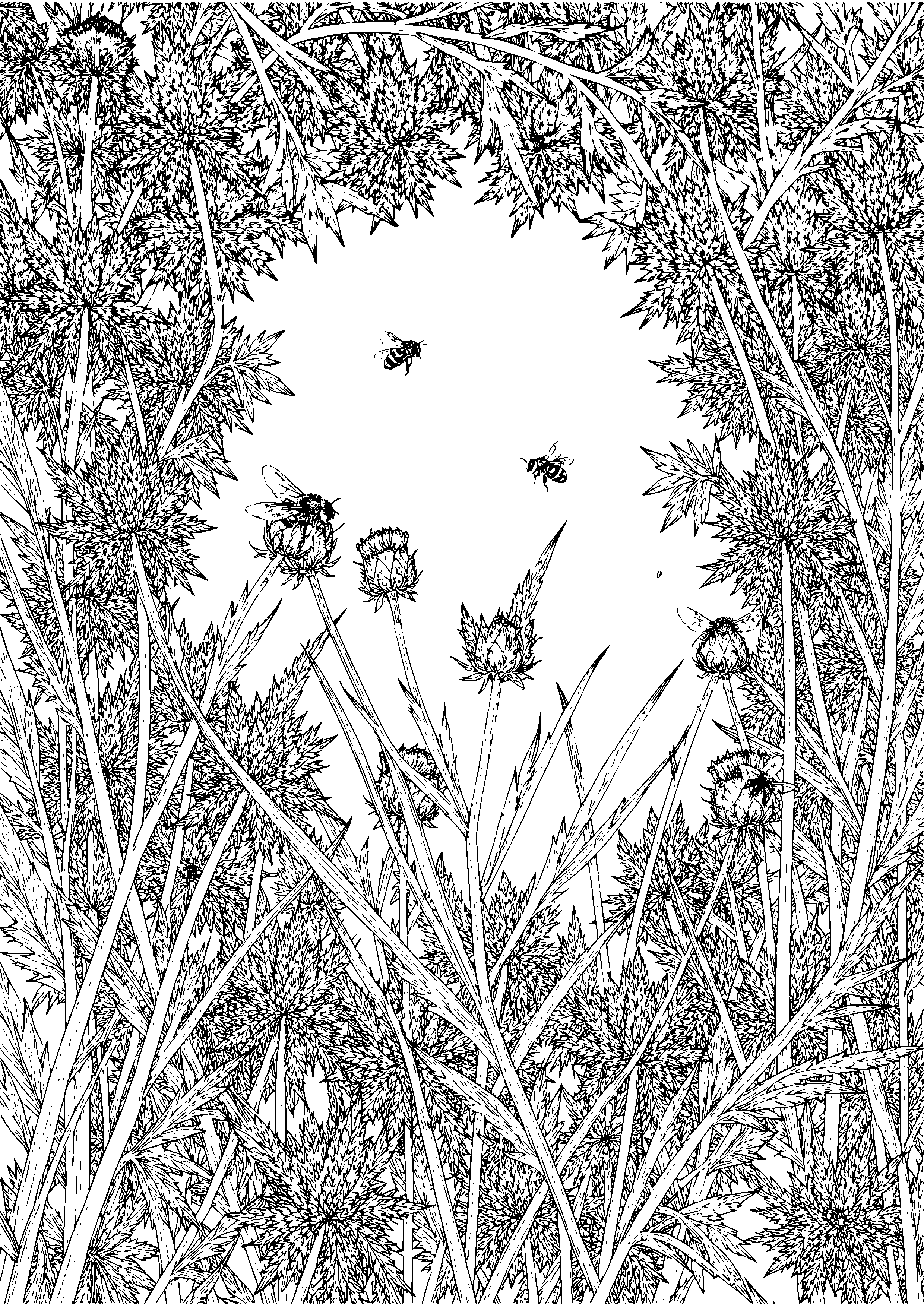
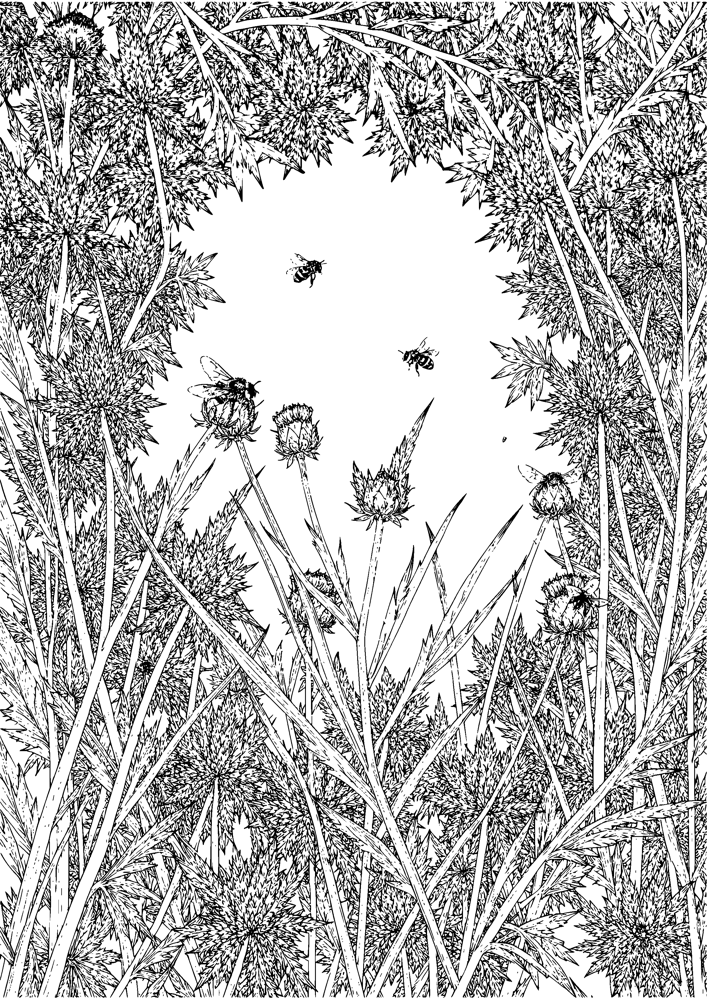
This intricate coloring page depicts a dense meadow of thistles framing a large patch of open white sky in the center. Multiple busy bees fly through the air and land on the prickly flower heads throughout the composition. The entire drawing uses fine, detailed black ink lines to capture every individual leaf edge, stem prickle, and petal texture.
The artwork creates a natural frame, with tall thistle stalks rising from the bottom and drooping down from the top corners. The center of the page remains open and white, creating a distinct window where several bees hover. Because of the high density of small leaves and spiky details, the page offers a complex layout with numerous small sections to color.
Thistles are well known for their distinctive spiky leaves and purple, pink, or blue flower heads that produce abundant nectar. Bees rely heavily on these plants for both nectar and pollen, especially during the summer months when other food sources might be scarce. The spiky armor of the thistle protects the plant from many grazing animals while allowing specialized pollinators to reach the deep flowers.
Honeybees and bumblebees navigate these prickly plants with ease, using their hairy bodies to collect pollen from the dense flower clusters. When bees visit thistle blossoms, they help pollinate the flowers, which allows the plants to produce seeds for the next generation. This partnership between the prickly weeds and flying insects is a vital part of many meadow ecosystems.
To bring this detailed meadow to life, try using soft muted greens and grays for the thistle leaves, paired with vibrant purples and blues for the flower heads. Sharp colored pencils work best here because they allow you to shade the tiny, overlapping leaves without losing the intricate line work. You might start by coloring the background thistle clusters before working your way forward to the central stems and bees.
If you want to depart from a realistic color scheme, try using warm autumn tones like copper, gold, and deep rust for the foliage. You can also leave the central sky area completely white to make the black ink illustrations of the flying bees stand out sharply. Adding a light yellow or pale blue wash in the center can also give the scene a soft atmospheric glow.
Because this page contains a massive amount of fine detail and tight spaces, printing it on heavier cardstock paper is recommended if you plan to use wet media or ink pens. Standard printer paper works well with colored pencils, but heavier paper prevents buckling if you apply layers of shading or blending solvents. Sharp fineliners can also be used for the outlines, but make sure to test your pens on a scrap piece of paper first to avoid bleeding through the detailed foliage.