Patterned Easter Eggs
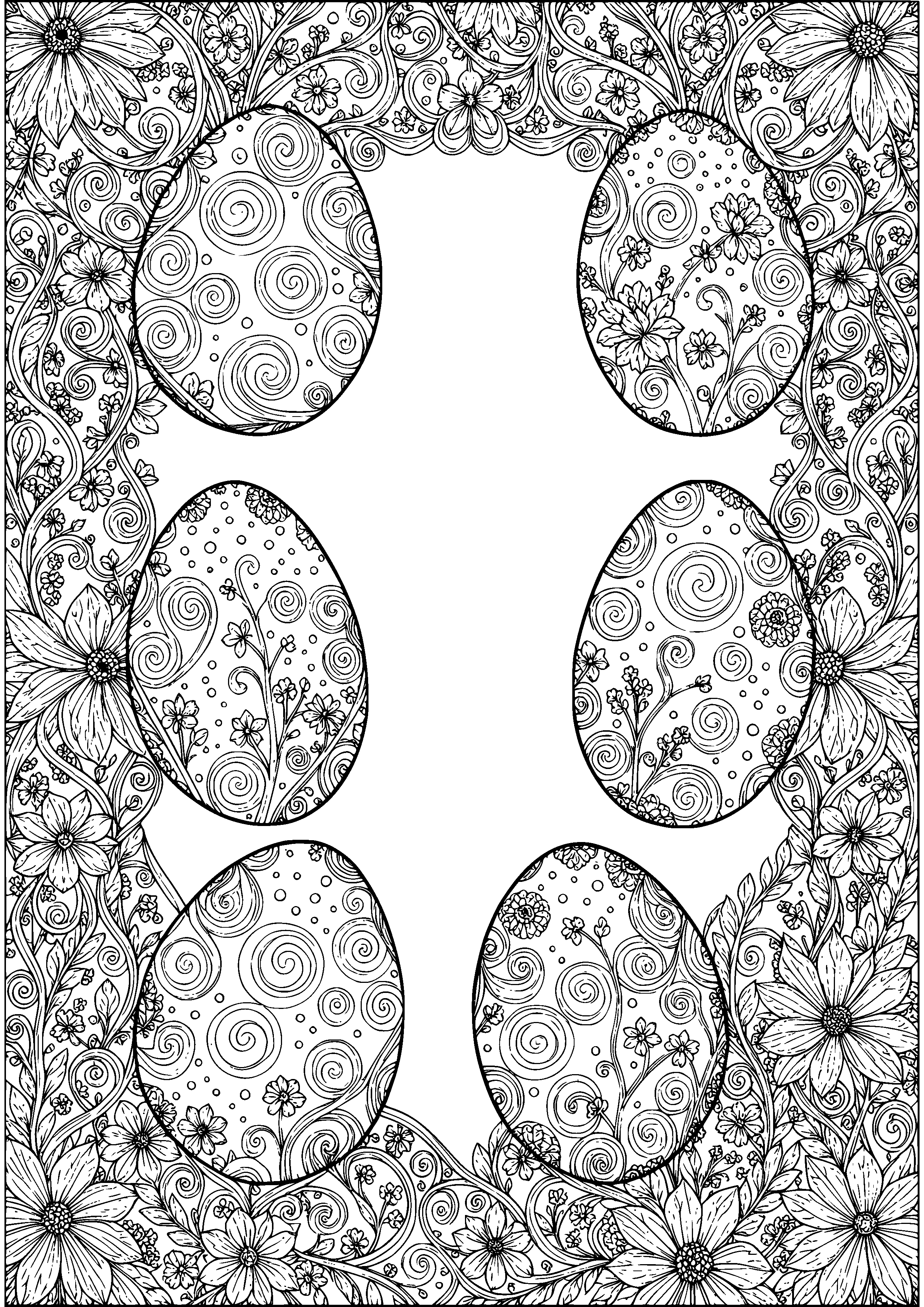
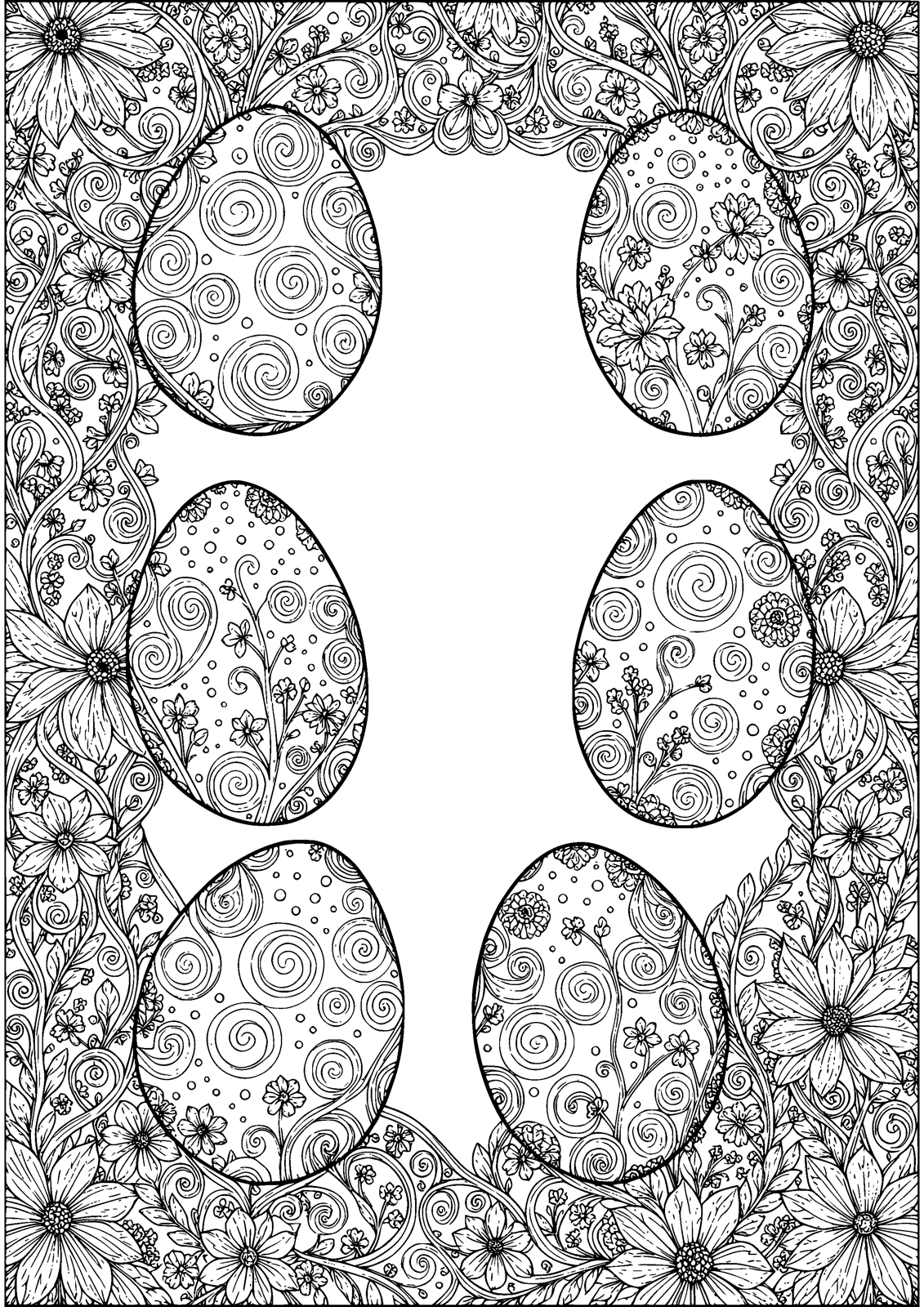
Six eggs, each with its own intricate pattern.
★★★★
Free printable · PNG 2480×3508 px (A4, 300 DPI) · PDF in A4 & US Letter · No sign-up
Best for Adults
This intricate coloring page features six patterned Easter eggs arranged in a symmetrical layout against a rich floral and vine border. The eggs themselves are filled with detailed designs including swirls, dots, and delicate botanical motifs.
The surrounding frame is densely packed with flowers, leaves, and flowing tendrils that fill every corner of the composition. The black outlines are sharp and fine, defining hundreds of tiny shapes and sections that offer a challenging coloring experience.
The combination of eggs and organic floral patterns draws on long-standing decorative traditions associated with spring and renewal. While the eggs resemble traditional pysanky or painted holiday eggs, the intricate swirls and repeating motifs in this composition are entirely imagined for artistic expression.
Ornamental patterns like these often use symmetry and flowing lines to create a sense of balance and visual rhythm. Filling in complex, repeating shapes can help steady the hand and focus the mind during a quiet session of coloring.
Because the lines are fine and the sections are small, sharp-tipped colored pencils or fine-tip fineliners work best for reaching every detail. You can color each egg in a distinct palette, using harmonious tones like soft blues and purples or vibrant shades of pink and yellow.
If you want to depart from traditional holiday colors, try working in a monochromatic scheme for the background flowers while making the six eggs stand out with contrasting metallic or neon hues. Starting with the small interior details of the eggs before moving on to the heavy floral border helps prevent accidental smudging.
Due to the dense detail and intricate linework across the entire page, printing on heavy cardstock rather than standard printer paper is recommended. Heavier paper will support fine-tipped markers without bleeding through and provides a sturdy base if you choose to blend multiple layers of colored pencil.