Ice Cream Cart
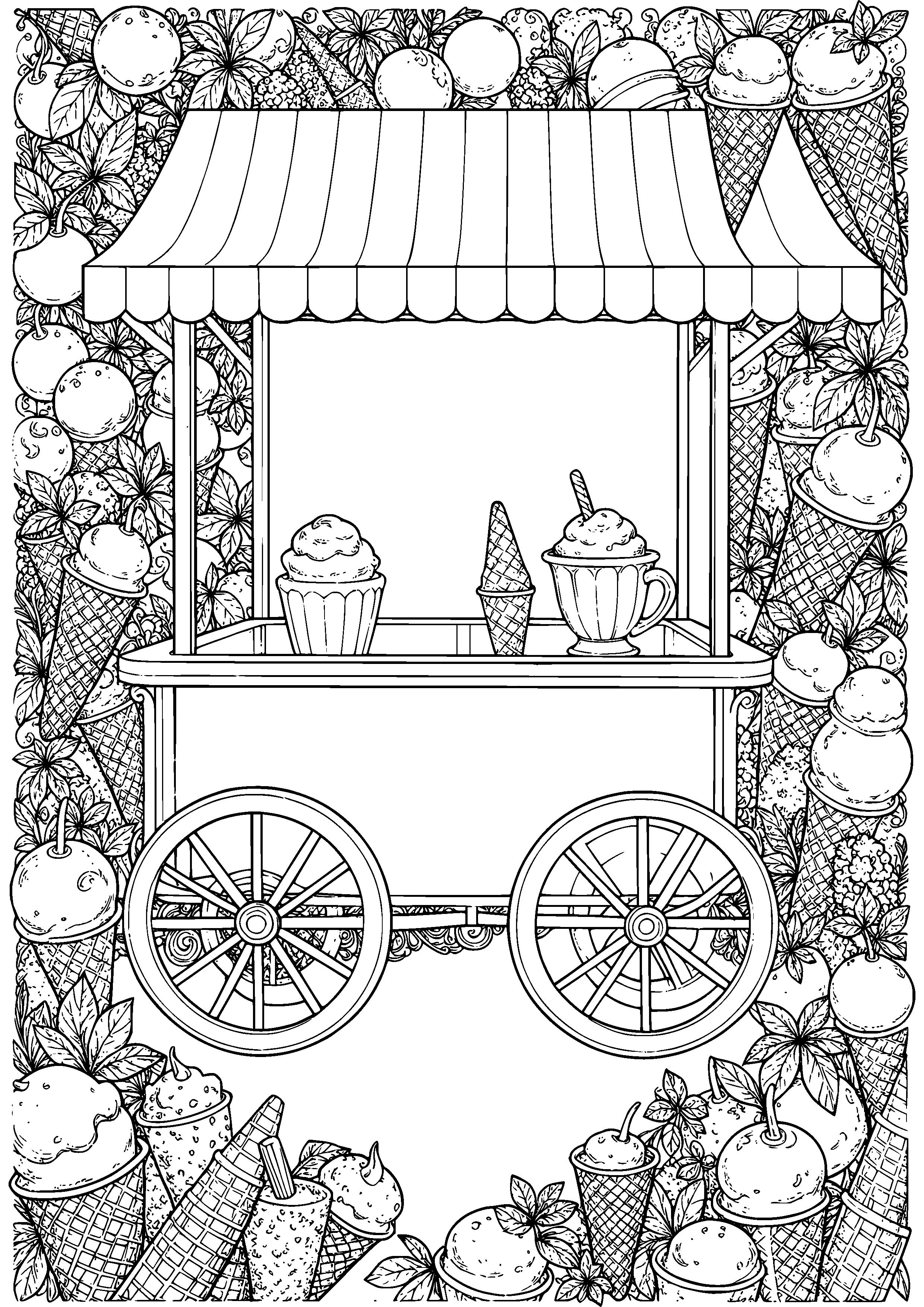
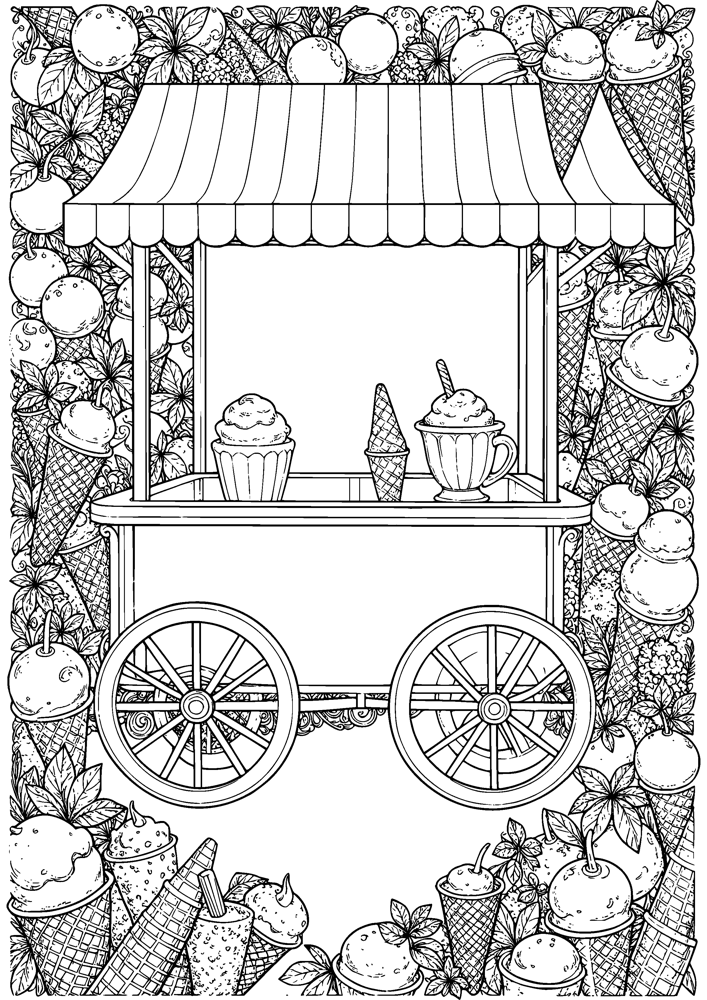
A vintage striped-awning ice cream cart with cones and sundaes in fine detailed linework.
★★★★
Free printable · PNG 2480×3508 px (A4, 300 DPI) · PDF in A4 & US Letter · No sign-up
Best for Adults
This intricate coloring page features a vintage ice cream cart centered beneath a striped awning. The cart rests on two spoked wooden wheels and holds a cupcake, a small cone, and a sundae in a handled glass on the counter.
Densely packed patterns of leaves, berries, scooped ice cream cones, and waffle textures fill the background on both sides and spill over the top and bottom. The fine linework offers hundreds of tiny, distinct sections to shade and fill.
Before modern refrigeration trucks, mobile ice cream vendors pushed decorative carts through neighborhood streets during the warm summer months. These wooden carts often featured colorful striped canopies to shade the ice cream tubs from the sun and attract customers from a distance.
The frozen treats served from these carts typically included scoops in waffle cones, paper cups, and fruit-flavored popsicles. Vendors relied on heavy blocks of ice packed inside insulated compartments to keep the treats cold throughout the day.
Colored pencils and fine-tipped markers work best for this page because of the dense background details and small leaf shapes. You can use alternating pastel colors for the awning stripes, such as soft pink and cream or mint green and white, to create a classic retro look.
For a whimsical touch, try coloring the ice cream scoops in unnatural shades like lavender for ube, bright turquoise for blue moon, or golden yellow for honeycomb. Leave the background leaves in natural shades of green to help the bright ice cream colors stand out.
Heavy cardstock is recommended for this detailed design if you plan to use water-based markers or fineliners, as thicker paper prevents ink bleed-through. Standard printer paper works well enough for colored pencils, though a heavier weight ensures the page remains flat and durable while you shade the intricate background.