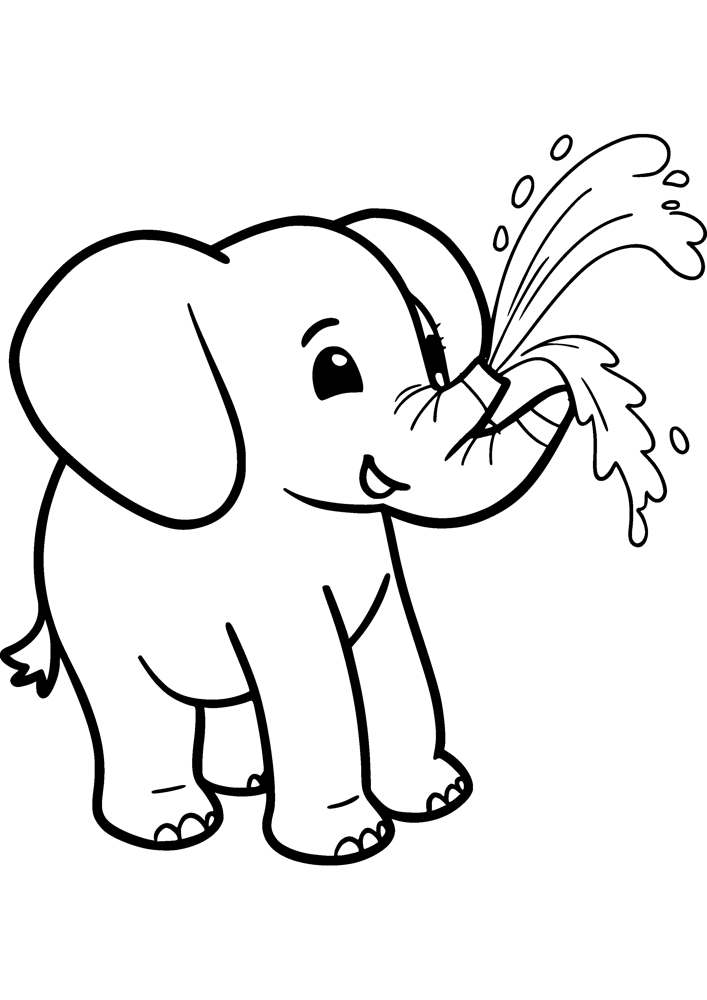
Baby Elephant
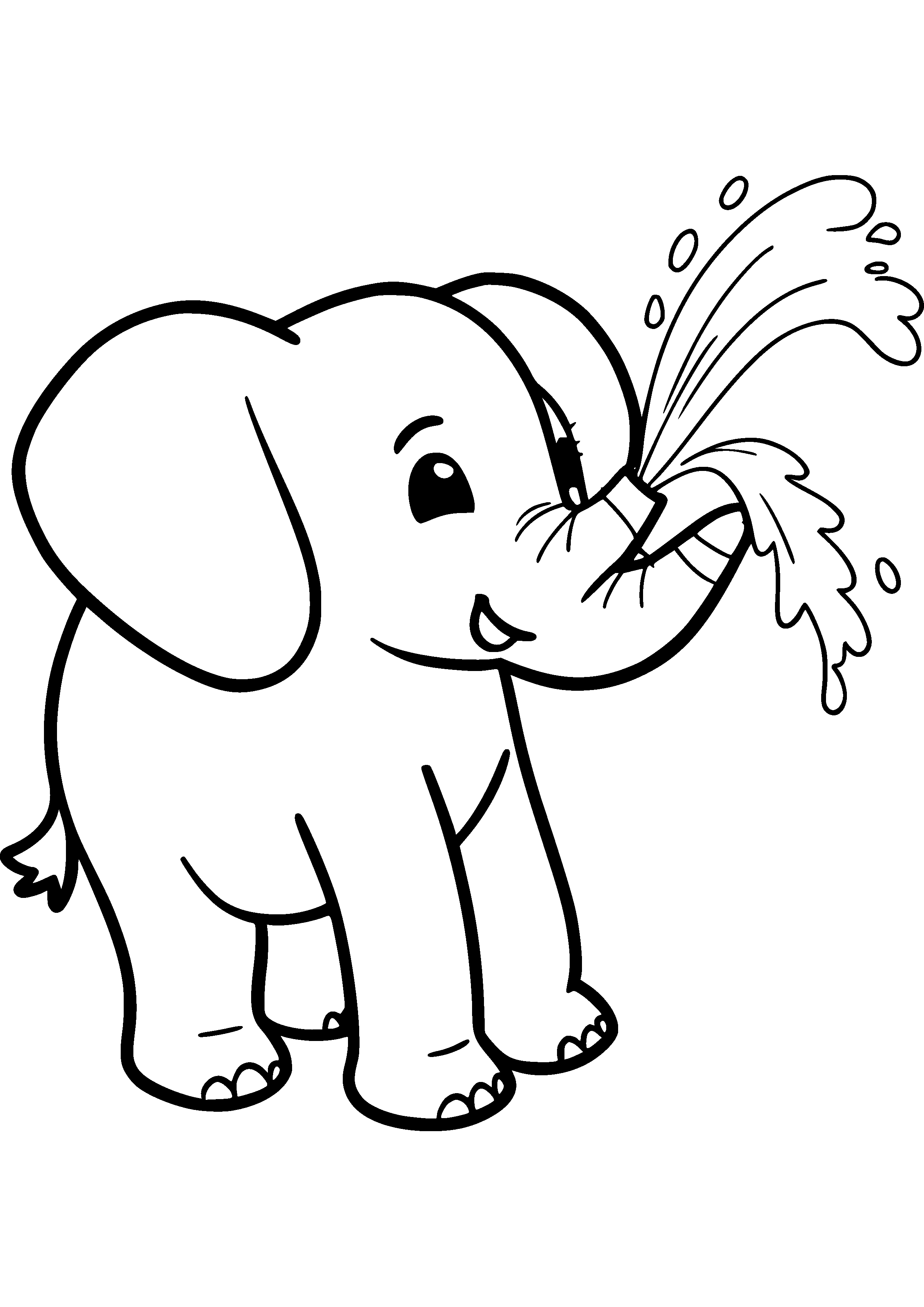
A baby elephant plays with water.
★
Free printable · PNG 2480×3508 px (A4, 300 DPI) · PDF in A4 & US Letter · No sign-up
Best for Toddlers
This coloring page features a cheerful baby elephant standing and spraying a fountain of water from its trunk. The illustration uses very thick, bold black outlines that are easy for a toddler to see. The drawing is centered on the page with plenty of open white space around it.
There are several distinct areas to color, including the elephant's large ears, its sturdy legs, and the individual splashes of water. The simple shapes make it easy for young children to practice moving their crayons across large surfaces without complex details getting in the way.
A baby elephant is called a calf. When they are first born, they can weigh over 200 pounds, which is about as much as a grown man. They are very playful and spend a lot of time learning how to use their long trunks.
Elephants use their trunks like a hand to grab food or like a hose to spray water. They often spray water on their backs to stay cool in the hot sun. These animals live in big families where everyone helps look after the youngest members.
While real elephants are usually gray, a young child might enjoy using a bright blue crayon for the water splashes first. A thick gray or light brown crayon is perfect for filling in the elephant's body. The large ears provide a great space to practice big, circular coloring motions.
For a more creative look, you can suggest making a circus elephant by using many different colors like yellow, red, or purple. Since the lines are so thick, toddlers can experiment with layering different colors on top of each other to see how they mix.
This page is designed for heavy-duty coloring tools like jumbo crayons or washable markers. Because the shapes are so large and open, standard printer paper works well, but using a slightly heavier cardstock will help if your child likes to press down hard while they work.