Unicorn Mane of Flowers
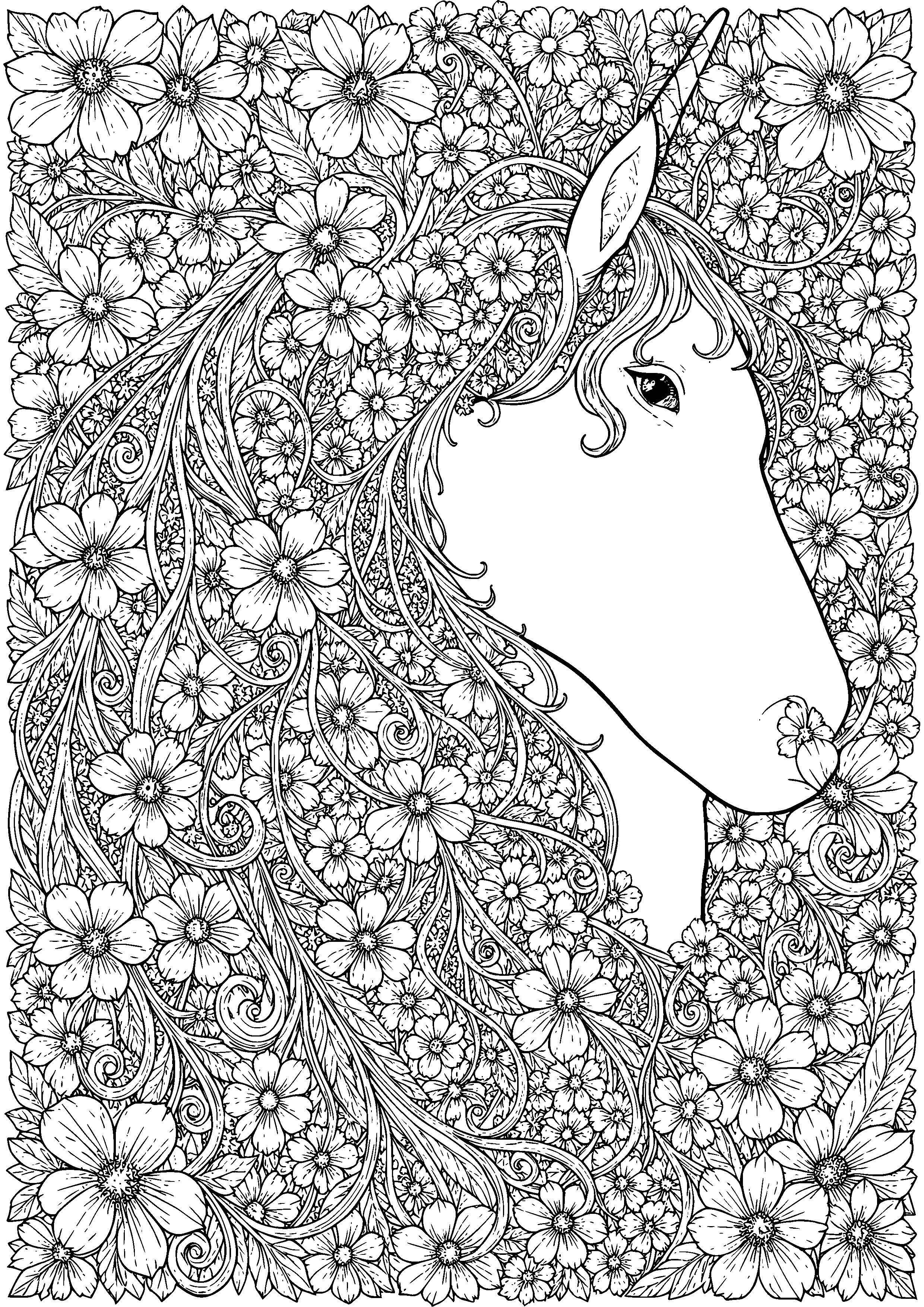
A unicorn whose mane is woven from flowers.
★★★★★
Free printable · PNG 2480×3508 px (A4, 300 DPI) · PDF in A4 & US Letter · No sign-up
Best for Adults
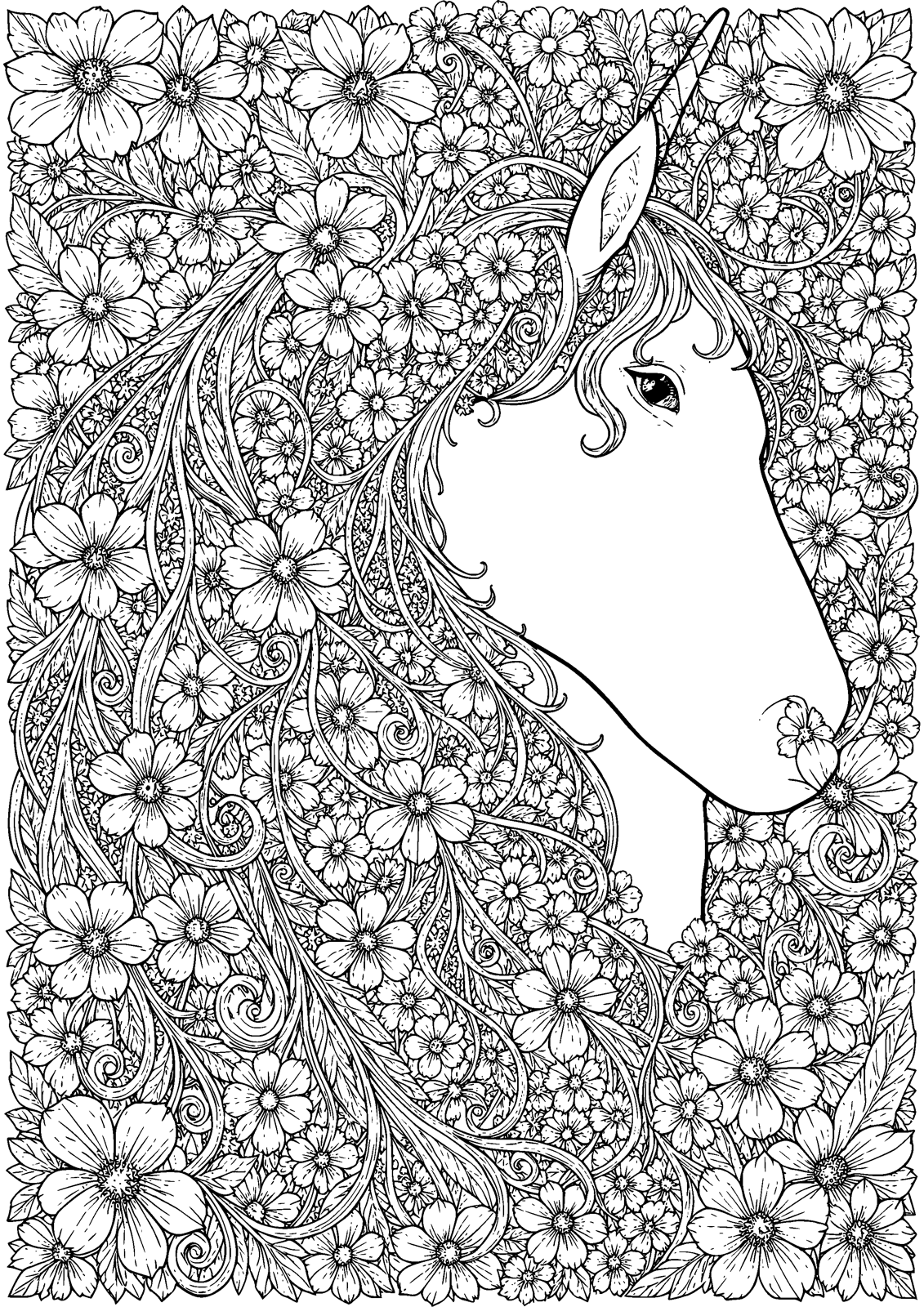
This coloring page features a detailed profile of a unicorn surrounded by an intricate field of flowers. The unicorn's long, flowing mane and forelock blend seamlessly into a dense mass of blossoms, leaves, and swirling vines that fill the entire background.
The artwork uses fine, crisp black lines to define thousands of tiny petals, leaves, and curls. There is almost no empty white space on the page, creating a rich tapestry where every section requires careful attention with a sharp pencil or a fine fineliner.
Unicorns are mythical creatures that have appeared in European folklore and art for centuries, usually depicted as graceful white horses with a single horn on their forehead. Unlike real animals, unicorns are purely imaginary symbols of purity, magic, and untamed nature in storytelling.
The tradition of decorating mythical animals with flowers and foliage comes from ancient tapestry art, where natural elements were interwoven to create lush, dreamlike scenes. This page adopts that decorative approach by merging the creature's hair with botanical patterns.
To tackle a page this intricate, start by coloring the large profile of the unicorn head first, using soft grays or creams to add subtle shading before moving to the detailed mane. For the flowers, you can assign different color families to separate clusters, using warm reds and oranges in one area and cool blues and purples in another to keep the composition organized.
If you want to depart from realistic colors, try giving the unicorn a lavender or soft pink coat with a rainbow gradient running through the floral mane. Sharp-tipped colored pencils work best here to reach the narrow spaces between petals and vines without muddying the lines.
Because this page contains an enormous number of tiny, detailed sections and very little open area, fineliners might bleed across the dense linework if printed on standard copy paper. Printing this page on heavier cardstock allows you to use a mix of sharp pencils and fine markers while keeping every petal crisp.