Submarine Explorers
Dive deep to explore the coral reef by submarine.
★★★
Free printable · PNG 2480×3508 px (A4, 300 DPI) · PDF in A4 & US Letter · No sign-up
Best for Kids
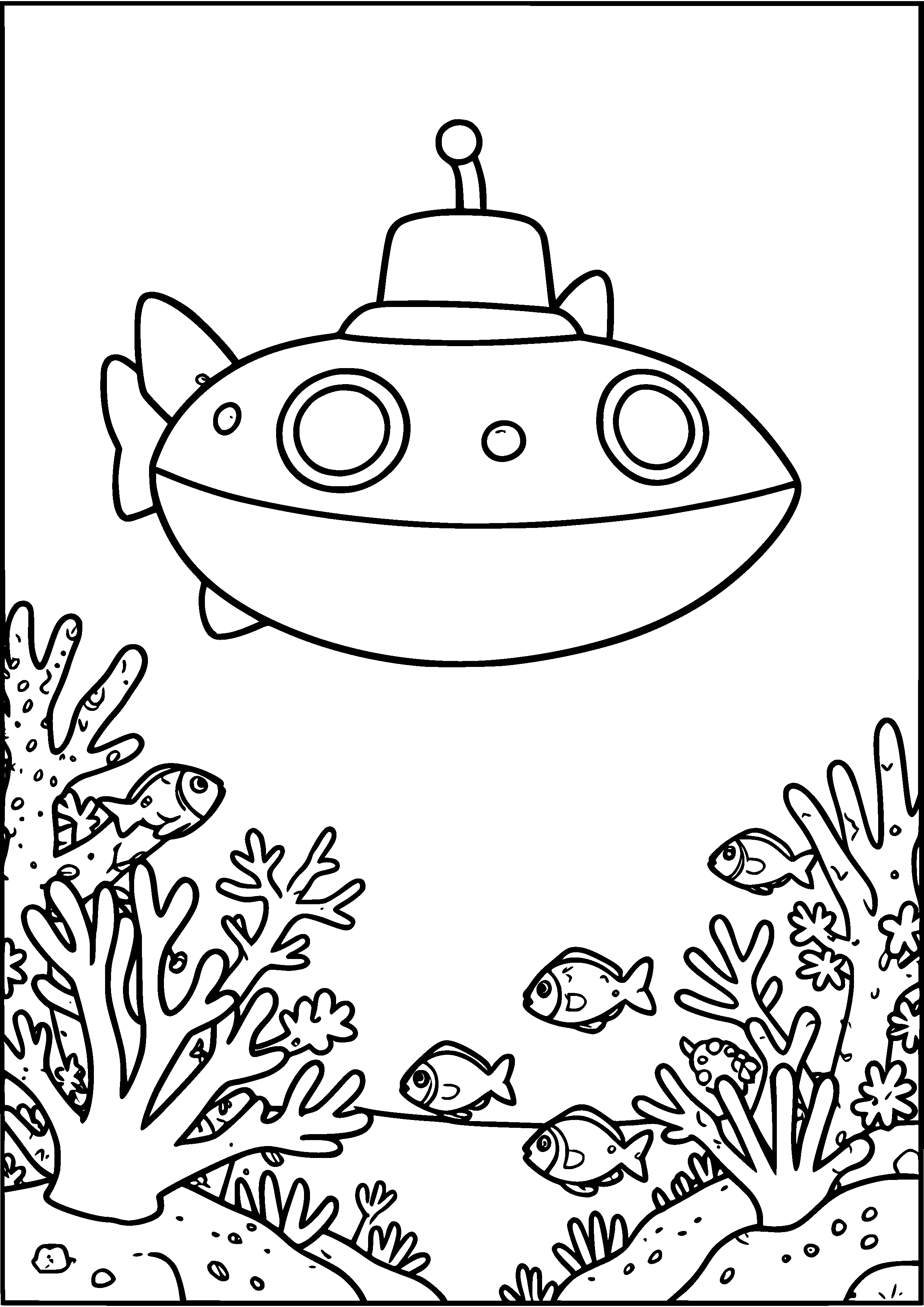
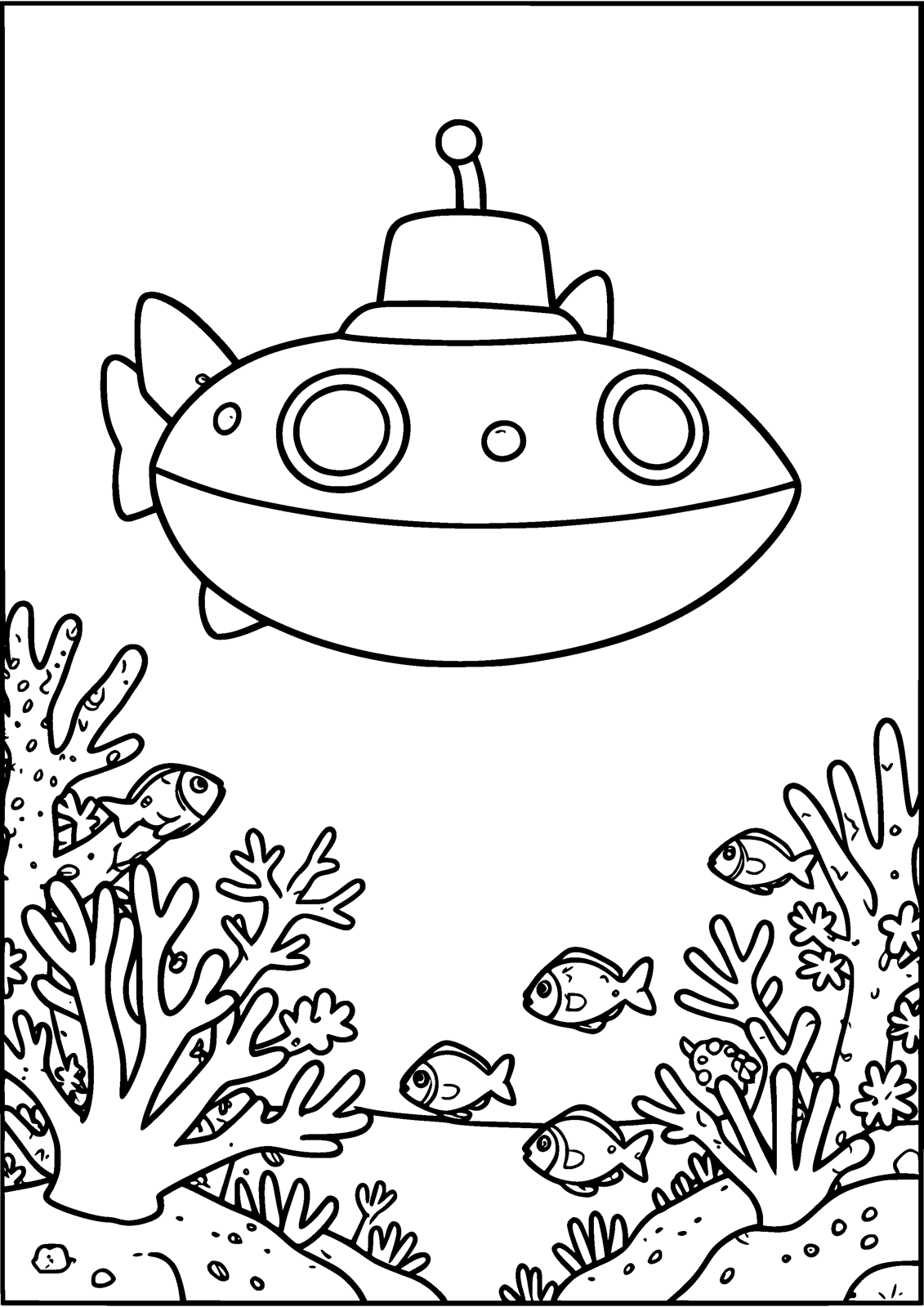
This coloring page features a friendly submarine floating above an ocean floor filled with coral reefs and small fish. The page is divided into two main parts, with the submarine in the upper white space and the seabed below crowded with seaweed, coral branches, and swimming fish.
The outlines are thick and clear, making it easy to color inside the lines. There are many distinct shapes to fill, including the portholes on the submarine, the individual fish, and the branching patterns of the coral.
Submarines are watercraft that can travel underwater by filling and emptying ballast tanks with water to control their buoyancy. They use periscopes to see above the surface when they are shallow enough. Real research submarines help scientists explore deep parts of the ocean that humans cannot reach by swimming.
Coral reefs are actually made of thousands of tiny animals called polyps that build hard skeletons around themselves. These reefs support about a quarter of all marine life by providing homes and hiding spots for fish and other sea creatures.
You can color the submarine a bright yellow or red so it stands out against the blue water. Try using different shades of pink, orange, and purple for the coral, and give each small fish a unique pattern of stripes or dots.
For a fun change from realistic colors, you could turn the submarine into a rainbow machine or color the sea in shades of green and purple instead of standard blue. Starting with the small fish and coral first will help you avoid smudging your work as you move across the page.
Standard printer paper works fine for colored pencils and crayons, but if you want to use markers, choose a heavier cardstock so the ink does not bleed through. A thicker paper also makes it easier to press down firmly when coloring the large open background areas.