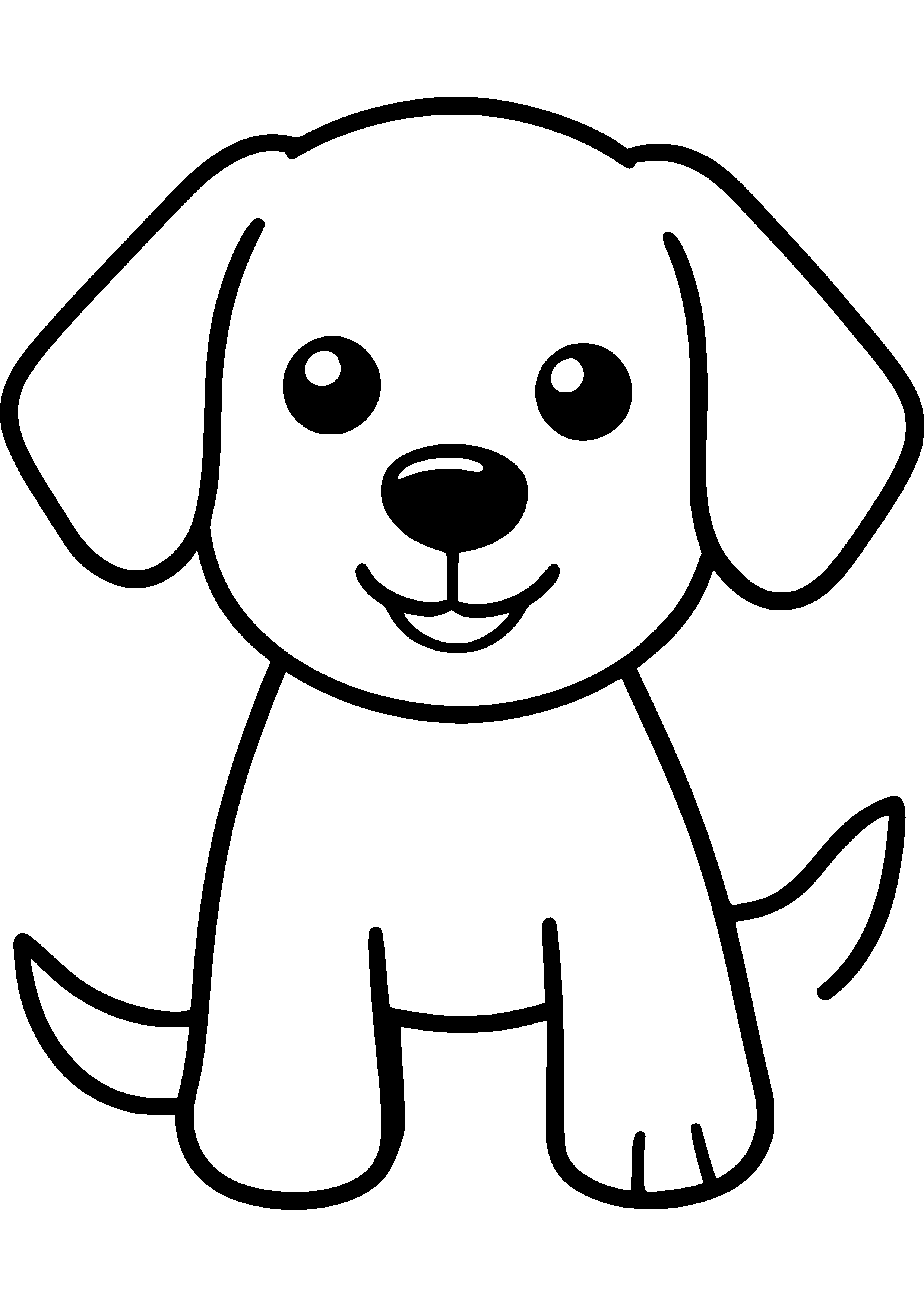
Happy Puppy Face
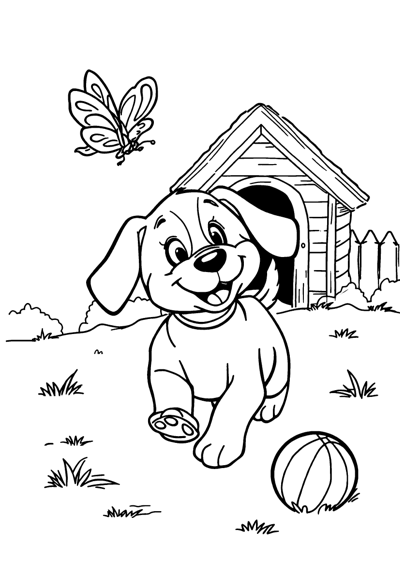
A big friendly puppy face with floppy ears.
★
Free printable · PNG 2480×3508 px (A4, 300 DPI) · PDF in A4 & US Letter · No sign-up
Best for Toddlers
This coloring page features a friendly puppy sitting upright, facing forward with a big head and large floppy ears. The outline is drawn in thick, bold black lines that create large, simple sections, making it very easy for young hands to color. There are few intricate details, leaving open white space around the character and no background elements to distract.
The puppy has round black eyes, a dark oval nose, and a simple smiling mouth. Its small body sits between two front paws, with a tail curving up on the right and another tail-like shape visible on the left. The overall composition is clean, centered, and gives plenty of room for bold crayon strokes.
Puppies are baby dogs that spend a lot of their early months playing, sleeping, and exploring the world around them. They use their floppy ears and wagging tails to show how they feel, often getting excited when people come near. Their sense of smell and hearing are very sharp even when they are quite young.
Young dogs grow up quickly through lots of running and chewing on safe toys to build strong teeth and muscles. Different breeds of dogs have different ear shapes, ranging from long and hanging down to pointy and standing straight up. This drawing shows a classic floppy-eared puppy style often found in children book illustrations.
Young children using thick crayons can fill the main body with warm browns, soft yellows, or spotted patches of black and white. Because the lines are thick and the shapes are large, little hands do not need to worry about staying strictly inside the boundaries. Starting with the big areas like the head and ears helps build confidence before moving to smaller details.
For a playful twist, a child might want to color the puppy in bright purple or blue instead of natural fur tones. The nose and eyes can remain solid black to keep that cheerful expression clear and friendly. Parents can talk about what color their own family pet is while coloring together.
Printing this page on standard letter paper works well for chunky crayons and oil pastels. If your child prefers using markers or paint sticks, a slightly heavier cardstock prevents the colors from bleeding through to the back.