Little Corn Cob
A big smiling ear of corn.
★
Free printable · PNG 2480×3508 px (A4, 300 DPI) · PDF in A4 & US Letter · No sign-up
Best for Toddlers
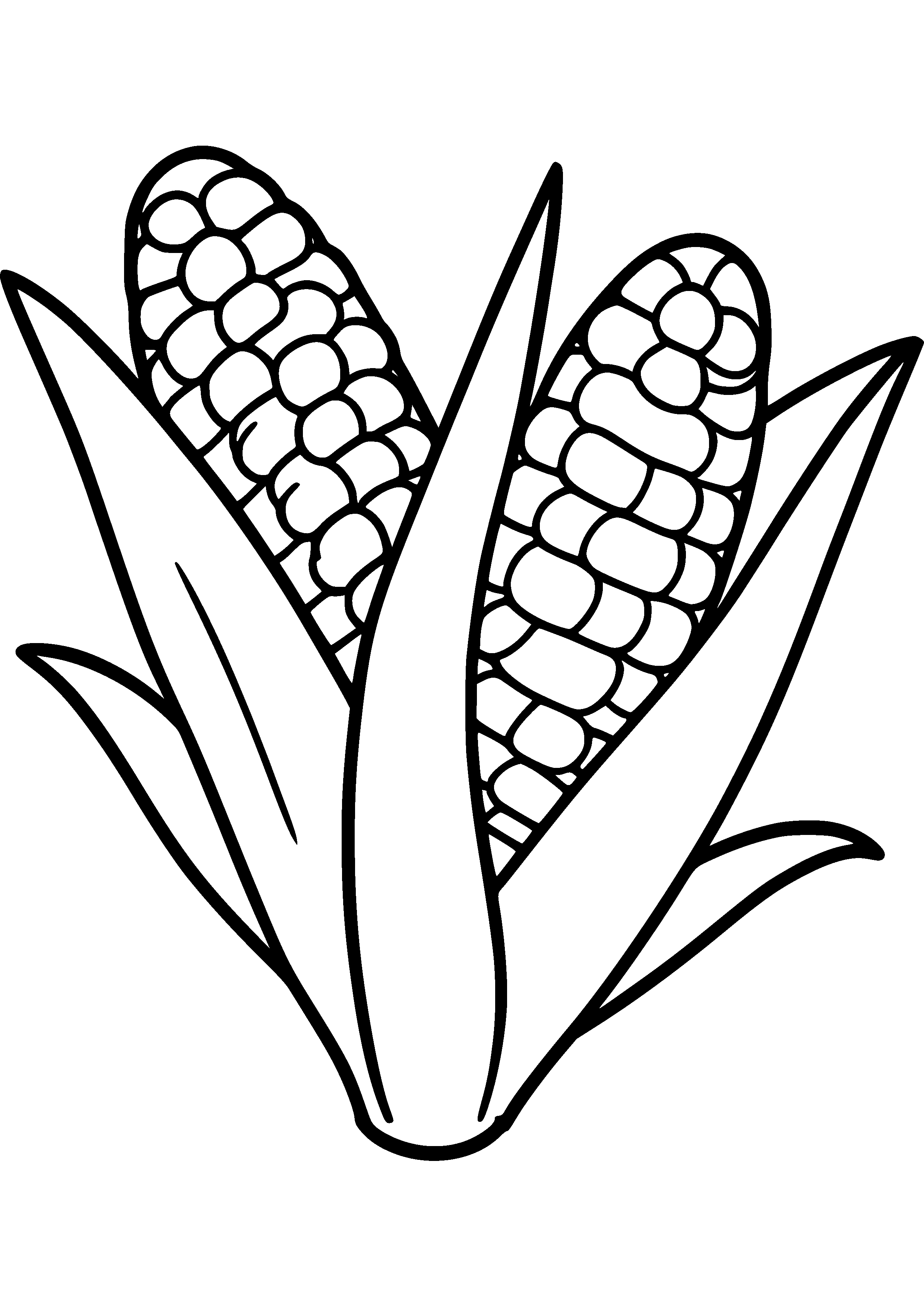
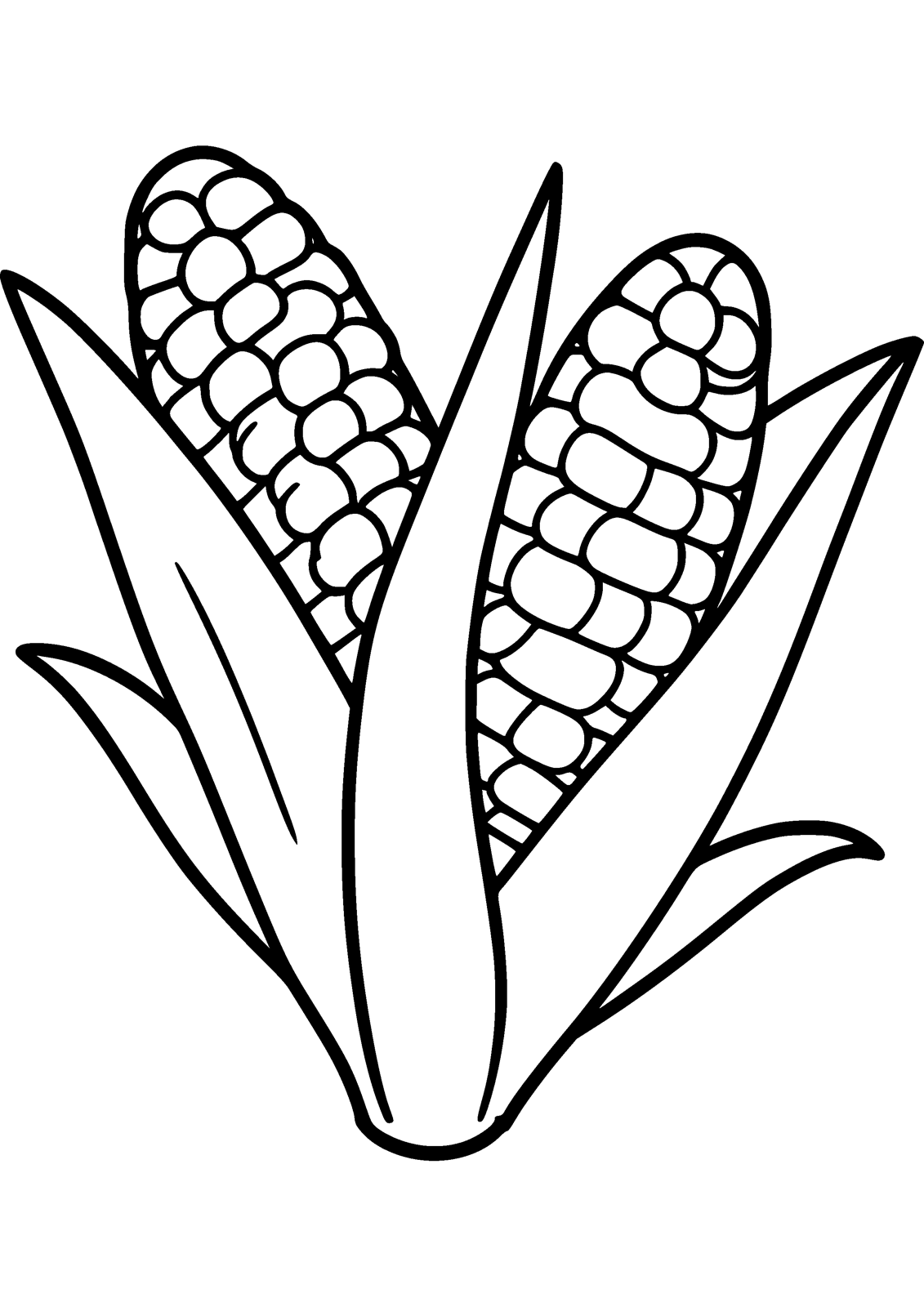
This coloring page shows two ears of corn standing side by side with large leaves wrapping around their bases. The outlines are drawn with thick, bold black lines that make it easy for little hands to see the shapes. The kernels at the top of each cob form rounded patterns while the leaves fan out on both sides.
The background is entirely plain white, leaving plenty of open space around the corn. There are many medium-sized areas to fill in between the individual kernels and the long strips of leaves. The simple composition focuses entirely on the two vegetable stalks without any extra objects or distractions.
Corn is a tall plant that grows grain inside protective layers of leaves called husks. Each individual kernel on the cob grows from a tiny flower and is packed closely together in neat rows. Sweet corn is a popular summer vegetable that many people enjoy eating right off the cob.
Farmers grow fields of corn all over the world to use as food for humans and animals. Every single ear of corn usually has an even number of rows of kernels. The long green leaves help catch sunlight to feed the growing plant before it is harvested.
Bright yellow works well for the corn kernels to look sweet and ripe. The surrounding leaves can be colored in shades of light and dark green. Young children can use thick crayons that fill in the wide spaces quickly without needing precise control.
For a playful twist, the corn could be colored in unexpected shades like purple or blue. A red or orange crayon can also give the cobs a different look. Starting with the large leaves first helps establish the outer shape before filling in the rows of kernels.
Thick cardstock paper works best for this page if young children want to use markers or paint. Standard printer paper is fine for crayons, but heavier paper keeps the page from wrinkling when thick strokes are applied.