Steam Locomotive
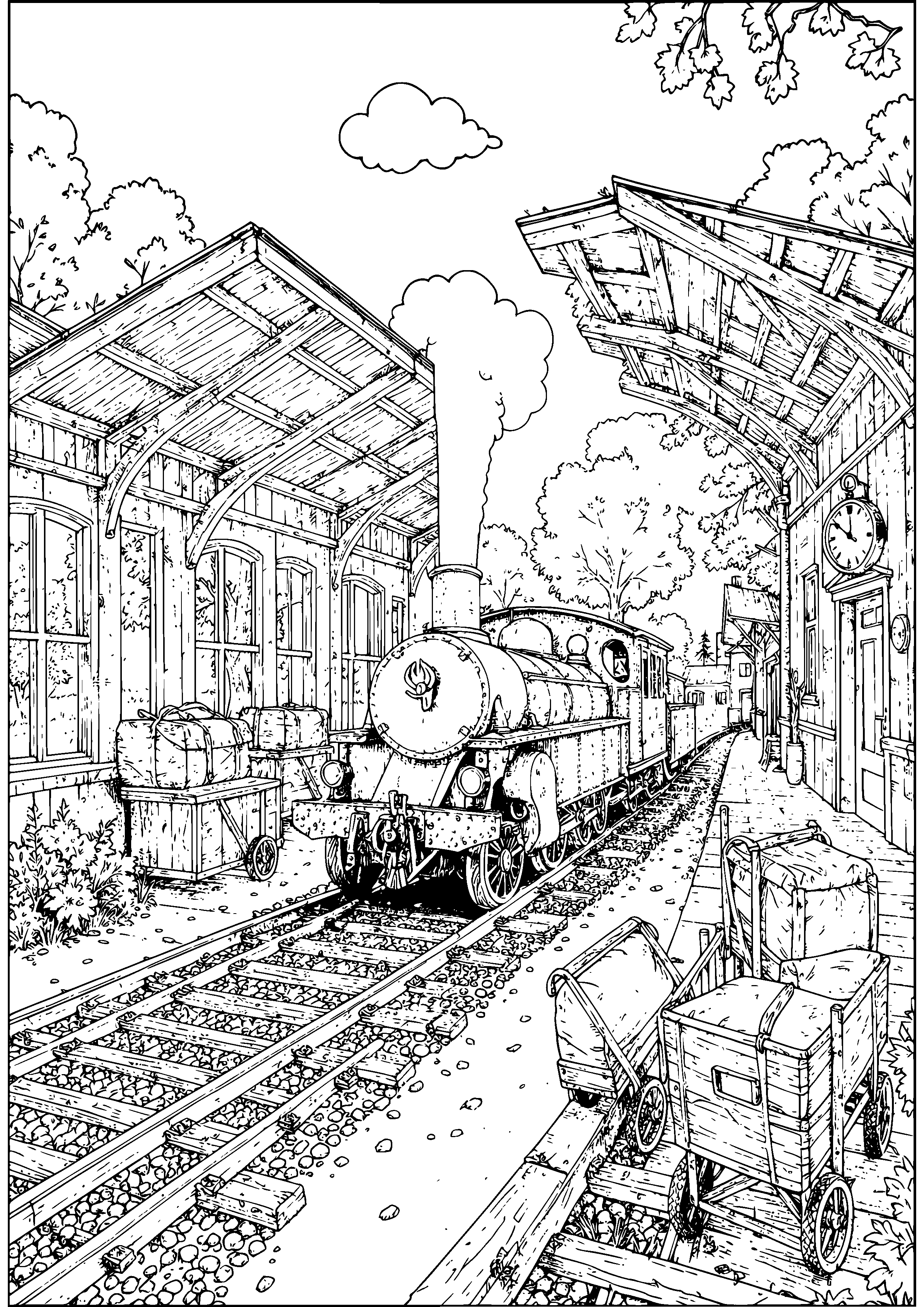
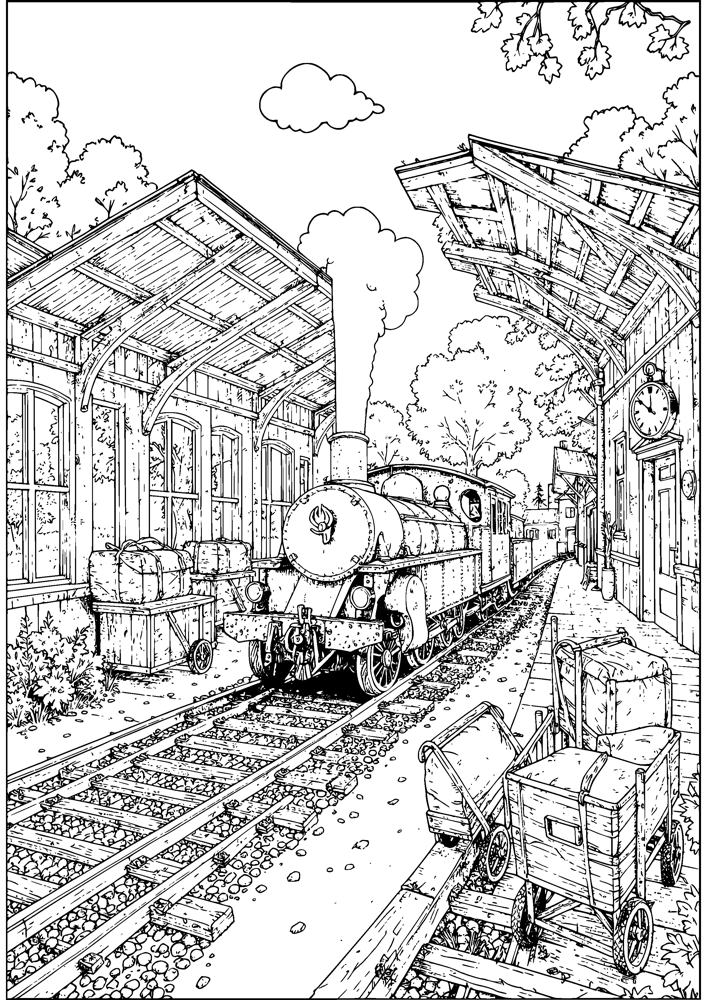
The steam train pulls into the old station.
★★★★★
Free printable · PNG 2480×3508 px (A4, 300 DPI) · PDF in A4 & US Letter · No sign-up
Best for Adults
This detailed coloring page shows an old-fashioned steam locomotive stopped at a rural station platform. The train sits on tracks running between two covered wooden platforms with arched roofs, tall station windows, and overhead wooden framing.
In the foreground and along the platforms, several wooden handcarts are stacked high with luggage and crates. The drawing features fine, intricate lines throughout, with detailed textures on the wooden planks, roof tiles, cobblestones, and the mechanical parts of the steam engine.
Steam locomotives are powered by steam pressure produced by heating water in a boiler, usually with coal or wood. The burning fuel creates hot gases that pass through boiler tubes, boiling the water around them to generate high-pressure steam for the pistons.
Early stations often featured covered wooden canopies to protect waiting passengers from rain and snow. These historic railways relied on hand-pushed luggage carts like the ones shown here to move cargo and trunks before motorized luggage trains became common.
Sharp colored pencils or fine-tipped fineliners work best for this complex scene due to the abundance of small wooden planks, mechanical wheels, and cobblestone details. Consider using warm earth tones like deep browns and grays for the wooden platforms and carts, while giving the steam engine a dark metallic finish.
For a creative approach, try coloring the scene as a warm autumn afternoon with golden sunlight striking the station roof and long shadows stretching across the tracks. You can also experiment with muted pastel shades for the station building while keeping the locomotive in classic black.
Because this page contains a high density of fine lines and intricate cross-hatching, printing it on a heavier cardstock paper will help prevent ink bleeding if you prefer using fine-tip markers or gel pens. Standard printer paper works well for colored pencils, allowing you to easily build up layers of shading and texture.