Flamingo Lagoon
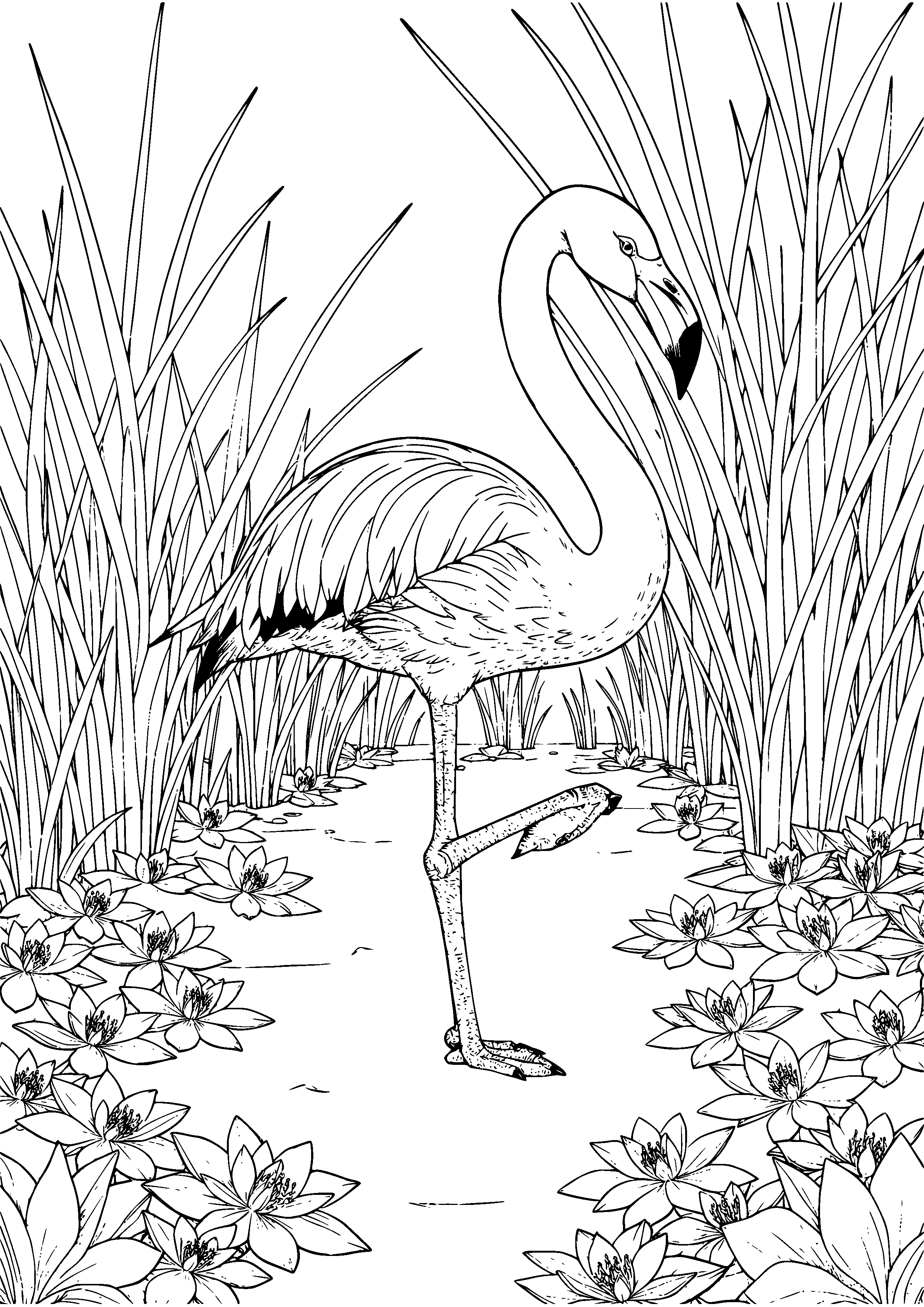
A one-legged flamingo among reeds and water lilies, drawn in fine linework.
★★★★
Free printable · PNG 2480×3508 px (A4, 300 DPI) · PDF in A4 & US Letter · No sign-up
Best for Adults
This intricate coloring page features a single flamingo standing on one leg in the middle of a shallow lagoon. Dense clusters of tall reeds frame the top and sides of the composition, while dozens of water lilies with detailed petals and leaves blanket the foreground and water's edge.
The linework is fine and detailed, with delicate shading lines across the flamingo's feathers, beak, and legs. The background behind the reeds is left completely blank, creating a clean frame that keeps the focus entirely on the bird and its watery habitat.
Flamingos are known for their distinct pink or reddish coloration, which comes from carotenoid pigments found in the algae and crustaceans they eat. Their famous one-legged stance helps them conserve body heat in cool water, as standing on two legs would expose more surface area to the chill.
The curved beak of a flamingo is specially adapted for filter feeding. They turn their heads upside down in the water to scoop up mud and small aquatic animals, using comb-like structures inside the bill to strain out food.
For a realistic look, use shades of soft pink, coral, and deep black for the tips of the flamingo's wings and the end of its bill. The water lilies offer a chance to experiment with crisp whites, pale yellows, and vibrant greens for the lily pads, while the reeds can be filled with earthy tans and browns.
Because of the fine linework and detailed shading patterns on the feathers and petals, sharp colored pencils or fine-tip markers work best here. If you want to try a more stylized approach, consider coloring the flamingo in deep purples and blues against a bright, unexpected color scheme for the surrounding foliage.
A slightly heavier weight paper, around 24 lb or cardstock, is recommended for this page so you can layer colored pencils and blend shades without wearing down the paper. If you prefer using fineliners, heavier paper will also prevent any ink bleed-through into the detailed areas of the water lilies and reeds.