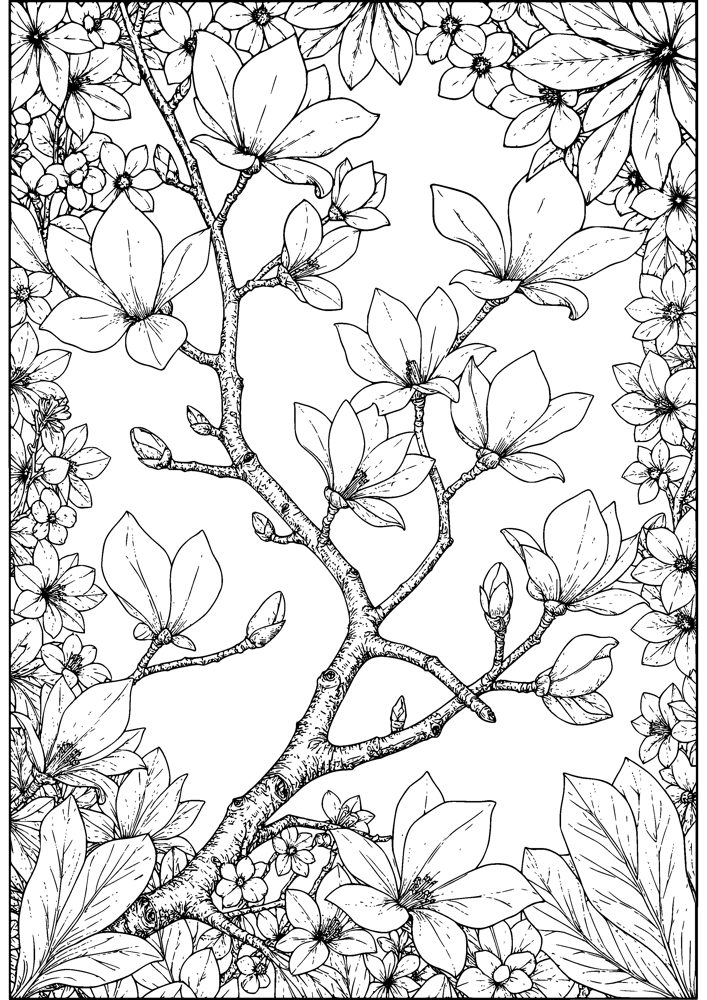
Magnolia Branch
Magnolia blooms from bud to petal-fall.
★★★★
Free printable · PNG 2480×3508 px (A4, 300 DPI) · PDF in A4 & US Letter · No sign-up
Best for Adults
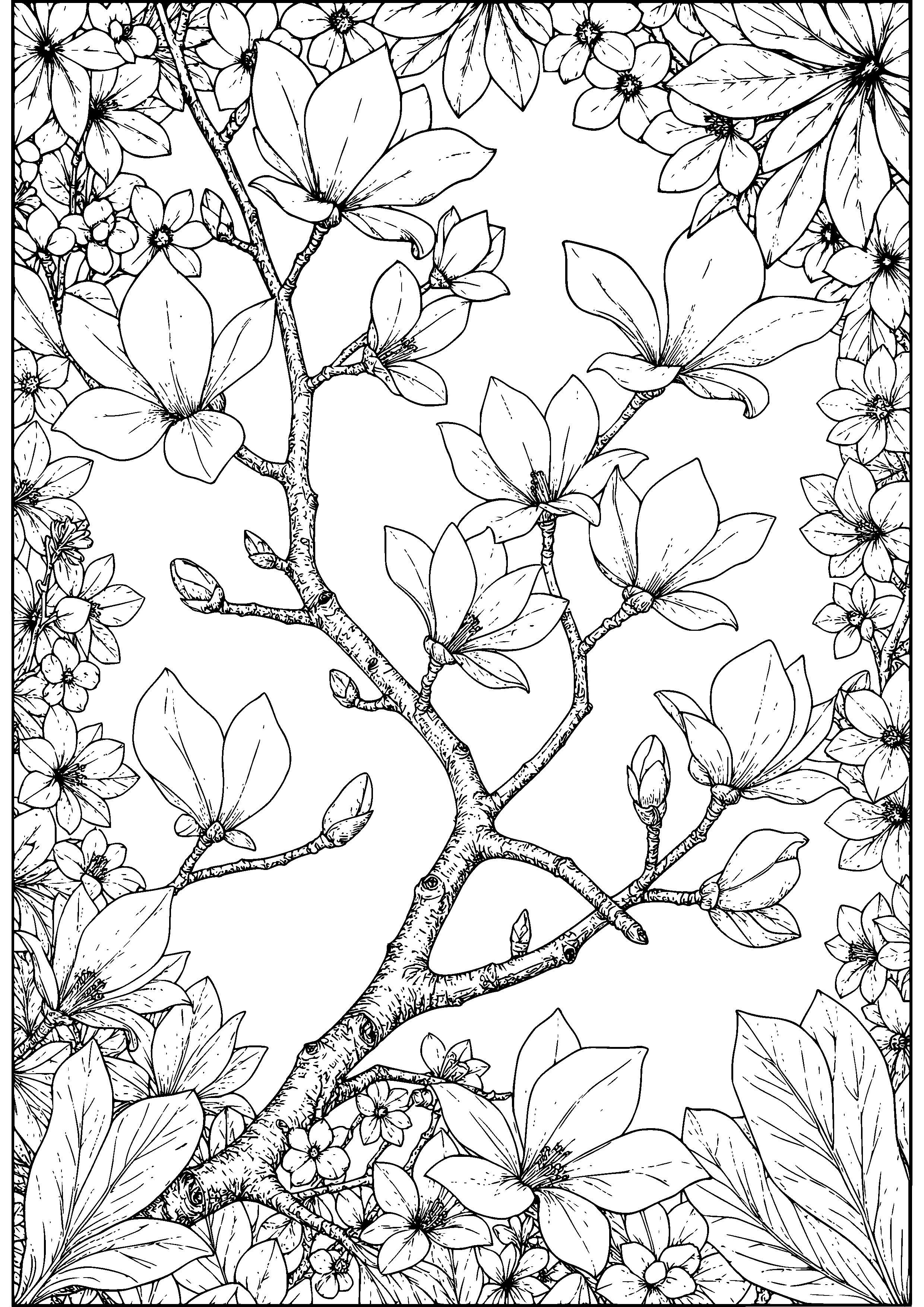
This coloring page features a gnarled magnolia branch stretching diagonally across the composition, laden with blossoms in various stages of bloom from tight buds to fully open flowers. Smaller star-like flowers and textured leaves fill the left and top borders, creating an organic frame around a central expanse of open white space.
The lines are crisp and fine with detailed stippling and hatching on the woody bark, while the petals offer smooth, sweeping contours. There are dozens of distinct petal segments, leaves, and background flowers to color, providing enough intricate detail to keep an experienced colorist engaged for several sessions.
Magnolias are among the most ancient flowering plants in the world, with fossil records dating back over 90 million years. Because bees did not exist when magnolias first evolved, the flowers developed tough, sturdy carpels designed to be pollinated by beetles rather than delicate insects.
Unlike most flowering trees that produce leaves first, many magnolia species burst into bloom before their foliage emerges in early spring. Their large, cup-shaped flowers can range in color from pure white and soft cream to deep pink, purple, and yellow.
Traditional magnolia petals look striking when rendered in soft creams and buttery yellows with subtle gray-green shading at the base. You can use colored pencils to build up gentle gradients on the large petals, keeping the tips bright and shading the underside where petals overlap.
For a more artistic approach, try setting the white blooms against a dramatic midnight blue or slate gray background to make the flowers pop off the page. Use fine-tip pens for the textured bark, layering browns and grays to capture the rough, woody surface of the branch.
Because this page contains detailed hatching on the branches and many small background flowers, it works best with sharp colored pencils or fine-liner pens. Printing on heavy cardstock will prevent any ink bleed-through if you choose to use water-based markers for the larger petal areas.