Sunflower Row
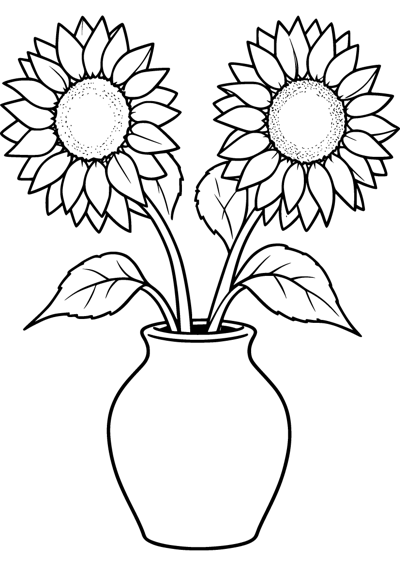
Sunflowers stretch toward the sun.
★★★★
Free printable · PNG 2480×3508 px (A4, 300 DPI) · PDF in A4 & US Letter · No sign-up
Best for Adults
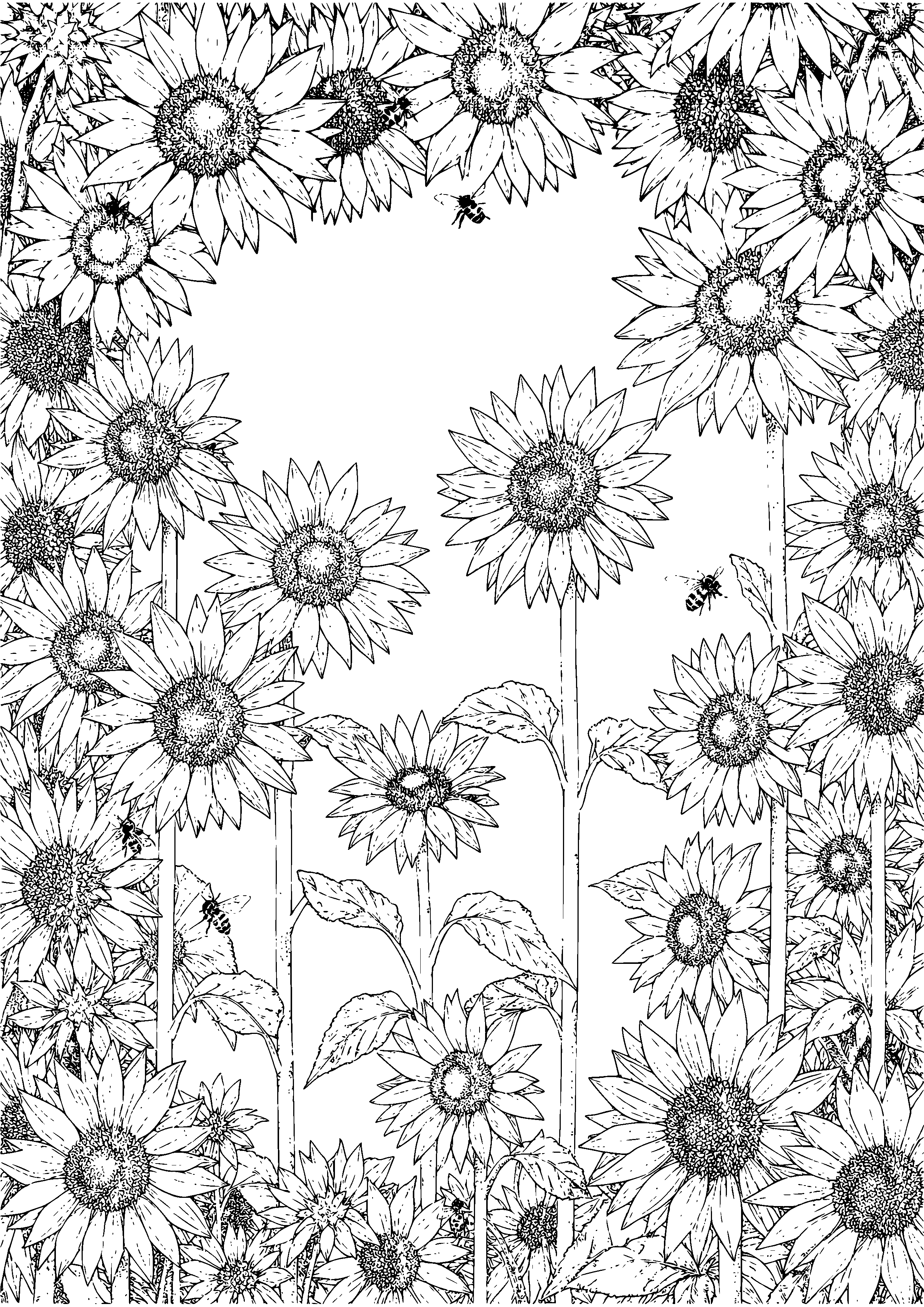
This intricate coloring page features a thick border of detailed sunflowers arranged in a grand arch around a central empty white space. Numerous flower heads of various sizes, complete with patterned centers, textured petals, and long stems, fill the outer edges alongside several small bees buzzing among the blossoms.
The line work is crisp, fine, and highly detailed, with delicate stippling and hatching used to create shadow and depth within the seed centers and leaves. The composition leaves the middle portion completely open, creating a natural frame filled with organic botanical elements and plenty of intricate areas to color.
Sunflowers are native to the Americas and were first cultivated by Indigenous peoples thousands of years ago for food, oil, and dye. The bright yellow petals and dark centers are specially adapted to attract pollinators like bees and butterflies, which are essential for producing sunflower seeds.
Young sunflowers exhibit a behavior called heliotropism, where their flower heads track the movement of the sun across the sky from east to west each day. Once the flower matures into full bloom, the stems stiffen and the heavy heads permanently face eastward to greet the morning light.
To bring this natural scene to life, try using a rich palette of golden yellows, warm oranges, and deep browns for the sunflower petals and textured centers. Layering different shades of green will help give the overlapping leaves and sturdy stalks a realistic, three-dimensional appearance.
If you want to try something outside of traditional realism, you can color the central frame area with soft pastel washes or create a night sky effect behind the sunflowers. Colored pencils and fine-tip markers work best for filling in the intricate petal lines and delicate bee illustrations.
Because this page contains many fine lines, delicate shading dots, and small details, printing on a heavier cardstock rather than standard copy paper is recommended. Heavy paper prevents bleeding if you use fine-tip markers and provides a sturdy surface for blending colored pencils.