Birdbath Afternoon
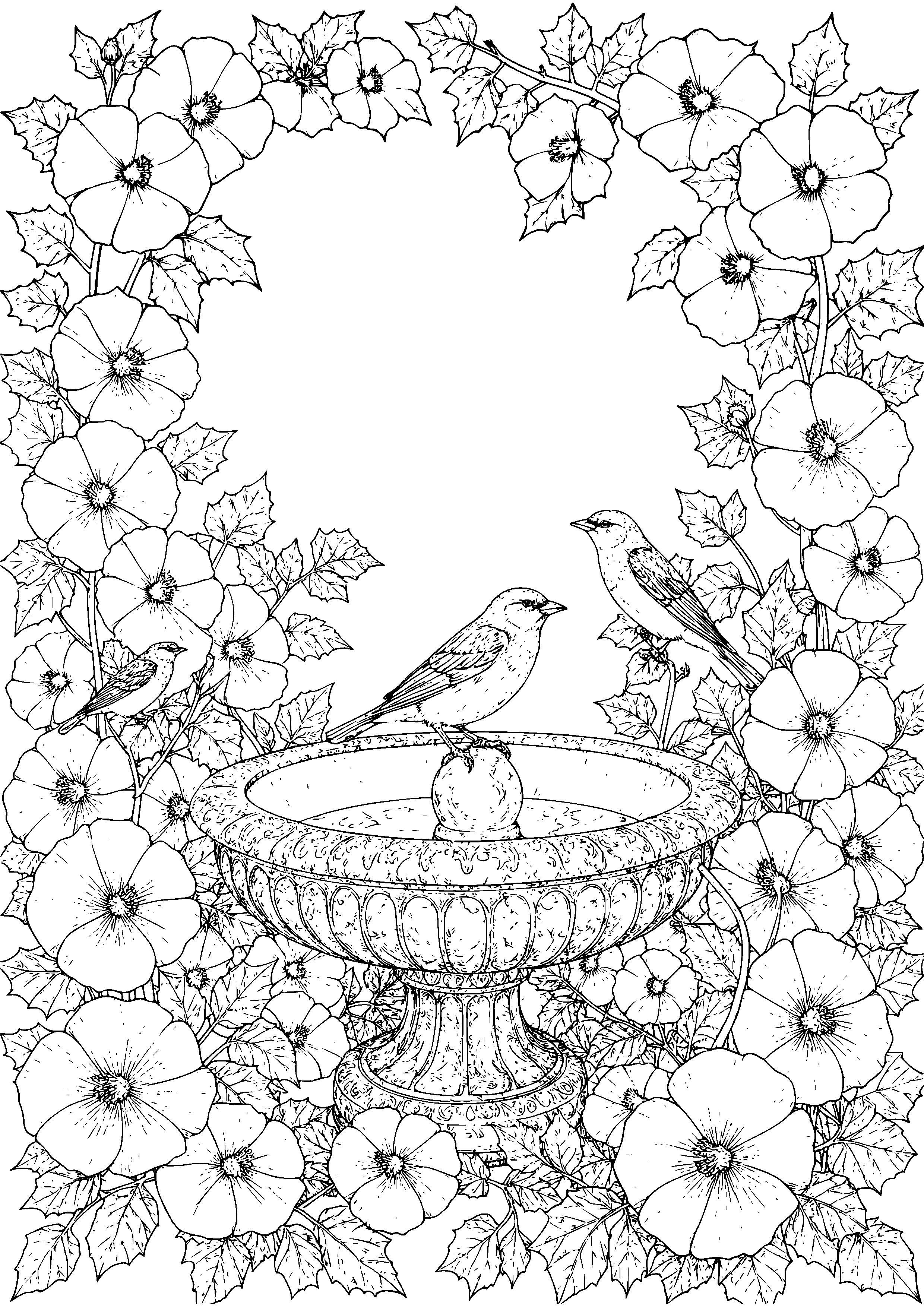
Finches gather at the stone birdbath.
★★★★
Free printable · PNG 2480×3508 px (A4, 300 DPI) · PDF in A4 & US Letter · No sign-up
Best for Adults
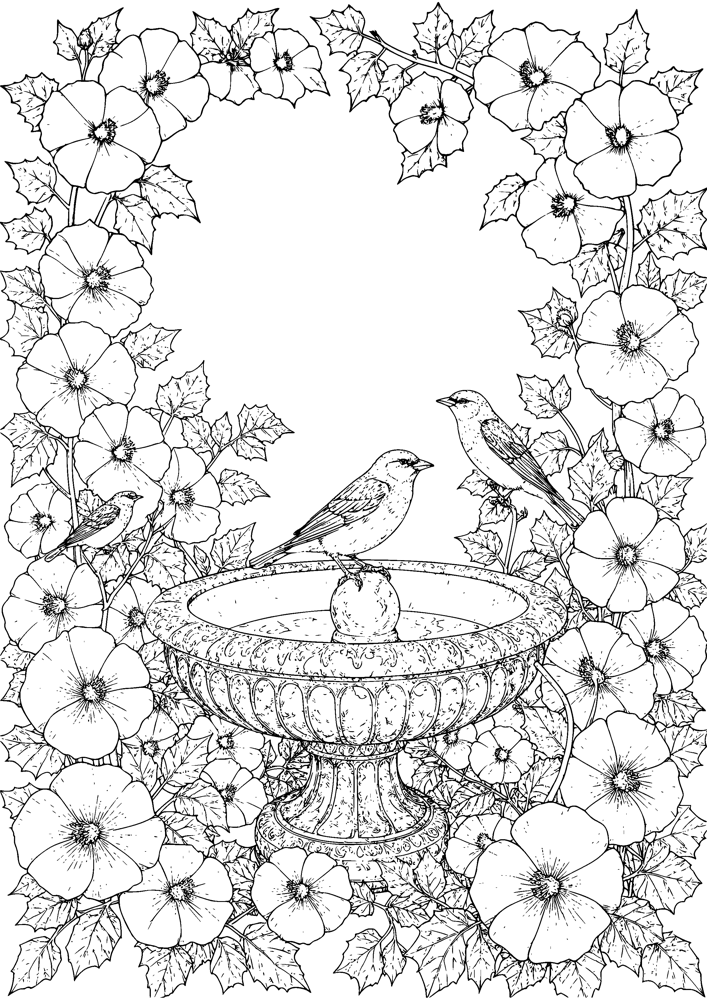
This page features a central, ornate stone birdbath surrounded by a lush border of hibiscus-like flowers and jagged leaves. Three small finches are positioned around the scene: one perches on the center of the birdbath, another sits on a branch to the right, and a third is nestled among the flowers on the left. The composition forms a natural frame, leaving a clear white space in the upper middle area.
The drawing is highly detailed with fine, thin lines suitable for intricate work. There are dozens of individual petals and leaves to color, providing many small areas for shading and color transitions. The stone texture of the birdbath is indicated with subtle stippling and curved lines that suggest a weathered surface.
Finches are small, energetic birds known for their stout beaks designed for cracking seeds. They are social creatures that often visit gardens in small flocks to find food and water. Providing a clean birdbath helps these birds maintain their feathers and stay hydrated during warm weather.
Birdbaths should ideally have a shallow area so birds can stand comfortably while they splash. The water helps remove dust and parasites from their plumage, which is essential for healthy flight. Watching birds interact at a water source is a common way to observe local wildlife behavior in a backyard setting.
For a realistic look, consider coloring the flowers in vibrant shades of coral, yellow, or deep red with darker centers. The finches can be rendered in soft browns and yellows or even bright gold if you imagine them as American Goldfinches. Use a range of cool grays and warm tans for the stone birdbath to give it a natural appearance.
Since this page is designed for pencils or fineliners, you can experiment with layering colors on the petals to create depth. Try using a light blue or pale lavender for the shadows in the white space or between the leaves to make the foreground elements pop. For a more creative approach, use a metallic pen for the water inside the basin to simulate a reflection.
This illustration contains very fine details and delicate line work that requires precision. It is best to print this on a heavier cardstock or high-quality drawing paper if you plan to use colored pencils for blending or fineliners that might otherwise bleed through. A smooth surface will help you achieve the subtle shading intended for this adult-level coloring project.