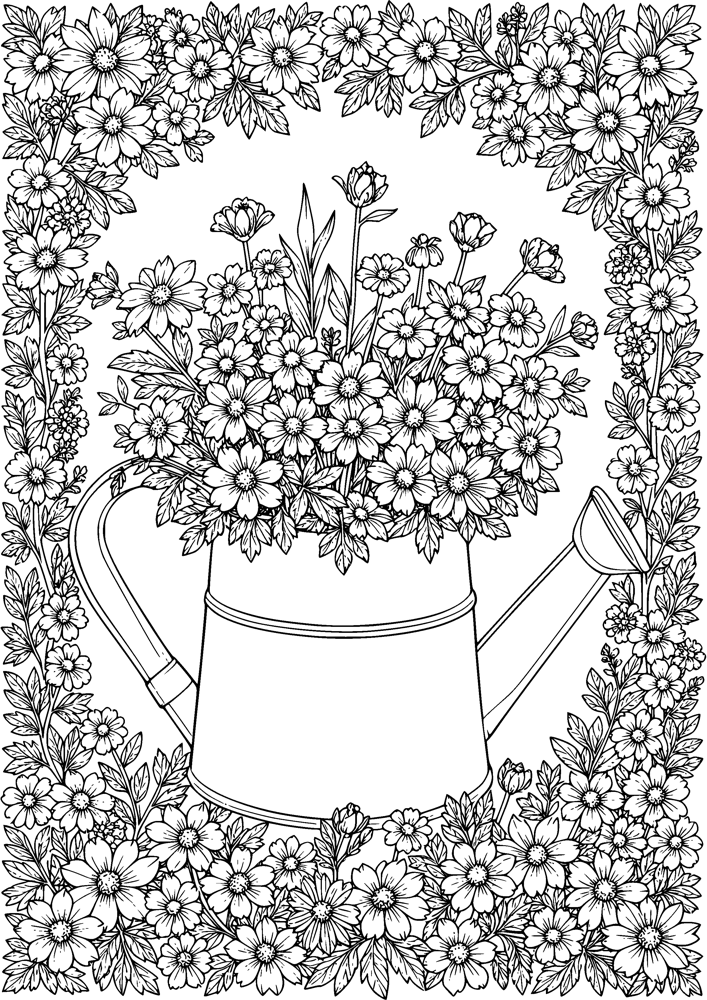
Watering Can Bouquet
A watering can turned flower vase.
★★★
Free printable · PNG 2480×3508 px (A4, 300 DPI) · PDF in A4 & US Letter · No sign-up
Best for Adults
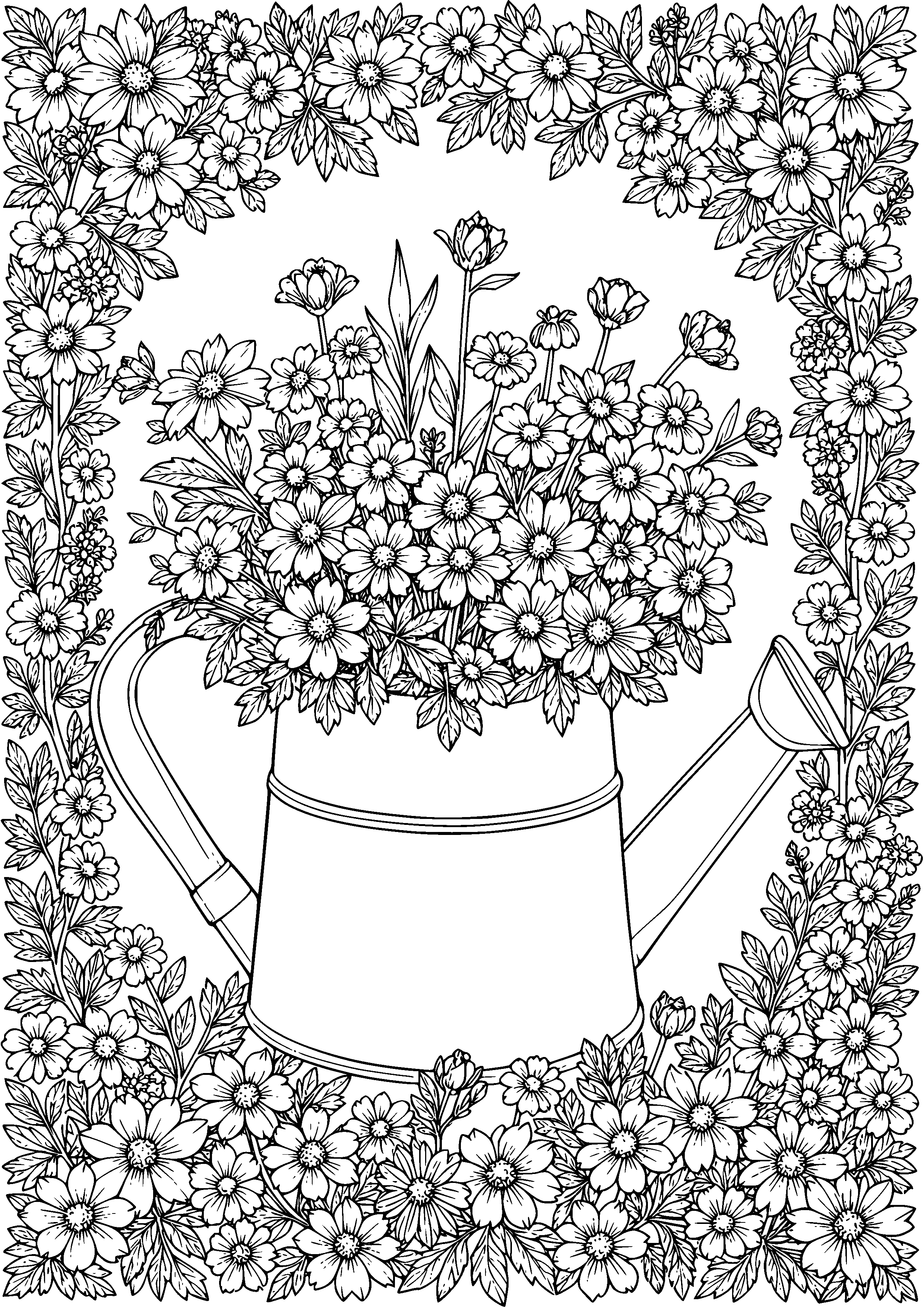
This coloring page features a metal watering can filled with a large, dense bouquet of daisies and other small wildflowers. The central arrangement is surrounded by a continuous rectangular border of blossoms, leaves, and stems that frames the entire composition. There are dozens of individual flower heads and petals waiting for color, creating a rich and detailed canvas.
The black-and-white line art is crisp with clean, medium-weight outlines that define each leaf and petal clearly. The background behind the framed watering can is left completely white, which keeps the focus entirely on the floral elements and allows for easy printing and coloring.
Galvanized watering cans are traditionally made of steel coated with a layer of zinc to prevent rusting from constant exposure to water. This practical gardening tool has long been a favorite decorative motif in rustic and cottage-style decor, often repurposed as a vase for freshly cut flowers.
Using metal containers for cut flowers was a common practice in old-fashioned gardens before modern glass vases became widespread. The sturdy metal construction provides a stable base that easily holds heavy bunches of stems without tipping over.
You can bring the bouquet to life by using soft pastel shades for the daisy petals, such as pale yellows, pinks, or classic crisp whites with bright yellow centers. The watering can offers a chance to experiment with metallic gray tones or a brightly painted enamel finish in vintage blue, red, or mint green.
For a more artistic approach, try using colored pencils to blend subtle shading on the flower petals and leaves to give the bouquet depth. If you want to depart from realism, color the flowers in vibrant neon hues or create a rainbow-striped watering can.
Because this page contains intricate details and many small flower centers, it works best with finely sharpened colored pencils or fine-liner pens. Printing on a heavier cardstock paper is recommended if you plan to use water-based markers or light washes of watercolor, as thicker paper prevents bleed-through and holds layered shading better.