Victorian Conservatory
Inside the glass palace of plants.
★★★★★
Free printable · PNG 2480×3508 px (A4, 300 DPI) · PDF in A4 & US Letter · No sign-up
Best for Adults
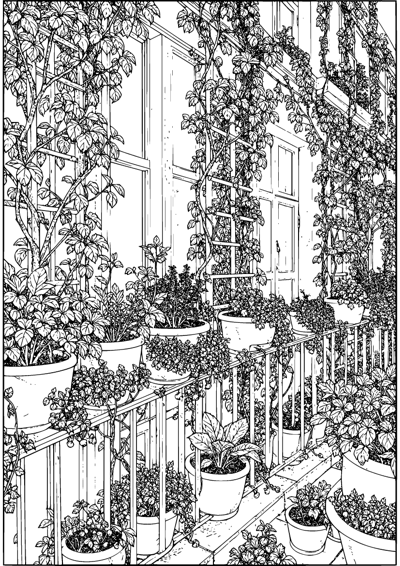
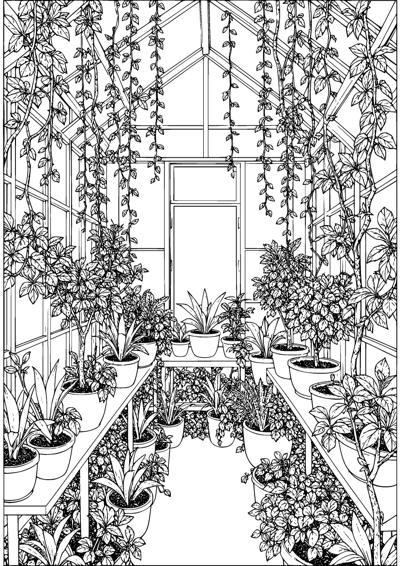
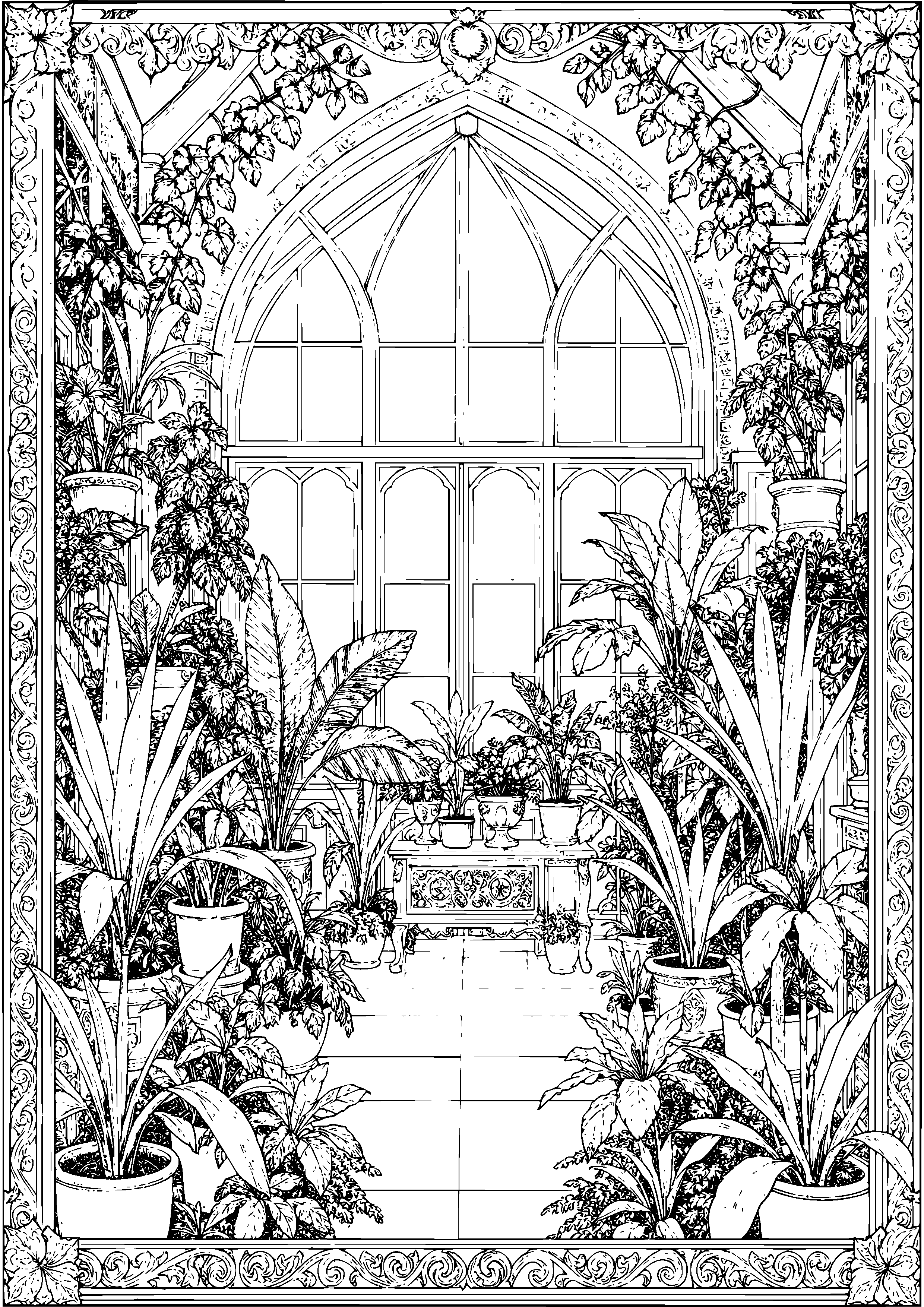
This intricate coloring page depicts a grand Victorian conservatory filled with a dense variety of potted plants and climbing vines. An elaborate arched window dominates the back wall, framing the lush botanical scene inside a heavily decorated botanical frame.
The foreground is crowded with large leafy plants in various pots, and the delicate black ink lines range from fine details on the leaves to bold strokes on the framing elements. There are dozens of distinct leaves, planters, and architectural details to fill in, providing a complex arrangement of botanical and decorative spaces.
Victorian conservatories became popular in the nineteenth century as advancements in glass manufacturing allowed for large iron-and-glass structures. Wealthy estate owners used these sunlit rooms to cultivate exotic plants, ferns, and orchids brought back from global expeditions.
These structures were designed as both functional greenhouses and elegant social spaces for entertaining guests among tropical greenery. The arched windows and ornate ceiling carvings seen in this drawing reflect the Gothic Revival and Victorian decorative arts of that era.
Layering various shades of green, olive, and chartreuse will give depth to the dense foliage of ferns, palms, and trailing vines. You might want to start with the background vines and work your way forward to the large potted plants in the foreground.
For a different approach, consider a botanical illustration style by using sepia tones or colored pencils in muted earth colors. Alternatively, a jewel-toned palette for the plants can create a moody, atmospheric greenhouse effect.
Because this page contains many fine lines and detailed leaf textures, printing on heavy cardstock will prevent bleeding if you prefer fineliners or brush markers. If you use colored pencils, the textured paper will help build up rich layers of shading without wearing down the point too quickly.