Fern Study
A study of layered fern fronds.
★★★
Free printable · PNG 2480×3508 px (A4, 300 DPI) · PDF in A4 & US Letter · No sign-up
Best for Adults
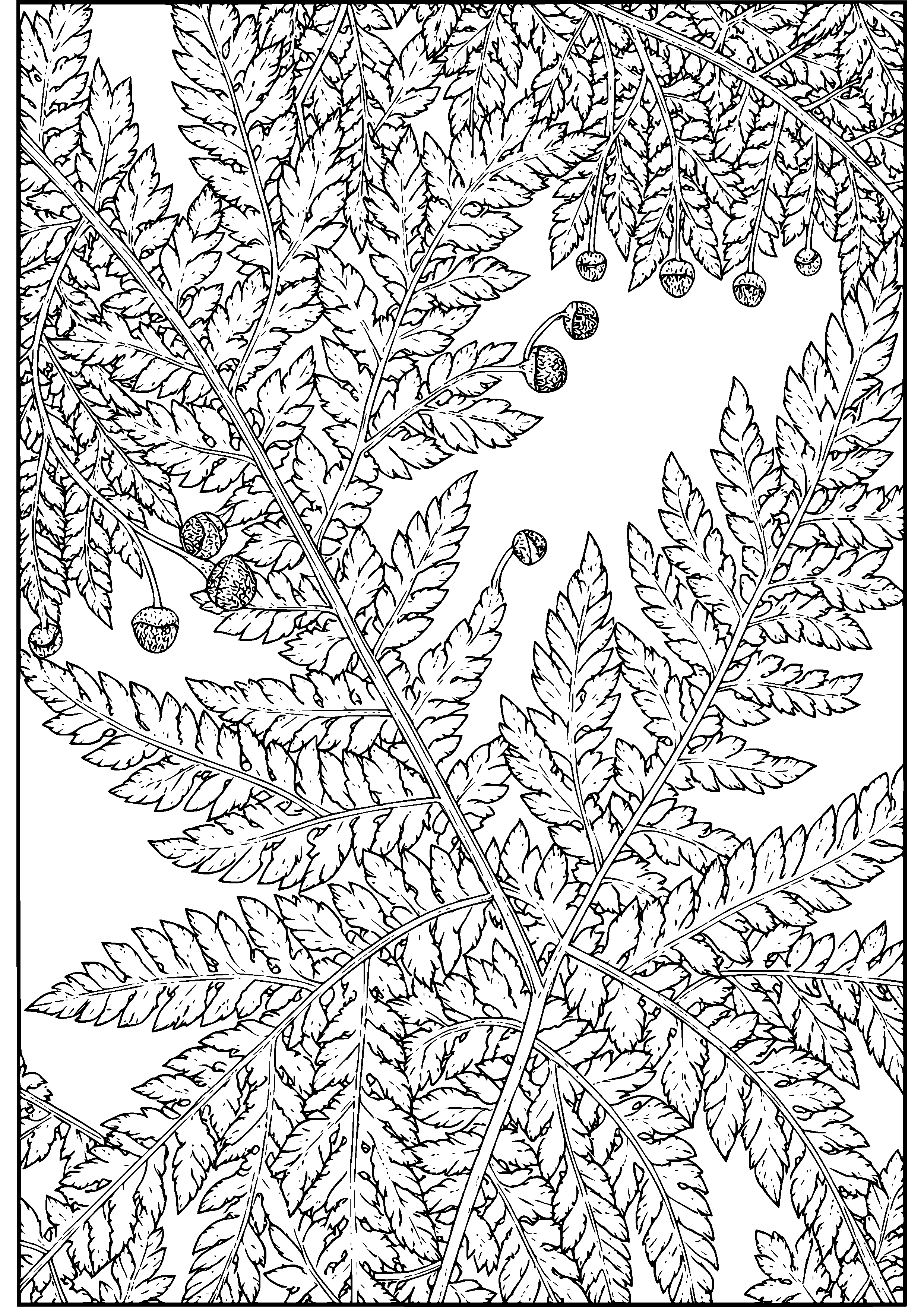
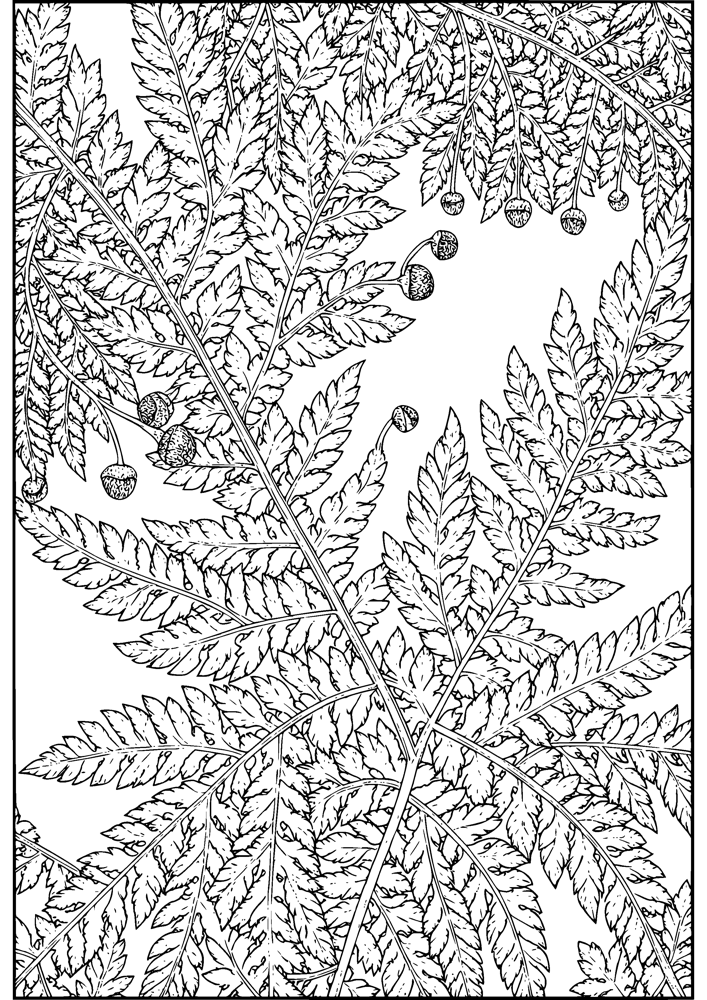
This coloring page presents a detailed botanical study of layered fern fronds filling the entire vertical frame. Multiple fronds overlap diagonally, creating a dense pattern of delicate leaflets and stems that weave across the page.
Small round spore cases hang beneath several stems, adding texture and interest to the composition. The outlines are drawn in clear, distinct black lines with generous open white space remaining in the center and upper right, offering a clean framing for the botanical elements.
Ferns are ancient plants that reproduce through spores rather than seeds or flowers. These spores typically develop in tiny clusters on the underside of the fronds, often appearing as small round dots or pouches similar to the ones illustrated in this drawing.
Unlike flowering plants, ferns have leaves known as fronds that usually unfurl in a unique way called circinate vernation. Each frond grows from an underground stem called a rhizome, allowing the plant to spread across shaded woodland floors.
Natural shades of green work wonderfully here, from pale chartreuse for the newer inner fronds to deep forest green for the layered overlapping leaves. Using sharp colored pencils allows you to define the edges of the tiny leaflets and add subtle shadows where the fronds cross one another.
For a different approach, try an autumn palette of golden yellows, rust oranges, and deep browns to capture a fern as it turns in the cooler months. You can also leave the background completely white to make the intricate frond structure stand out clearly.
Because this page features fine linework and closely spaced leaflets, printing on heavy cardstock will prevent buckling if you decide to use water-based markers or fine-tip pens. A smooth paper surface is particularly helpful for maintaining clean lines when coloring the intricate spore cases and detailed leaf edges.