Old Oak Swing
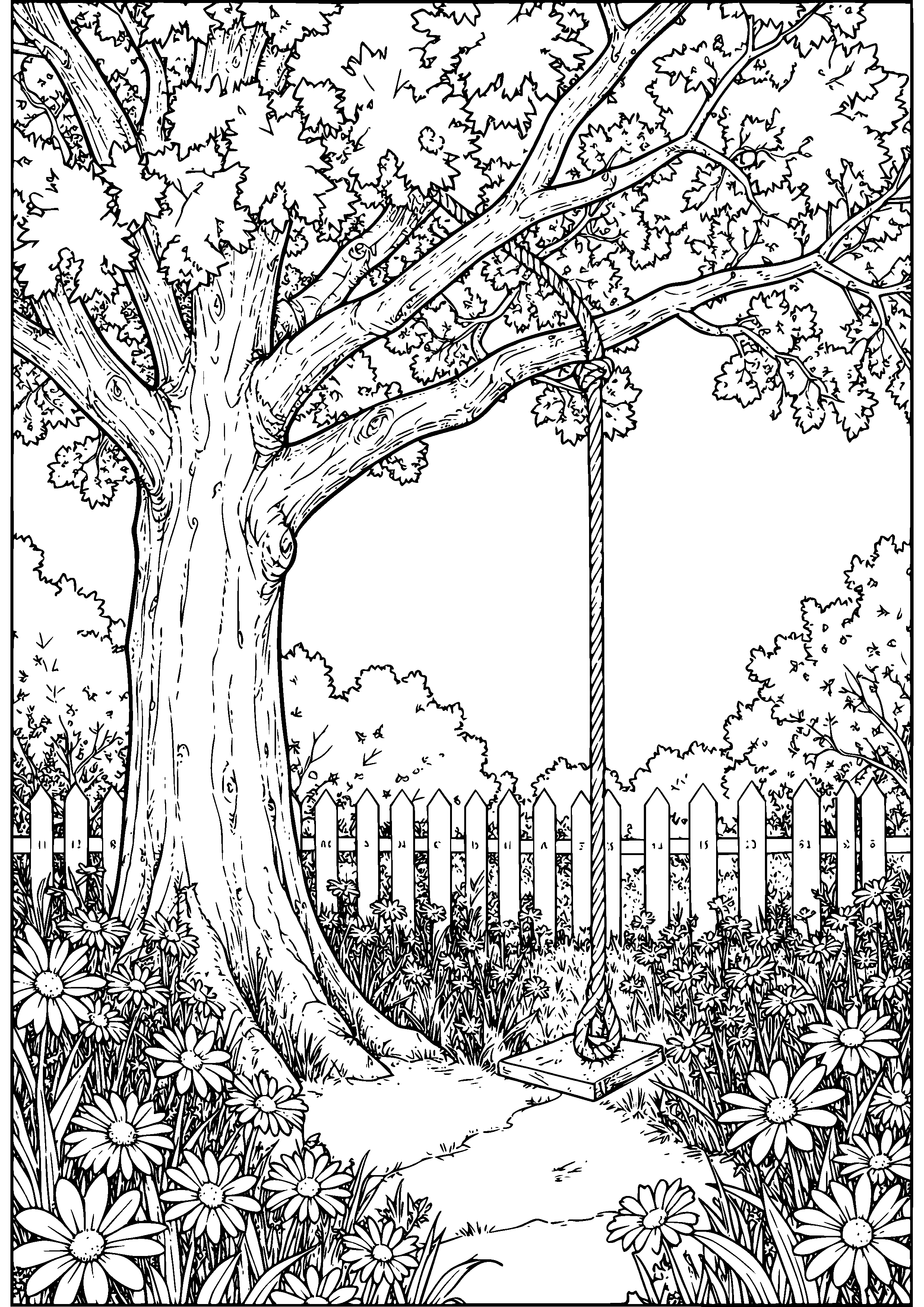
A rope swing waits under the oak.
★★★
Free printable · PNG 2480×3508 px (A4, 300 DPI) · PDF in A4 & US Letter · No sign-up
Best for Adults
This intricate coloring page features a large, gnarled old oak tree standing prominently on the left side of the frame. A simple wooden rope swing hangs from one of its major branches, hovering above a clear path that winds through a dense patch of daisies and wild grass.
In the background, a rustic wooden picket fence stretches across the middle distance, backed by smaller leafy bushes and open white space at the top. The lines are detailed and fine throughout, with plenty of small petals, leaves, and bark textures to fill for someone looking for a patient, relaxing coloring session.
Mature oak trees often live for centuries and can grow massive trunks with deeply ridged bark and sprawling canopy branches. They support a huge variety of wildlife, providing acorns for small mammals and shelter for many species of birds and insects.
Rope swings tied to sturdy oak limbs are a classic fixture of rural landscapes and childhood nostalgia. The thick, strong branches of a healthy oak make it one of the few tree types capable of supporting the weight of a swing safely for many years.
For a classic look, use shades of warm gray, brown, and tan for the rough tree bark and weathered wooden swing seat. The daisies in the foreground invite bright whites and yellows, while the grassy meadow can be shaded in multiple tones of olive and spring green.
If you want to try something different, set the scene at twilight by coloring the sky area in deep indigos and purples while giving the tree and grass a moonlit blue-green cast. Sharp-tipped colored pencils or fine-tip markers work well for navigating the dense field of flowers at the base of the tree.
Because this page contains a high level of fine detail in the flowers and bark textures, print it on heavier cardstock if you plan to use water-based markers or fine-liners. Standard printer paper works fine for colored pencils, but thicker paper will prevent any bleed-through and give you a sturdier page to work on.