Fat Goldfish
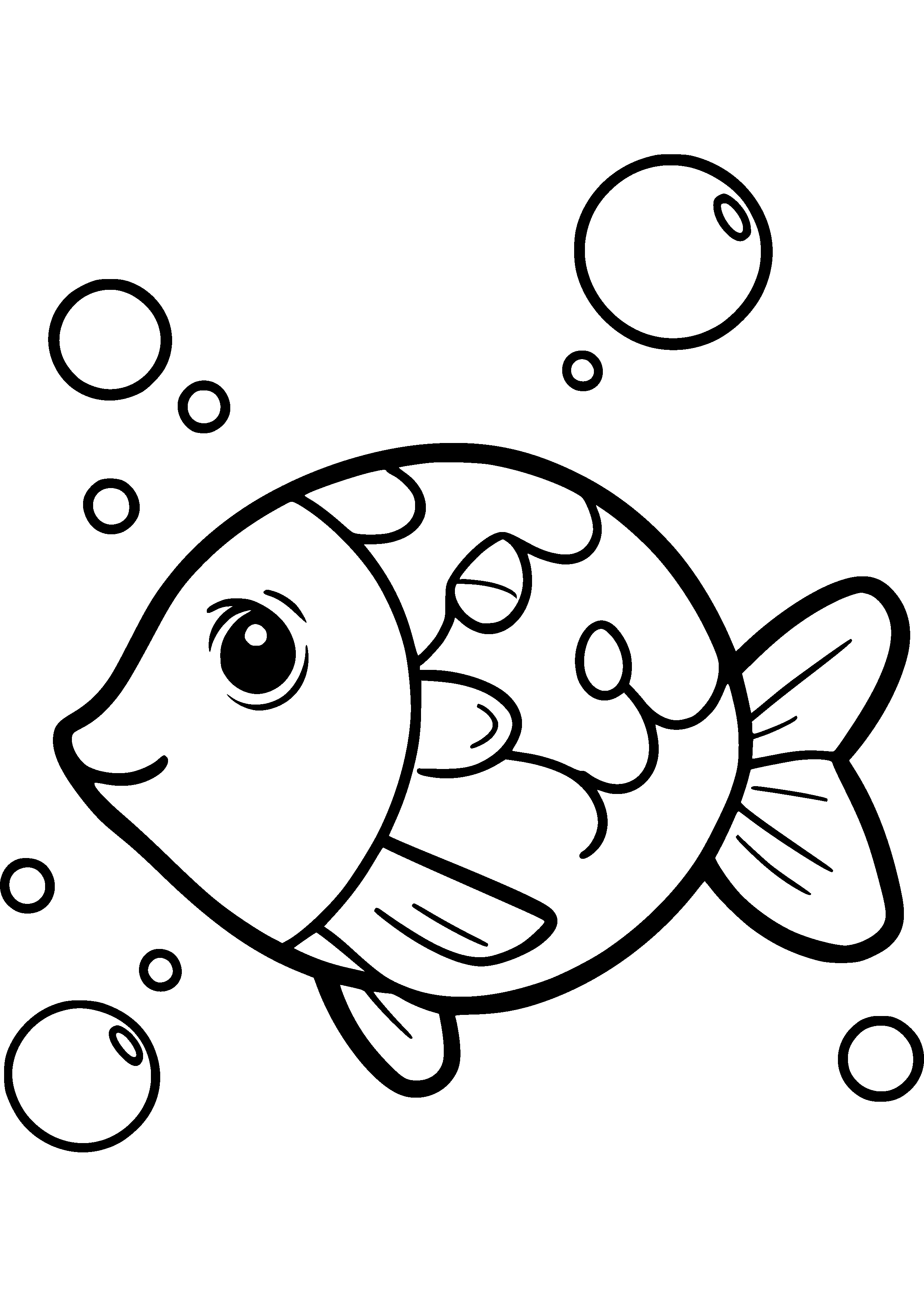
A round goldfish blows big bubbles.
★
Free printable · PNG 2480×3508 px (A4, 300 DPI) · PDF in A4 & US Letter · No sign-up
Best for Toddlers
This coloring page shows a round, plump fish swimming surrounded by nine floating bubbles of different sizes. The fish has large, clear outlines, a happy curved smile, and a prominent eye near the front of its body. Its scales are marked with big, simple patch shapes across its back.
The background is completely blank white, giving lots of open space for little hands. The lines are bold and thick throughout the drawing, making it easy to see where shapes start and stop. There are about fifteen main sections to color, including the fish's body, fins, and the surrounding bubbles.
Goldfish are a type of freshwater fish that belong to the carp family. They were first bred in China over a thousand years ago from wild carp that showed natural red and orange colors. Real goldfish come in many different body shapes, from long and slender to very short and round like the one in this drawing.
Goldfish do not have eyelids, so they always sleep with their eyes wide open. They also have a very good sense of hearing, even though they do not have external ears on the sides of their heads. Their skin can change color depending on how much light they get in their tank or pond.
Goldfish are traditionally bright orange, red, or yellow, often with patches of white or black on their scales. A toddler holding a fat wax crayon can start by coloring the big body patches in warm orange and red tones. The bubbles can be left white to look like shiny air pockets, or lightly touched with pale blue.
For a playful twist, young colorists can make the fish purple, green, or rainbow-colored with as many shades as they like. Since the outlines are thick and forgiving, it does not matter if the crayon marks go slightly over the lines. Starting with the large body section helps build confidence before tackling the smaller fins and bubbles.
Because the coloring areas are large and simple, standard printer paper works well for chunky wax crayons. If your child prefers using washable markers or paint sticks, print the page on heavier cardstock paper to prevent the ink from bleeding through.