Seashell Collection
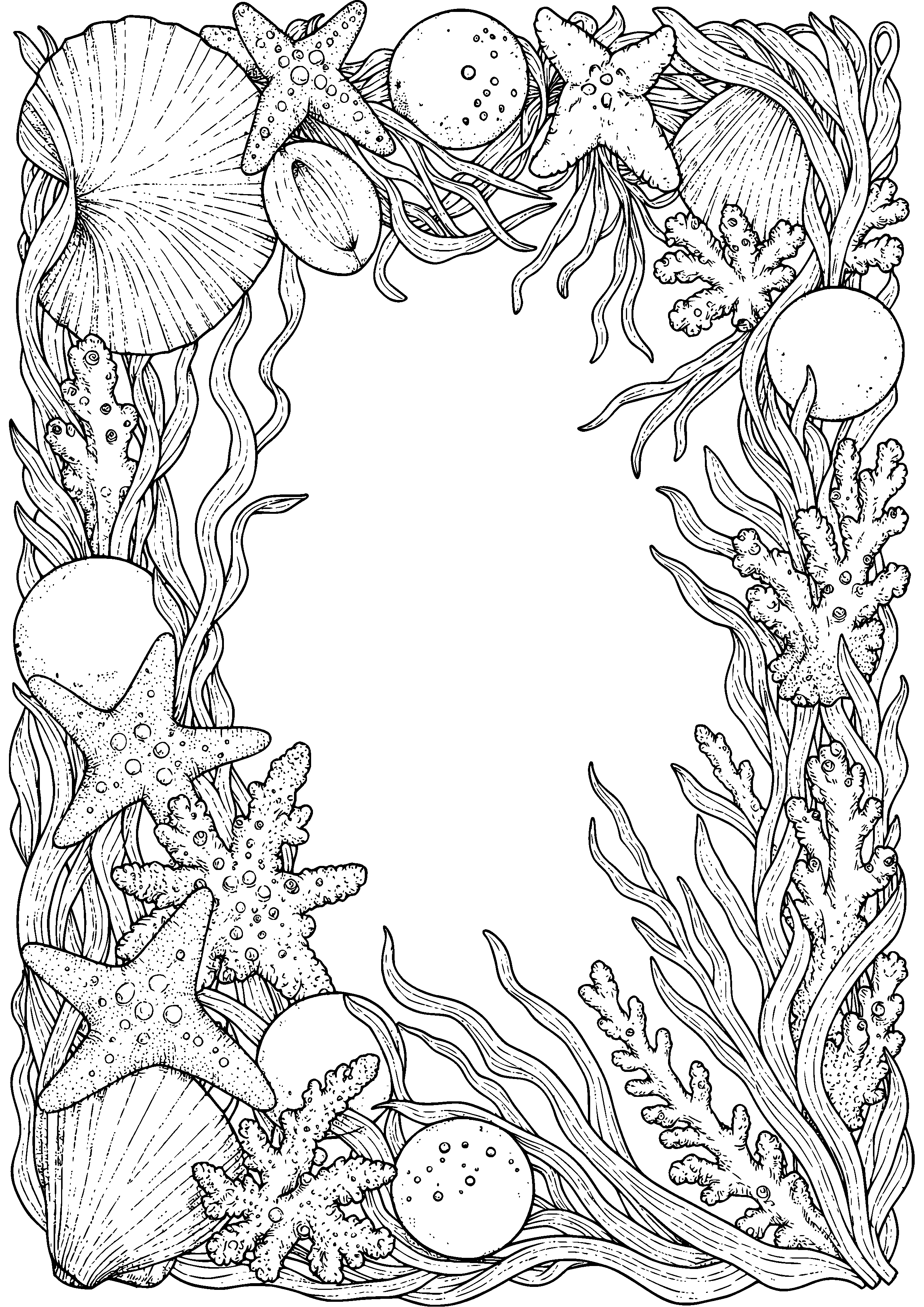
Conches, scallops, starfish and sand dollars arranged in fine detailed linework.
★★★★
Free printable · PNG 2480×3508 px (A4, 300 DPI) · PDF in A4 & US Letter · No sign-up
Best for Adults
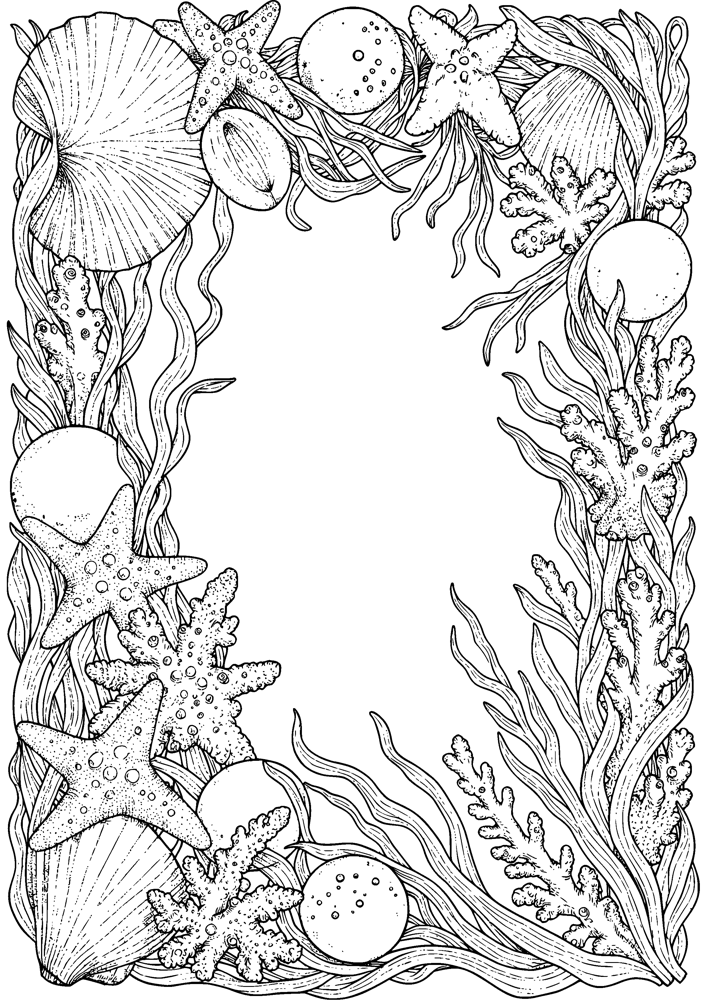
This coloring page features an intricate rectangular frame made of various ocean elements. Large fan-shaped scallops anchor the top left and bottom left corners, while detailed starfish, round sand dollars, delicate branching corals, and rolling waves of seaweed fill the sides and bottom.
The center of the page remains entirely blank and open, providing ample white space for a message, a drawing, or a favorite quote. The linework consists of fine, detailed stippling and hatching throughout the shells and starfish, offering plenty of small, intricate areas to shade and blend.
Seashells are the hard, protective exoskeletons left behind by marine animals like mollusks after they pass away. As waves wash ashore, they deposit these shells along sandy beaches, often mixing them with dried seaweed and fragments of coral.
Starfish, also known as sea stars, use hundreds of tiny tube feet on their undersides to move slowly across the ocean floor and grip onto rocks. Sand dollars are actually a flat, burrowing type of sea urchin that live in shallow coastal waters just beneath the surface of the sand.
To bring this scene to life, try using soft cream and beige tones for the scallops and sand dollars, with warm terracotta and burnt orange for the starfish. The seaweed can be layered with olive green, moss, and deep teal to create a rich underwater feel.
If you want to depart from realistic colors, you could turn this into a fantasy coral reef by using pastel pinks, lavenders, and bright mint greens for the shells and background vegetation.
Because this design features dense hatching and many small details, it works best with sharp colored pencils or fine tip fineliners rather than broad markers. Printing on a heavier cardstock will prevent the page from buckling if you use light watercolor washes for the background.