Whale and Calf
A whale guides her calf through the deep.
★★★★★
Free printable · PNG 2480×3508 px (A4, 300 DPI) · PDF in A4 & US Letter · No sign-up
Best for Adults
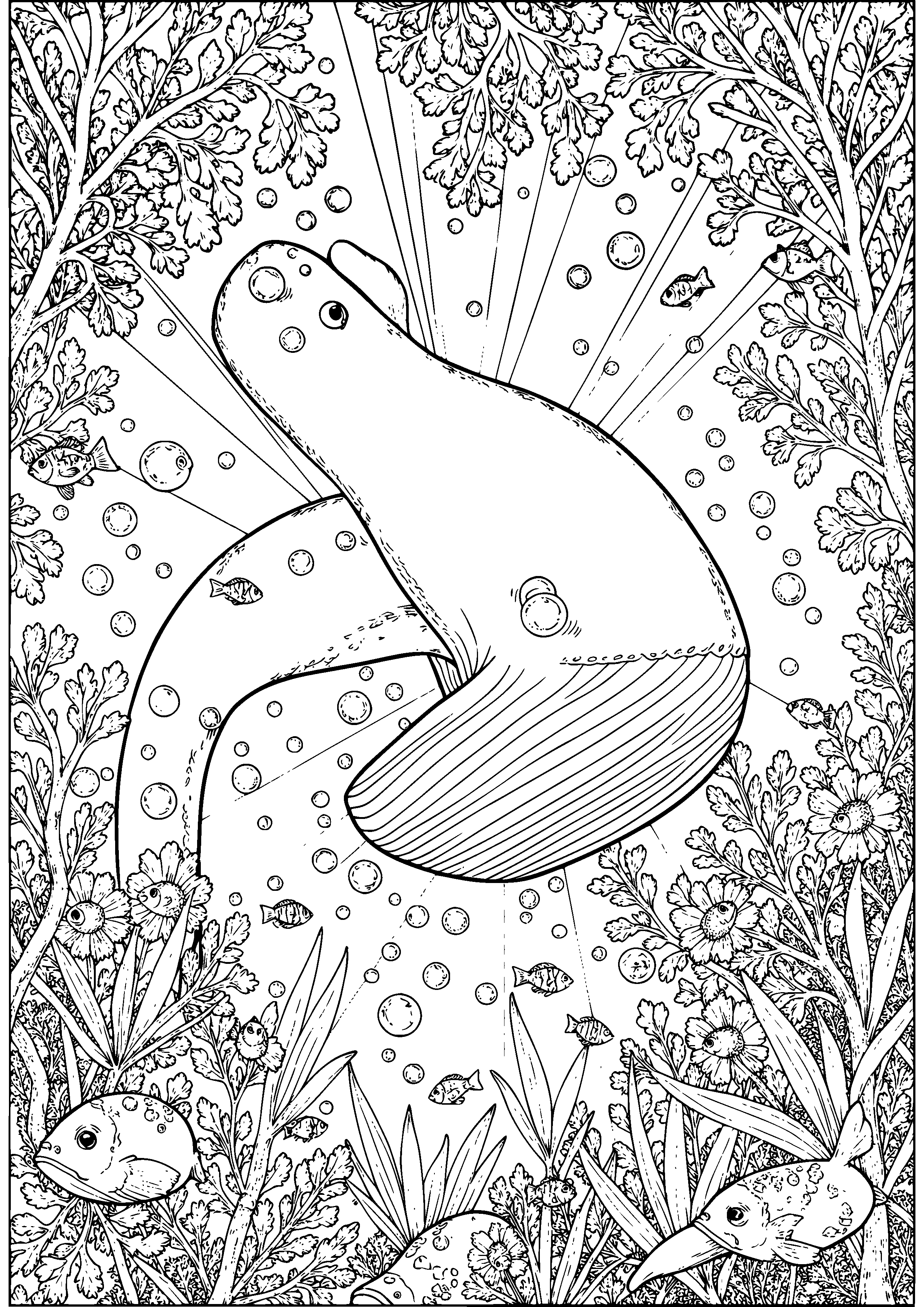
This intricate adult coloring page features a large adult whale curving through the center of the frame, accompanied by a smaller calf curled within its body. The composition is packed with underwater details, including dense sea plants framing the left and right sides, scattered bubbles rising toward the surface, and several small fish swimming through the open water.
The background is filled with detailed foliage, floral seaweed patterns, and delicate rays of light stretching from the top corners. The lines are fine and intricate, creating numerous small sections that require patience and steady handwork with colored pencils or fineliners.
Whales are marine mammals that spend their entire lives in water, yet they must surface to breathe air through their blowholes. They communicate across vast ocean distances using complex songs and low-frequency sounds that can travel for miles underwater.
Mother whales share a remarkably close bond with their calves, nursing them on rich, fatty milk to help them grow quickly. These massive creatures play an essential role in marine ecosystems by helping to support microscopic ocean life through the nutrients they bring to the surface.
For a realistic look, you can color the whales in shades of deep blue, slate gray, or black, with lighter bellies and textured markings. The surrounding seaweed and flowers offer a chance to use bright greens, purples, and yellows to make the underwater garden pop against the background.
If you want to try something different, use a palette of warm sunset colors—such as oranges, corals, and golds—for the light rays and water to give the scene a magical, glowing atmosphere. Begin by coloring the smaller background fish and bubbles before moving on to the large whale bodies.
Because this page contains many tiny, detailed sections and delicate background patterns, printing on heavier cardstock is recommended if you plan to use fineliners or wet mediums. Standard printer paper works well enough for sharp colored pencils, but thicker paper will prevent ink from bleeding through and lets you layer your colors with more pressure.