Smiling Sun
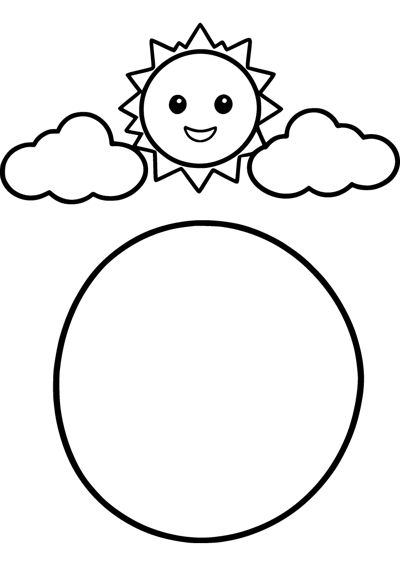
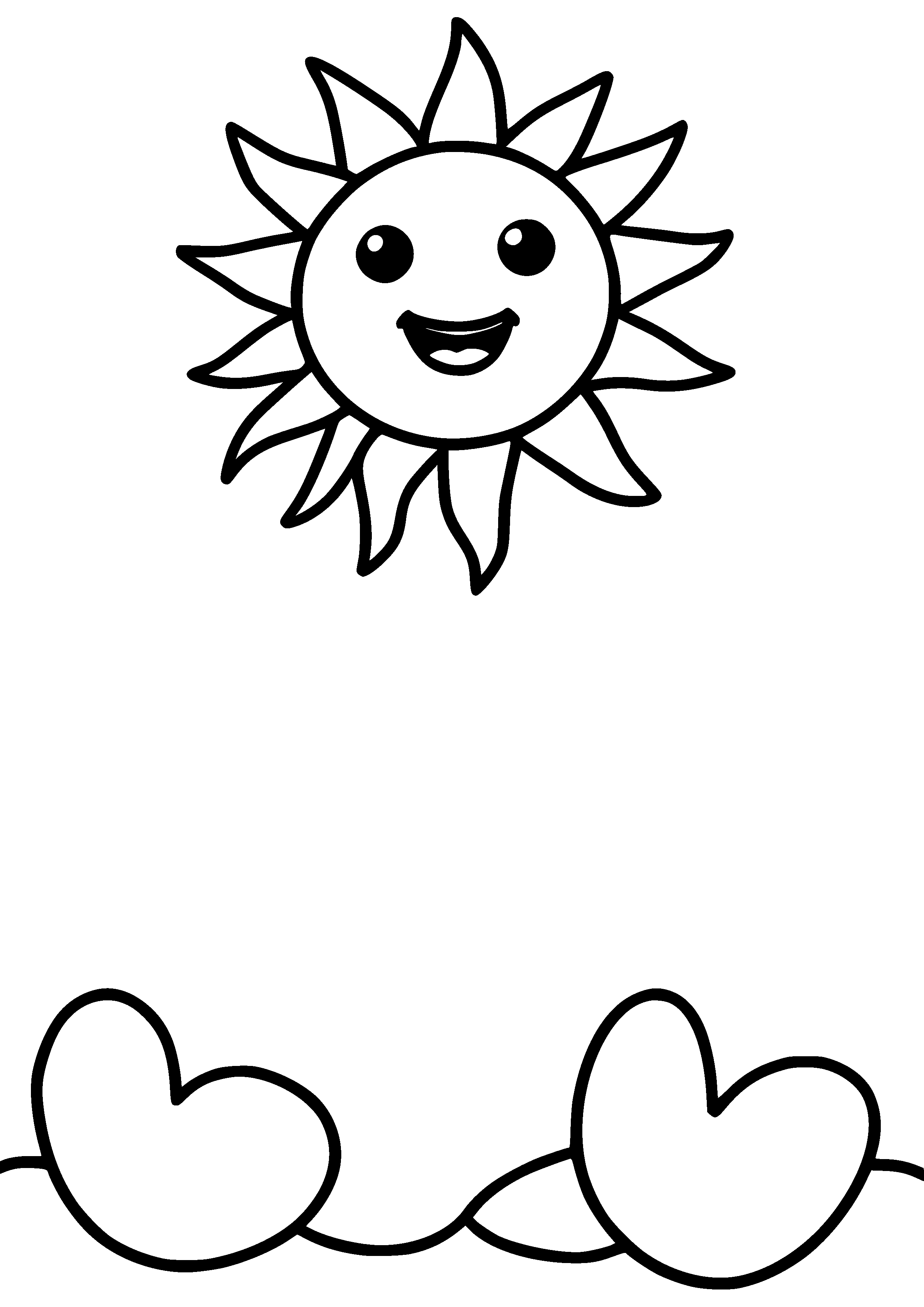
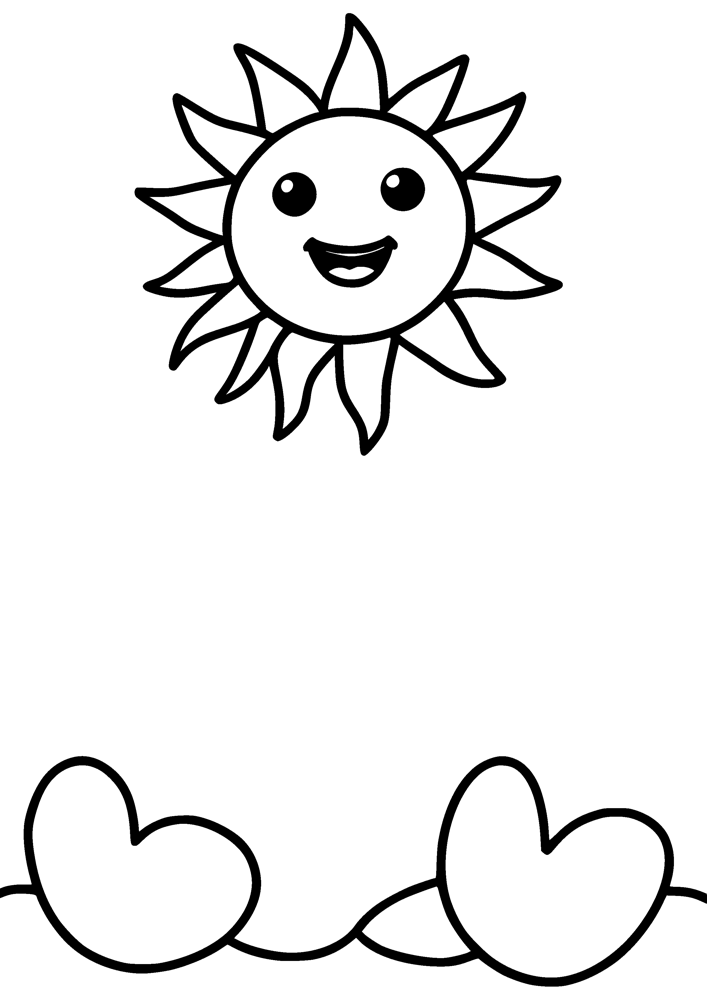
A big smiling sun with happy wavy rays.
★
Free printable · PNG 2480×3508 px (A4, 300 DPI) · PDF in A4 & US Letter · No sign-up
Best for Toddlers
This coloring page features a large, friendly sun centered near the top of the page. The sun has a happy face with round eyes and a wide smile, surrounded by wavy pointed rays. Below the sun, two heart-shaped objects rest on a low curved ground line, leaving a large open white space between the sun and the bottom shapes.
The lines are thick and bold, making it easy for young children to see the boundaries. There are only a few distinct areas to color: the sun's face, the ray border, the two heart shapes, and the ground line. The vast open space gives toddlers plenty of room to move their crayons around without feeling restricted by complex details.
The sun is a giant star at the center of our solar system that gives off light and heat. It is so big that about one million Earths could fit inside it. Without the sun, plants could not grow and life on Earth would not be possible.
Even though the sun looks yellow or orange to us from Earth, it is actually made of white light. Sunlight takes a little over eight minutes to travel the 93 million miles through space to reach our eyes.
Bright yellow and orange are natural choices for the sun, while the heart shapes can be filled with cheerful reds or pinks. Toddlers can use fat, easy-to-grip crayons that leave wide strokes of color without needing fine control. Starting with the big circle of the sun helps little ones get a feel for the page before moving on to the smaller details.
Children who want to experiment can color the sun in rainbow shades or give the heart shapes contrasting blue and green tones. There is no right or wrong way to fill in the space, so young artists can let their creativity guide them across the page.
Printing this page on standard letter paper works well for thick crayons, but slightly heavier cardstock is helpful if your child tends to press down hard. The large open areas and bold outlines mean you do not need special paper for basic coloring tools, though markers might bleed through thin printer paper.