Violin and Sheet Music
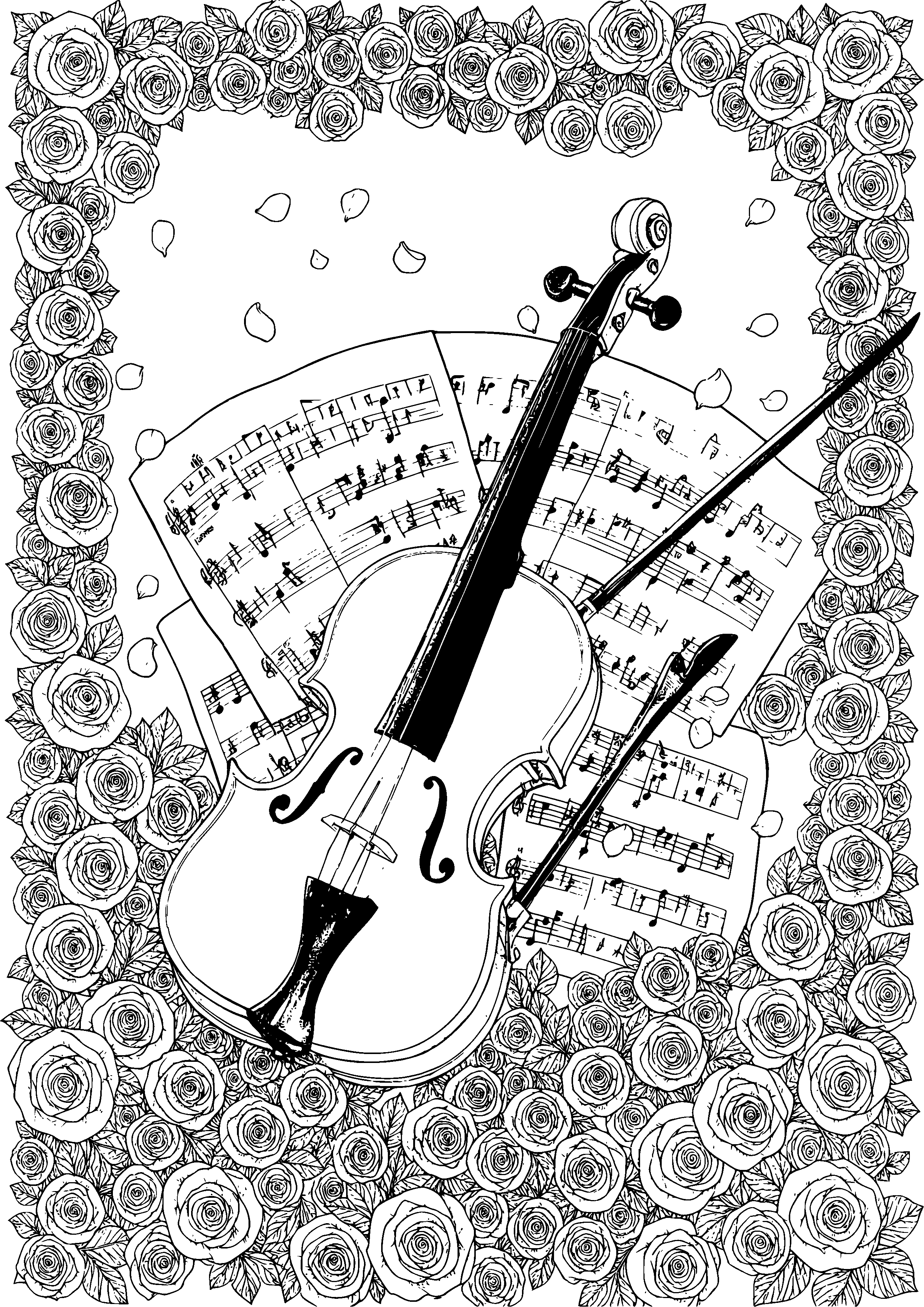
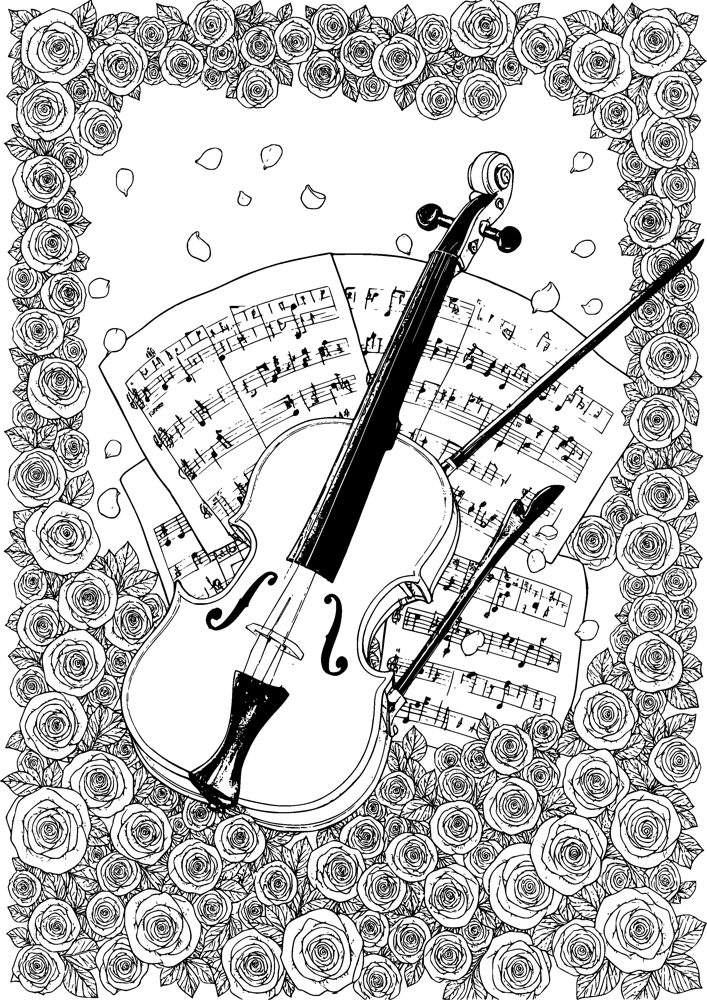
A violin, bow and curling sheet music with rose petals in fine detailed linework.
★★★★
Free printable · PNG 2480×3508 px (A4, 300 DPI) · PDF in A4 & US Letter · No sign-up
Best for Adults
This intricate coloring page features a classical violin resting diagonally across layered sheets of musical scores, accompanied by its bow. The central composition is framed by a dense border of detailed roses and leaves that fills the outer edges of the page, leaving an open white area around the sheet music. Scattered rose petals float gently in the upper white space above the instruments.
The linework is fine, crisp, and highly detailed, particularly in the dense clusters of rose petals and the complex notes on the sheet music. There are hundreds of small sections to color, from the tiny individual leaves and rose spirals to the intricate grid lines of the musical staff. The fine lines call for careful hand control and patience, making the page well suited for adults using sharp colored pencils or fine-tipped markers.
The violin is the smallest and highest-pitched member of the orchestral string family, usually played by drawing a bow across four strings or by plucking them. Its body is traditionally crafted from carved wood, such as spruce for the top and maple for the back and sides, which helps create its rich resonant sound. The scroll at the very top of the neck is often hand-carved in a decorative spiral shape, much like the one shown here.
Sheet music uses a five-line staff to communicate pitch and rhythm, with notes telling musicians which string to press and where to place their fingers. The bow is strung with horsehair, which is coated in rosin to create enough friction against the violin strings to produce a clear tone. While real violins are typically finished in warm amber, reddish-brown, or dark chestnut wood tones, this drawn version invites any color scheme you choose.
Consider using rich shades of mahogany, chestnut, or honey amber for the wooden body of the violin to give it a realistic finish, while keeping the fingerboard and tailpiece a solid deep black. For the frame, you can color the roses in classic crimson, soft pink, peach, or even varied jewel tones, backed by deep forest greens for the leaves. Leaving the background paper white will make the dark musical notes and framing roses pop.
If you want to move away from a traditional look, try coloring the roses in unexpected neon shades or cool blues and purples for a modern, fantasy-inspired aesthetic. Colored pencils work best for blending the subtle tonal gradients on the rose petals and wood surfaces without bleeding through the fine lines. Start with the smaller leaf details and background roses before moving on to the larger, central violin and sheet music.
Because this page contains many dense, fine-lined areas like the rose border and the musical notes, standard printer paper can sometimes pill if you press too hard with colored pencils. Printing this on a heavier cardstock creates a sturdier surface that holds up well to repeated shading, blending, and layering. A firmer paper also prevents bleed-through if you decide to use fineliners or water-based markers for the delicate petals and notes.