Deer in the Birches
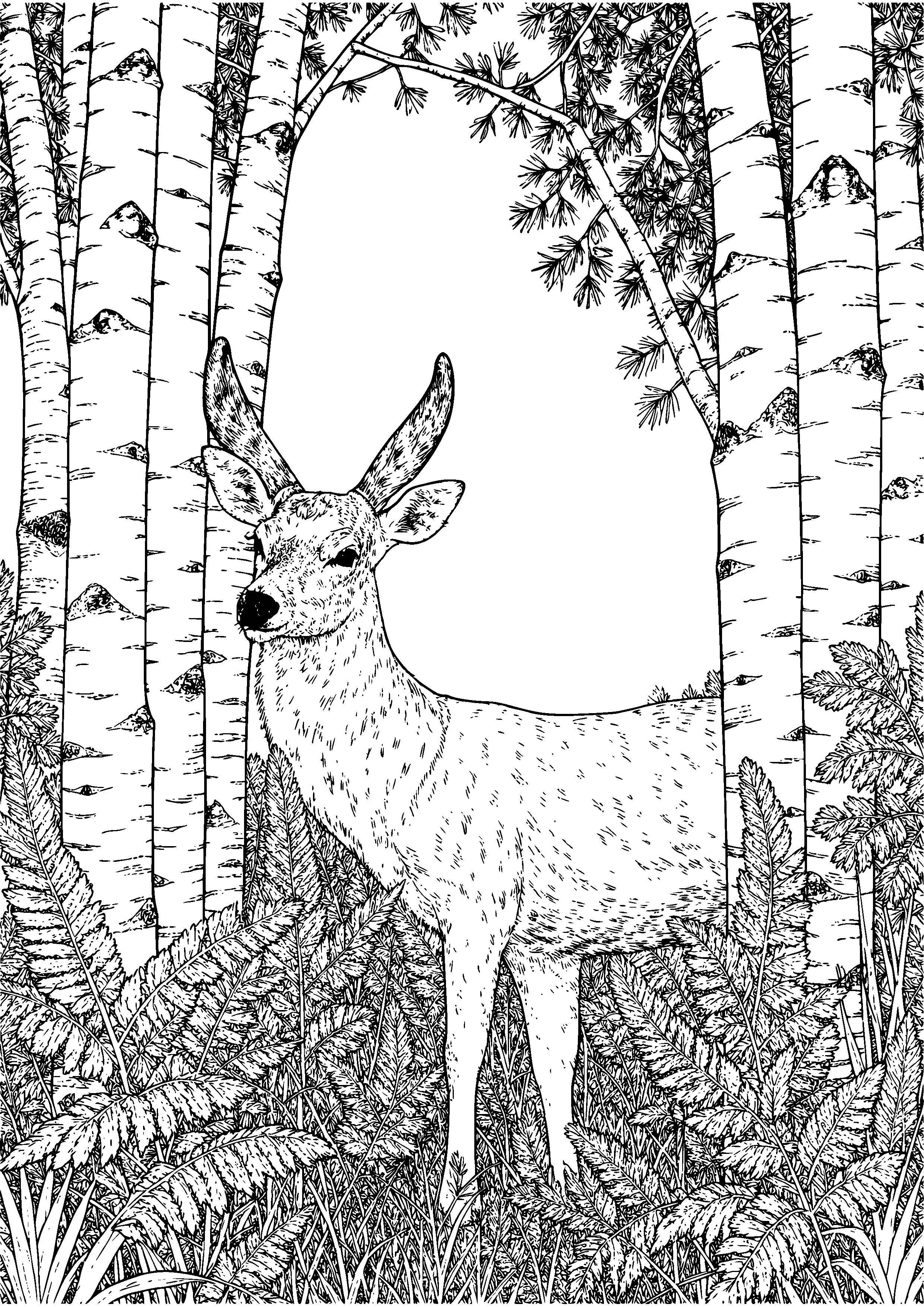
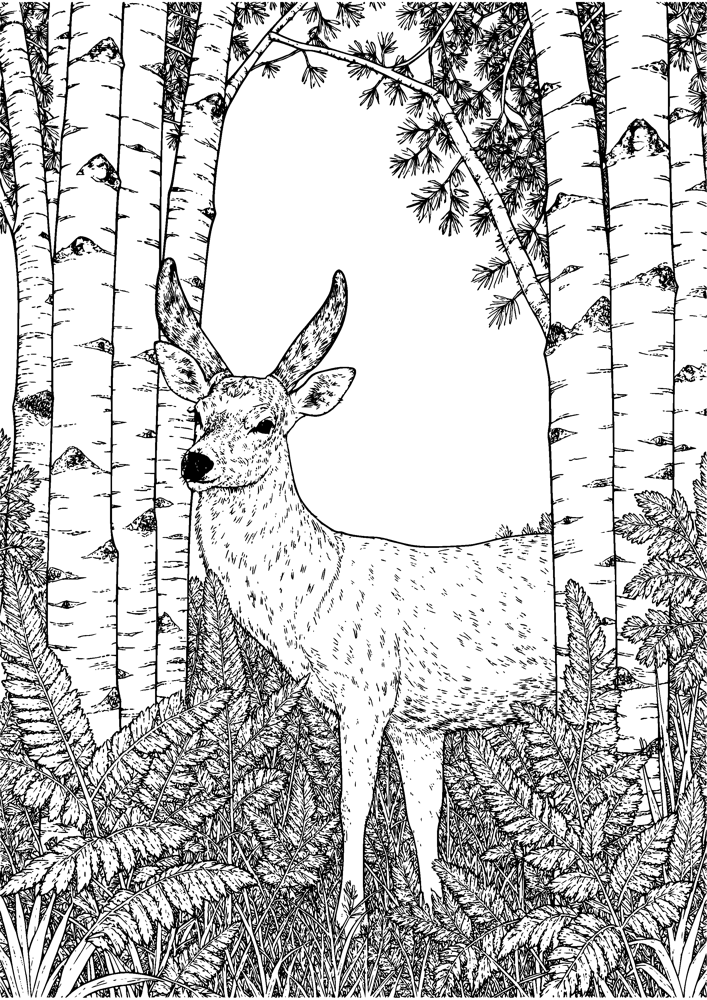
A deer pauses among the birches.
★★★★
Free printable · PNG 2480×3508 px (A4, 300 DPI) · PDF in A4 & US Letter · No sign-up
Best for Adults
This coloring page features a deer standing calmly in a dense forest. The central subject is a buck with short antlers, positioned among a dense thicket of ferns on the forest floor.
Towering birch trees frame the scene on both left and right, with their characteristic banded bark adding strong vertical lines. Fine pine needles and branches arch across the upper portion, leaving a clear white sky area in the upper center, and the outlines are drawn with crisp black ink suitable for careful shading.
Deer grow and shed their antlers each year, starting as soft bone covered in velvety skin during the spring and hardening into solid bone by autumn. Their coats also change seasonally, shifting from a reddish-brown summer coat to a thicker, grey-brown winter coat that helps them blend into cold, barren woods.
The white spots visible on many young deer, or fawns, act as natural camouflage by mimicking sunlight filtering through the canopy of the forest. While this drawn buck has a textured, patterned coat rather than distinct spots, the dappled shading on real deer helps them stay hidden from predators.
To bring this woodland scene to life, consider using soft gray and cream tones for the birch bark, contrasting with deep charcoal or black for the dark horizontal markings. The ferns on the forest floor offer a chance to layer different shades of green, from olive to rich forest green, to create depth among the fronds.
For a more artistic approach, you can color the background sky in a pale twilight blue or warm sunset amber rather than leaving it white. Colored pencils work best for building up the subtle texture on the deer's coat and shading the delicate pine needles overhead without smudging.
Because this page contains detailed linework and fine shading areas on the deer and foliage, a medium-weight cardstock works better than standard copy paper. Heavier paper allows you to use sharp colored pencils or fine-tip markers for layering tones without the ink bleeding through or wearing down the surface.