Rabbit in the Vegetable Patch
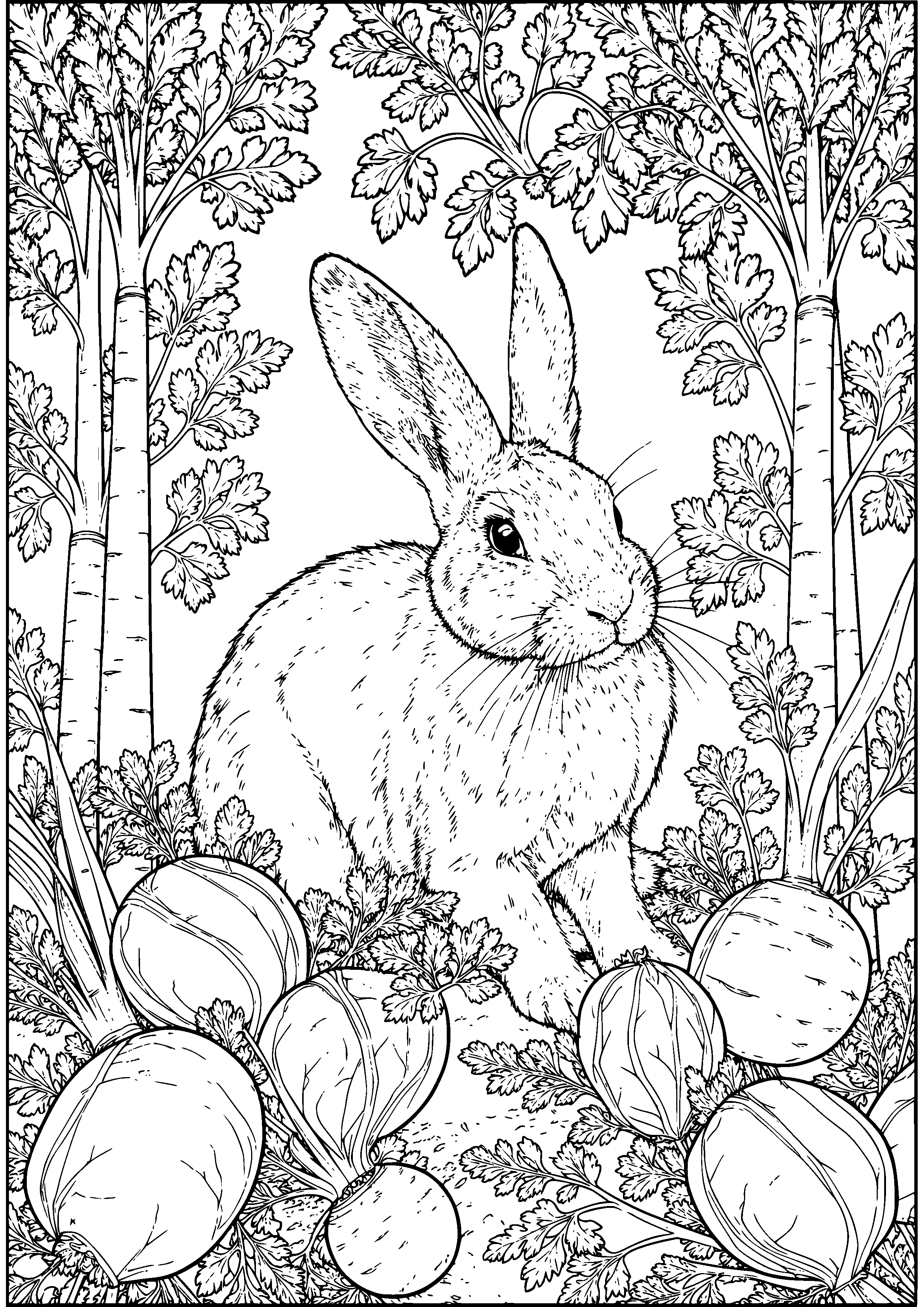
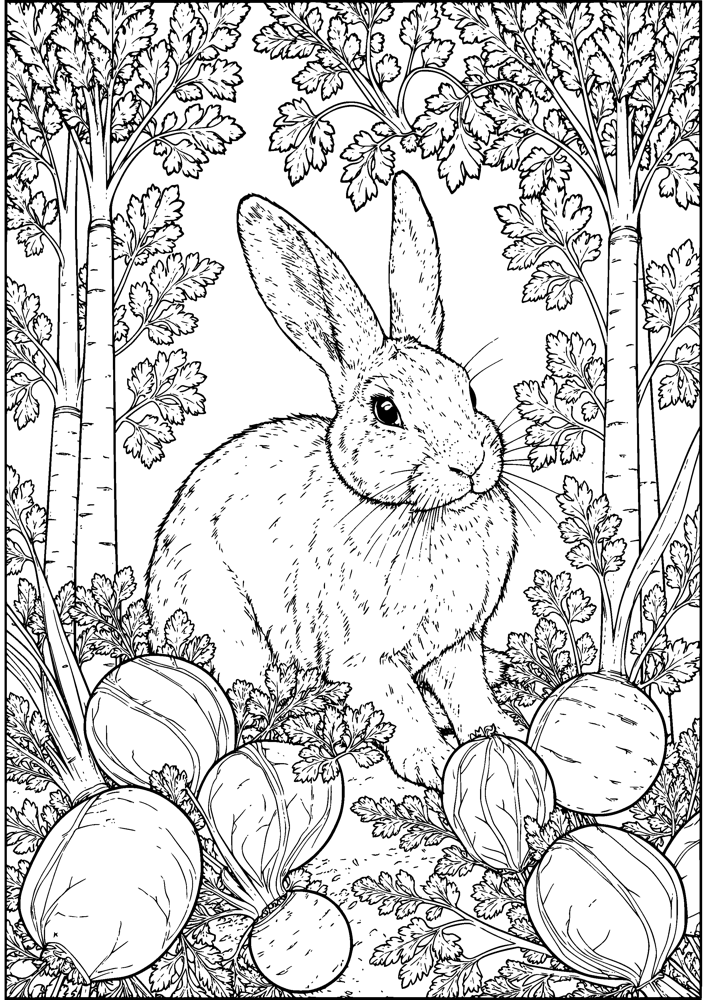
A rabbit inspects the vegetable patch.
★★★★
Free printable · PNG 2480×3508 px (A4, 300 DPI) · PDF in A4 & US Letter · No sign-up
Best for Adults
This coloring page features a realistic rabbit sitting amidst a lush garden filled with root vegetables and leafy greens. Tall celery stalks and parsley foliage frame the scene from above and along the sides, creating a natural canopy over the animal.
The line work is detailed and fine, with intricate textures drawn into the rabbit's fur, the crinkled leaves, and the round roots scattered on the ground. A multitude of small, enclosed shapes throughout the foliage and vegetables offer plenty of sections for careful color work.
Rabbits are well known for their keen sense of smell, which helps them locate fresh greens, carrots, and root vegetables in home gardens. Their powerful hind legs allow them to hop quickly between rows of crops when they need to escape from potential predators.
In the wild, rabbits spend much of their time foraging during the early morning and late evening hours. They have specialized teeth that continue to grow throughout their lives, which helps them constantly chew through fibrous stems and leaves.
You can use warm browns, soft grays, and white pencils to bring the rabbit to life with natural shading along its flanks and ears. The vegetables and leaves provide an opportunity to blend various shades of bright green, muted olive, and earthy cream tones.
If you want to try something different from a realistic scene, consider coloring the background foliage in shades of twilight blue or purple to make the white rabbit stand out. Colored pencils work best here to capture the delicate fur texture without losing the fine outlines.
Because this page contains many fine lines and detailed textures in the leaves and fur, print it on heavier cardstock if you plan to use fine-liner pens or light water-based markers. Standard printer paper works fine if you are using colored pencils and want to practice blending techniques.