Patterned Owl
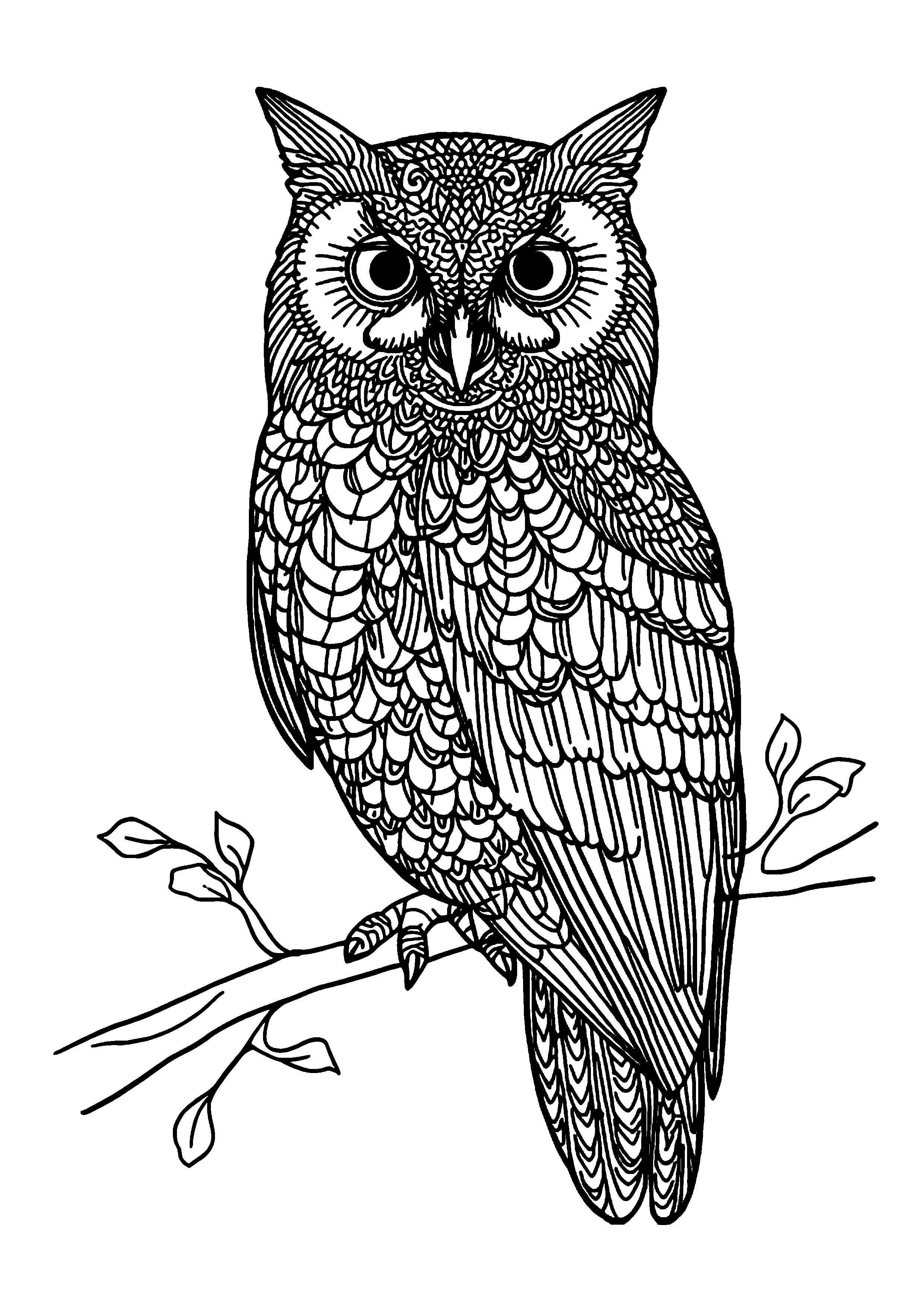
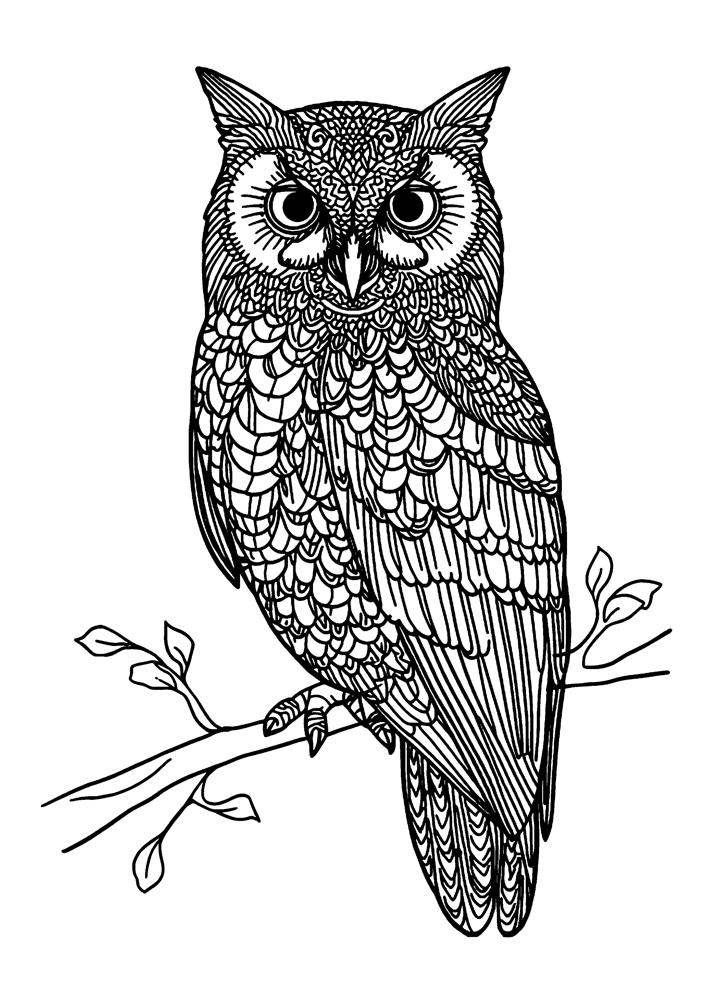
An owl whose feathers swirl with intricate decorative patterns.
★★★★
Free printable · PNG 2480×3508 px (A4, 300 DPI) · PDF in A4 & US Letter · No sign-up
Best for Adults
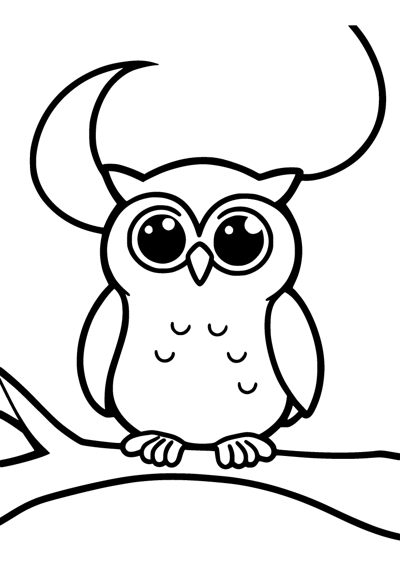
This coloring page features a detailed illustration of an owl perched on a branch, filling the center of the vertical composition. The entire body of the bird is covered in dense, interlocking feathers decorated with swirls, scales, and geometric patterns that create hundreds of small sections to color. The branch beneath its talons includes a few small leaves, and the background is left completely white.
The black outlines are crisp and vary in weight, with thicker lines defining the main silhouette of the bird and thinner lines making up the intricate feather details. Because of the sheer number of tiny compartments, this page offers a dense and absorbing coloring challenge. There is no border around the design, allowing the drawing to stand alone clearly on the page.
Owls are nocturnal birds of prey known for their large, forward-facing eyes, excellent hearing, and silent flight due to specialized wing feathers. While real owls possess camouflage patterns of brown, gray, and white to blend into tree bark, this particular illustration is entirely imagined as a decorative piece. The swirling lines and repetitive shapes turn the natural anatomy of the bird into a work of abstract folk art.
Artistic depictions of animals filled with patterns draw inspiration from traditional textiles and doodle art, where the goal is texture rather than biological accuracy. The asymmetrical details on the wings and chest invite closer inspection, turning a familiar animal into a fascinating puzzle of shapes. This stylized approach gives colorists complete freedom to interpret the bird through color rather than mimicking nature.
To tackle a page with this level of detail, colored pencils or fine-tip markers work best to fit inside the small patterns without bleeding over the lines. You might start by coloring the large eye outlines and the beak to anchor the face, then work your way down the chest feather by feather. Using a limited palette of warm autumnal tones like ochre, rust, and burnt orange can make the patterned feathers feel unified.
If you want to depart from realistic owl colors, try dividing the body into sections of jewel tones like emerald green, sapphire blue, and deep purple. Alternating metallic gel pens with matte pencils can also add a striking contrast between the different layers of feathers. Take your time with the background white space, as leaving it blank helps the intricate black linework pop.
Because the feathers contain many tiny areas that require careful coloring, printing this page on medium-weight cardstock rather than standard copy paper is recommended. Cardstock prevents fineliners and gel pens from bleeding through to the other side and provides a sturdier surface if you decide to use light watercolor washes for the background.