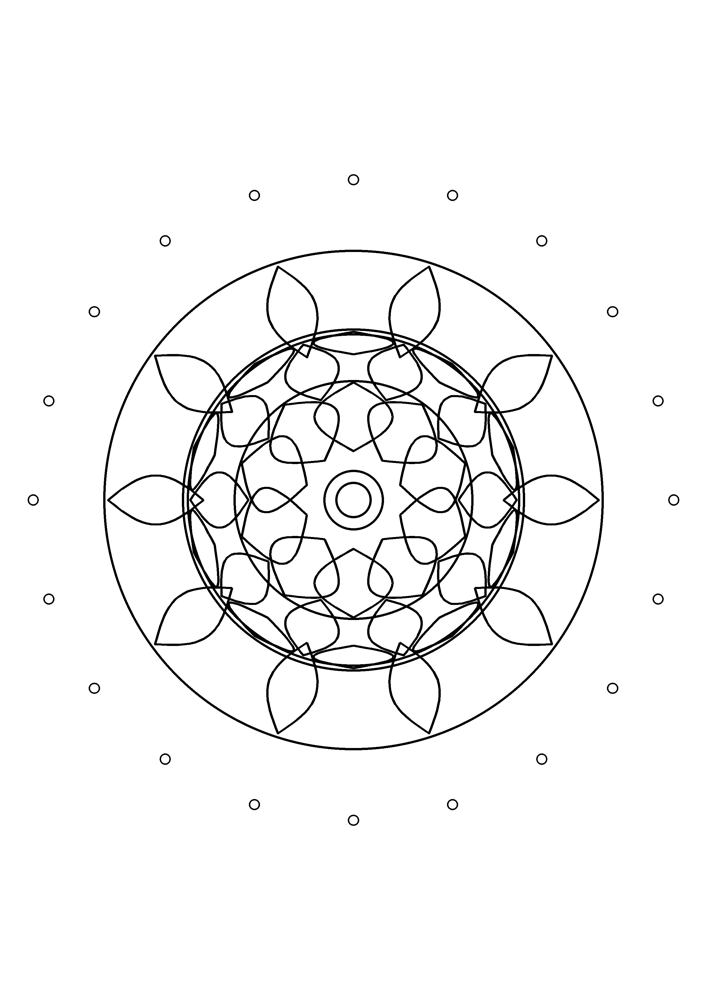
Mandala Coloring Page #14
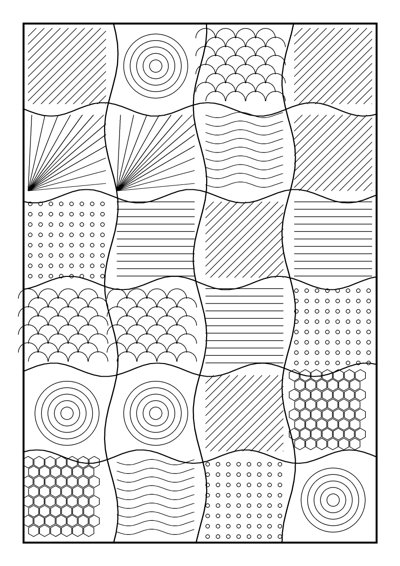
An original symmetric mandala with layered petal rings for relaxing, detailed coloring.
★★★★
Free printable · PNG 2480×3508 px (A4, 300 DPI) · PDF in A4 & US Letter · No sign-up
Best for Adults
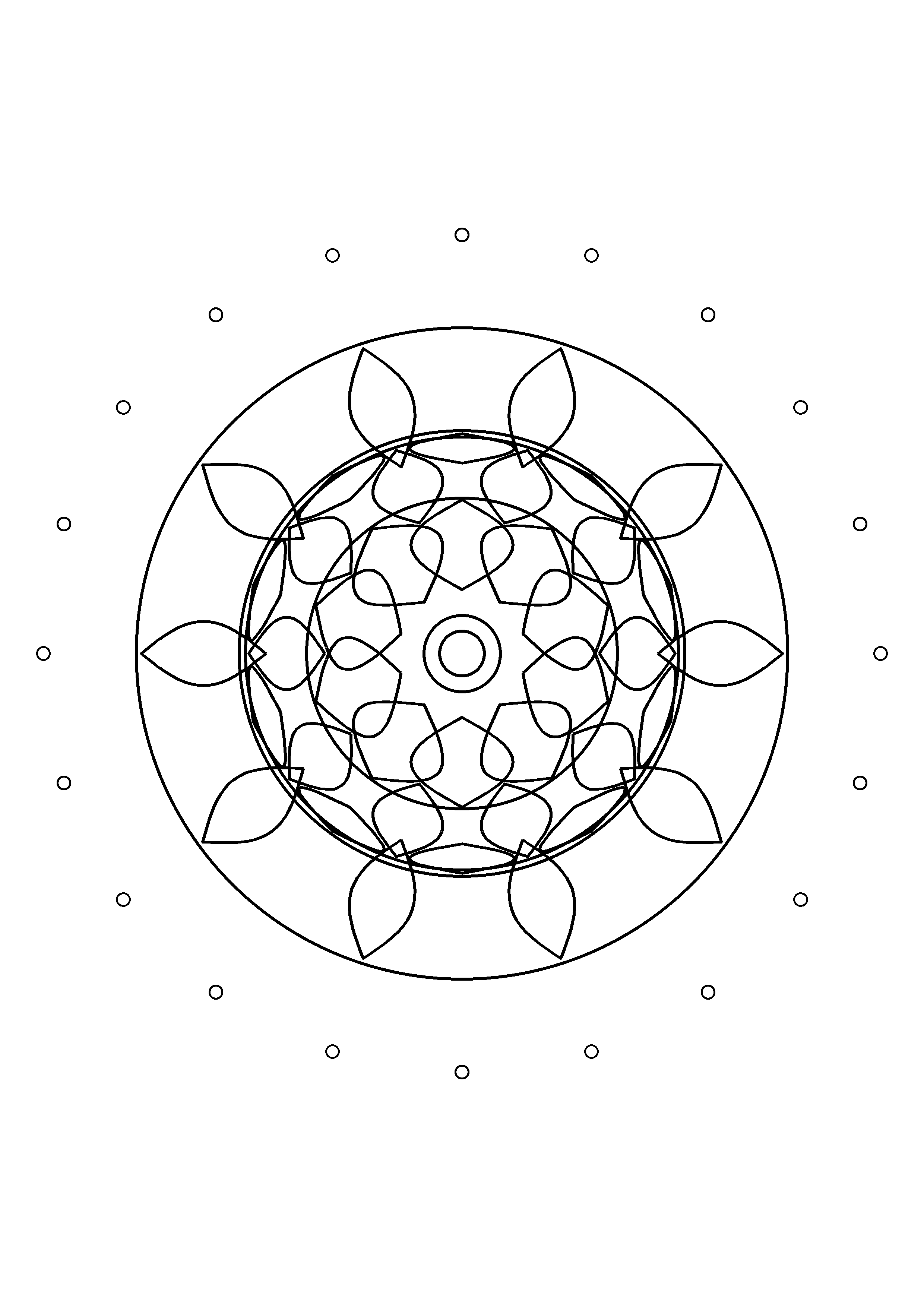
An original symmetric mandala with layered petal rings for relaxing, detailed coloring.
★★★★
Free printable · PNG 2480×3508 px (A4, 300 DPI) · PDF in A4 & US Letter · No sign-up
Best for Adults
This printable coloring page features a large, highly detailed circular mandala centered neatly on a plain white background. The intricate design is built from multiple concentric rings of geometric shapes, leaf-like petals, and delicate diamonds, creating a vast number of tiny, distinct sections to fill in.
The black outlines are rendered in a clean, consistent medium weight that keeps every layer separated clearly. Because of the density of the pattern, it offers hours of focused coloring for anyone who enjoys fine details.
Mandalas are traditional circular designs that represent wholeness, balance, and the cosmos in various cultures around the world. The word itself translates to circle in Sanskrit, and structured patterns like this one are often used as tools for meditation and centered focus.
This particular design is entirely decorative and imagined rather than based on a specific cultural artifact. It relies on radial symmetry, meaning that the repeating petal and diamond motifs mirror each other perfectly around the central point.
Working with sharp-tipped colored pencils or ultra-fine fineliners works best for this mandala due to the narrow widths of the inner petals and small background circles. You might want to pick a strict limited palette, such as shades of deep blues and purples, to make the complex overlapping layers feel cohesive.
For a striking contrast, try coloring each concentric ring in a distinct color family, moving gradually from warm tones at the center to cool tones at the outer edge. If you prefer a more playful approach, alternate bright, contrasting jewel tones across the matching radial sections.
Because this design contains many tiny geometric spaces and thin lines, printing it on a slightly heavier cardstock rather than standard copy paper is recommended. Heavier paper prevents fineliner ink from bleeding into adjacent sections and provides a sturdy surface if you decide to use colored pencils with heavy shading.
★★★★
★★★★
★★★
★★★
★★★
★★★
★★★
★★★
★★★★
★★★★
★★★★