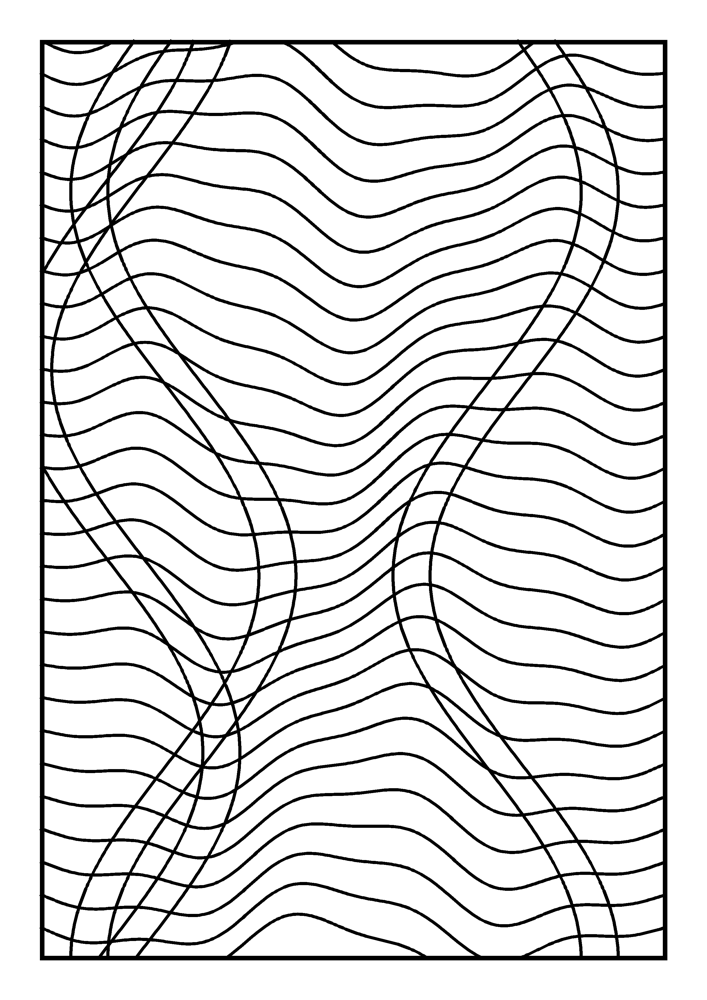
Op-Art Waves Coloring Page #9
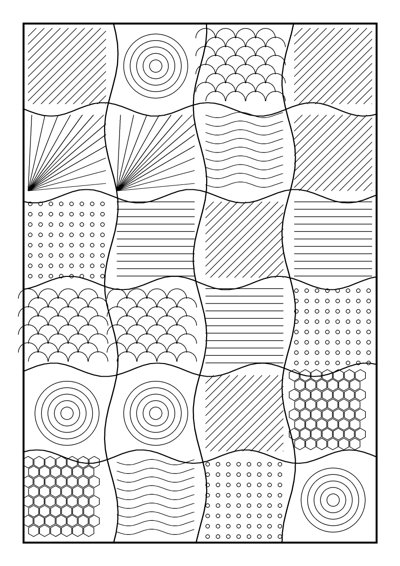
Rhythmic op-art wave ribbons that turn mesmerizing once colored.
★★★
Free printable · PNG 2480×3508 px (A4, 300 DPI) · PDF in A4 & US Letter · No sign-up
Best for Adults
Rhythmic op-art wave ribbons that turn mesmerizing once colored.
★★★
Free printable · PNG 2480×3508 px (A4, 300 DPI) · PDF in A4 & US Letter · No sign-up
Best for Adults
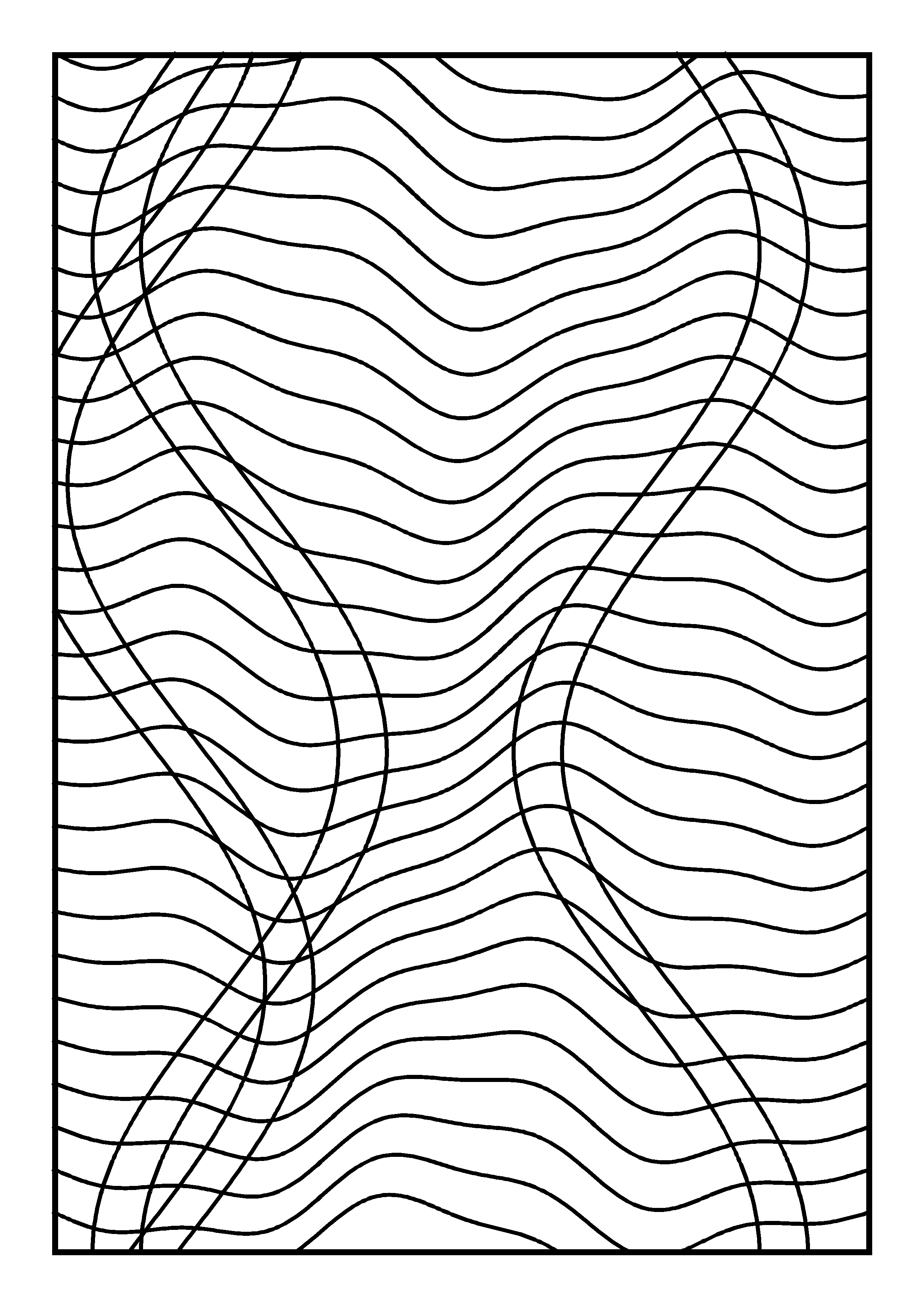
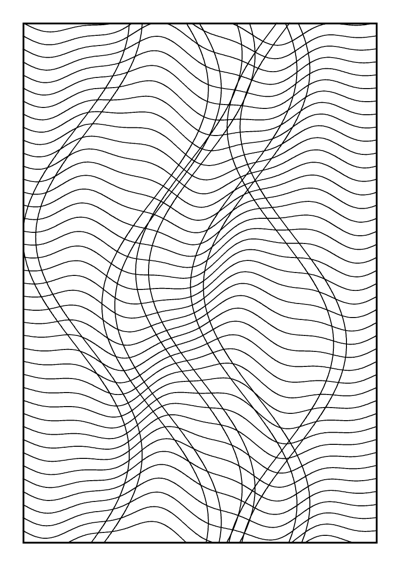
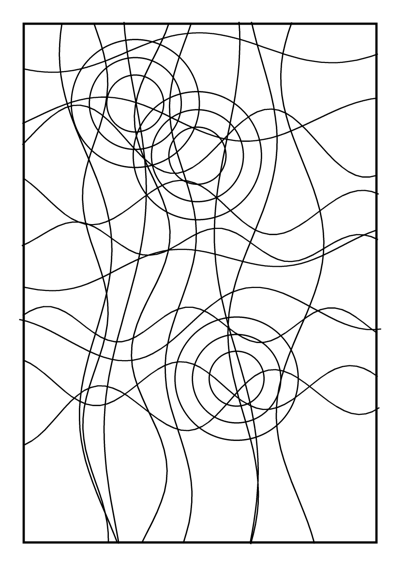
This coloring page features an optical art composition filled with rhythmic, undulating wave ribbons that twist and cross across the vertical frame. The wavy lines form multiple intersecting ribbon-like pathways and closed segments, creating a dense geometric puzzle of organic shapes from top to bottom.
The black outlines are clean and consistent in weight, separating dozens of narrow channels and overlapping loops. There is no traditional background or empty white space, leaving the entire rectangular field packed with continuous movement for detailed coloring.
This design belongs to the optical art genre, which uses geometric patterns and repetition to create illusions of movement, depth, and swelling forms on a flat surface. Op-art became widely popular during the 1960s through the works of artists like Bridget Riley and Victor Vasarely, who experimented with how the human eye processes contrast and line.
The flowing ribbons in this pattern are entirely imaginary and decorative, designed to trick the perception of the viewer through overlapping curves. By altering the contrast between adjacent channels, colorists can make certain sections appear to lift forward or recede backward.
To emphasize the optical illusion, consider using high-contrast shades or a sharp gradient of a single color family, such as deep blue transitioning to pale cyan across intersecting channels. Colored pencils work well for smoothly blending shades within the narrow ribbons, while fine-tipped markers can deliver bold, saturated blocks of color.
For a striking modern look, try an alternating black-and-white checkerboard effect inside the overlapping segments, or use metallic gel pens along the curved borders to highlight the sense of depth. Starting from the center where the ribbons cross and working outward helps maintain control over the complex color scheme.
Because this design features many narrow spaces and detailed intersecting lines, using fine-tipped fineliners or sharp colored pencils will help keep your work neat. Printing this page on heavy cardstock is recommended if you plan to use water-based markers, as thicker paper prevents bleeding through the densely patterned sections.
★★★★
★★★★
★★★★
★★★
★★★
★★★
★★★
★★★
★★★★
★★★★
★★★★