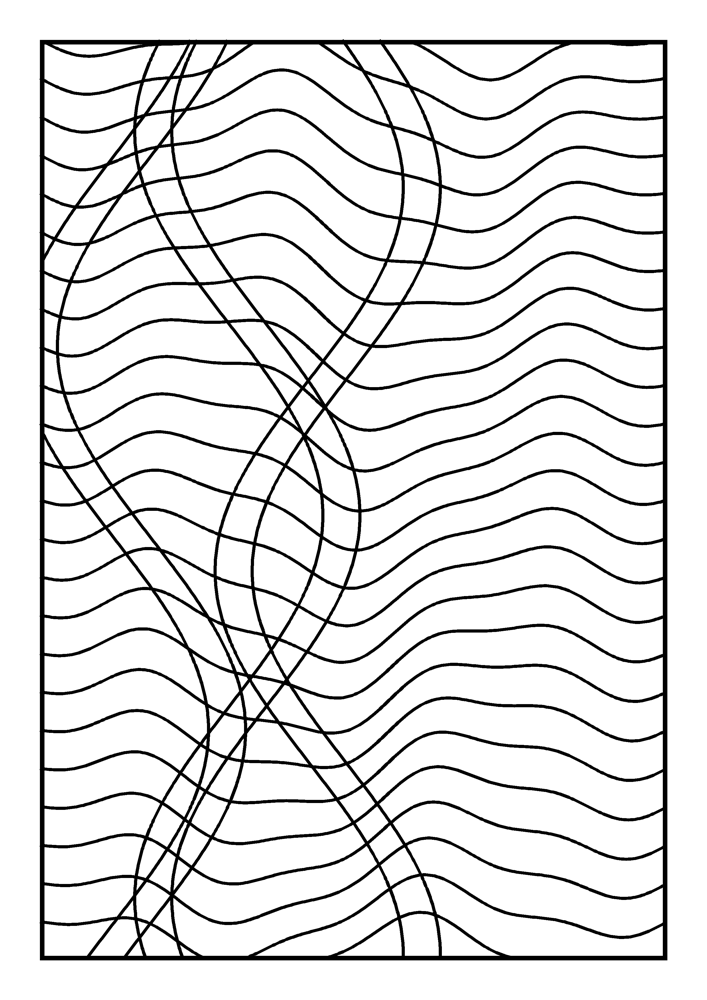
Op-Art Waves Coloring Page #4
Rhythmic op-art wave ribbons that turn mesmerizing once colored.
★★★
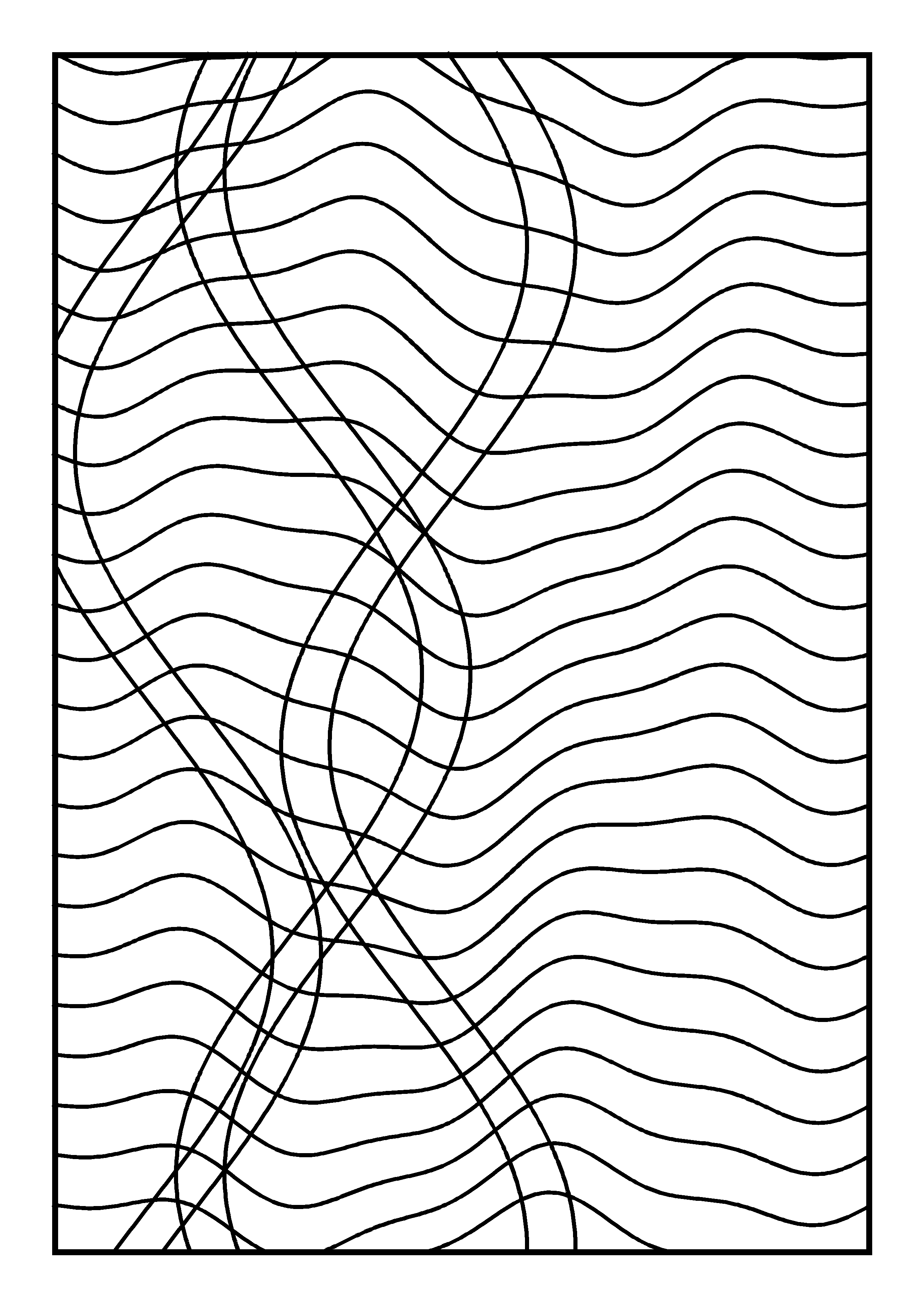
Free printable · PNG 2480×3508 px (A4, 300 DPI) · PDF in A4 & US Letter · No sign-up
Best for Adults
Rhythmic op-art wave ribbons that turn mesmerizing once colored.
★★★
Free printable · PNG 2480×3508 px (A4, 300 DPI) · PDF in A4 & US Letter · No sign-up
Best for Adults
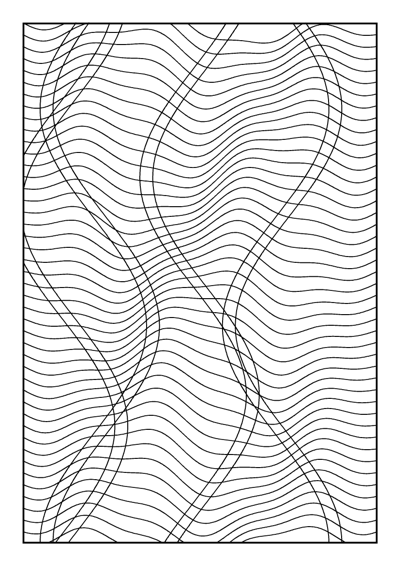
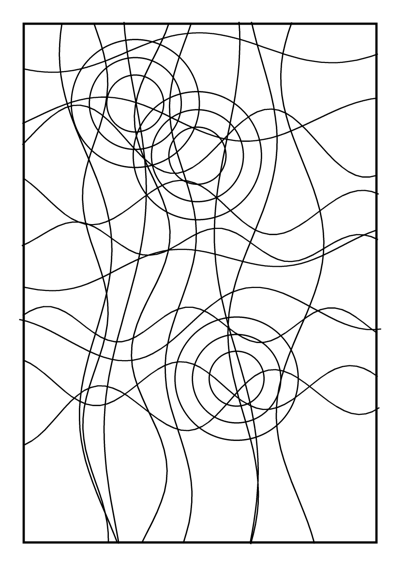
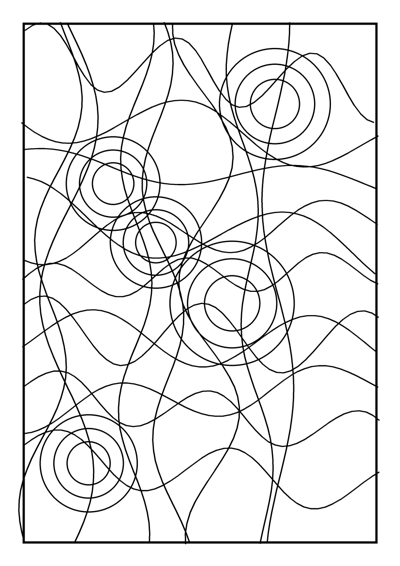
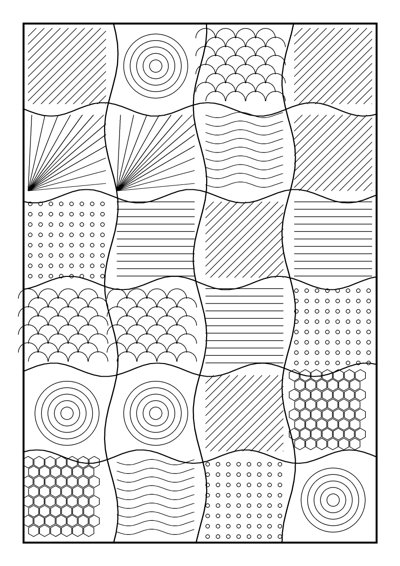
This printable coloring page features a complex optical art pattern composed of undulating horizontal wave lines intersected by sweeping vertical ribbons. The composition creates a continuous mesh of curved shapes that divide the rectangular page into dozens of distinct, elongated cells of varying sizes. The outer black border encloses the entire design, leaving no plain background areas outside the grid.
The black outlines are clean and well-defined, providing clear boundaries for every single cell within the geometric wave network. Because the lines twist and overlap across the page, tracing the individual paths offers a visual challenge that rewards careful coloring. The overall layout is dense and rhythmic, designed to keep your attention focused as you work section by section.
Optical art, often called op art, is a style of visual art that uses mathematical patterns, geometric shapes, and repeating lines to create optical illusions. Artists working in this movement during the 1960s aimed to trick the human eye into perceiving movement, hidden dimensions, or swelling surfaces on a flat two-dimensional plane. This coloring page uses flowing curves and overlapping paths to mimic classic op art techniques without depicting any real-world object.
Because the subject is purely decorative and imaginary, there is no correct way for the lines to look when finished. The visual effect relies entirely on how contrast and color interact across the intersecting curves. As you fill in the cells, your color choices will determine whether certain ribbons appear to push forward or recede into the background.
To enhance the optical illusion, consider using a monochromatic color palette with varying shades of a single color, such as dark blue, medium blue, and light ice blue. Alternatively, applying a vibrant rainbow gradient across the horizontal waves can make the intersecting ribbons pop out against the background. Using fine-tipped colored pencils works well for this page because many of the enclosed cells are narrow and require precise control.
If you want to depart from a simple color scheme, try alternating two contrasting colors for every other row of cells to emphasize the undulating wave pattern. Starting near the center where the lines cross most densely can help you establish a rhythm before working your way out toward the edges. You can also leave certain cells entirely uncolored to create a stark, graphic contrast with the filled areas.
Because this design contains many small, intersecting cells and close parallel lines, using fine-tipped fineliners or sharp colored pencils will help you stay neatly within the borders. Printing the page on a heavier cardstock rather than standard copy paper is recommended if you plan to use water-based markers, as thicker paper prevents bleeding through the narrow shapes and keeps your finished op-art piece crisp.
★★★★
★★★★
★★★★
★★★
★★★
★★★
★★★
★★★
★★★★
★★★★
★★★★